stories of travel, medical missions, and more

Category: Travel Journal (Page 13 of 15)

Travel Journal, 22

Old and Older

Historical buildings and architecture fascinate me. Tall spires donned by looming cathedrals, crumbling Greek ruins, precariously leaning towers, and uneven cobbled stone roads lure me into the world. No matter where you go, most people and most cultures respect the old places. Whether you go to Israel or Boston, the oldest locations demand respect and fascination.

Jerusalem, 2015

We stepped through the ancient doorway and peered out into the Old City. When reading ancient texts, many authors, when talking about going to Jerusalem, say that they “go up” to the city. Even if a traveler is going south, they say they’re “going up.” The reason? The Old City of Jerusalem is on a hill. We looked down from the top of that hill. All around us lay the ruins of a palace. The most famous King of Israel was the King David, son of Jesse of Bethlehem; he lived sometime around 1000 BCE. This was his house. English translations on placards spoke of ancient times and doings. We wandered dumbfoundedly and tried to comprehend its age and meaning. From here, the king could see everything; the city, the wall, the gates, and even the majestic Holy Temple which stood nearby. The respect that hung in the air was hotter than the Israeli sun. And it’s no surprise. This was the place of kings and honor.

Boston, 2014

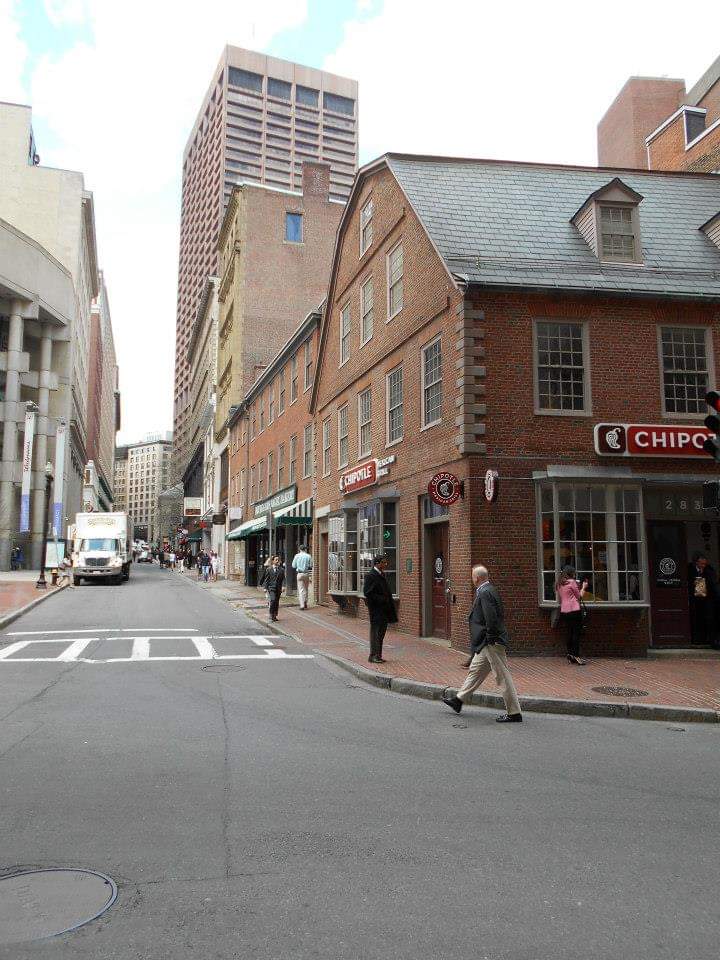
A year earlier, we were eating cannoli and gazing up at what may just be the most important bookstore in American history; at least it was. In the early 19th century, the Old Corner Bookstore began selling books and magazines. And throughout its active literary history, the Bookstore published authors such as Nathaniel Hawthorn, Ralph Waldo Emerson, and the quintessential American poet himself, Henry Wadsworth Longfellow. The classic post-colonial building looks like a brick barn. Its windows jut out onto the sidewalk, beckoning window-shoppers to peek within. You’d expect to see gas lanterns hanging nearby. But alas, no, a Chipotle restaurant sign clings to the façade. The whole thing looks fake—like somebody on a committee accidently approved a zoning permit, then completely forgot about it. One of the most important literary sites in the United States of America now sells burritos instead of books. What once fed minds and hearts and souls, now feeds the people what the really want. At least, that’s what it may seem like on first glance.

Part of us

To say that western culture, and specifically American culture, lacks respect for important landmarks and heritage is unfair and simply not true. Downtown Boston is full of historical landmarks, heritage sites, and museums. The owners of the building could have bulldozed it for more space. But they didn’t. It has been preserved and hundreds of people visit it daily. How else would I have known the history of the building without a nearby plaque?

Western and American culture reinvents, reuses, and integrates historical remnants into our everyday lives. In Boston, it’s difficult to know where the old ends and the new begins.

Our history is quite literally part of us.

But just to be safe, don’t make us choose between burritos and books.

anthony forrest
Travel Journal, 21

Not Cheap

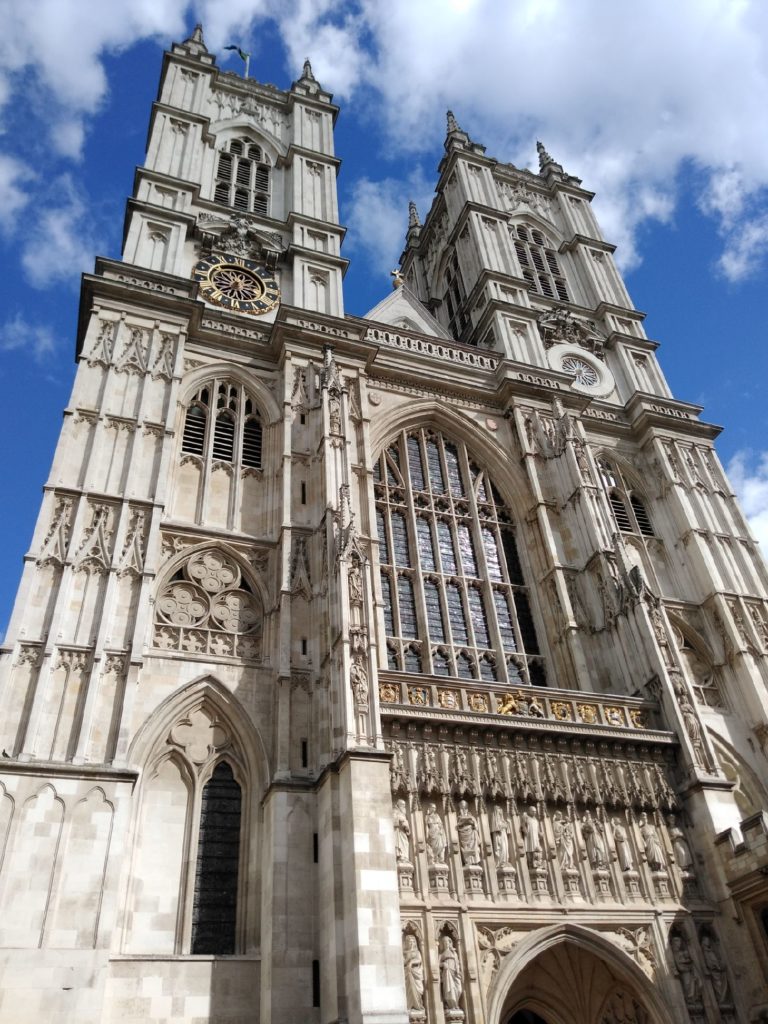
A dull throbbing cut through my worn-out running shoes and seeped into the pads of my feet. The ancient stone floor wasn’t helping. Jet lagged and bedraggled, there we stood—occasionally. After short intervals of standing, a hallow voice asked us to be seated. And so the pattern continued. Stand, sit, stand, sit.

Every once and a while I smelled smoke and wax. Burning candles glowed on tables and shelves and stone and glass. But the aroma implied so much more than just a burning candle. It hinted at old candles, new candles, forgotten candles. It was the aroma of candles continuously burning—maybe for centuries. Out of the smoke and silence rose a voice; many voices. Soon the Choir of Westminster Abbey all sang together. They had started so quietly that I hardly knew when they had begun. Perhaps the choir had always been singing. Was I not listening?

My feet still hurt. But the intoxicating cold stone, smoke, and music gently eased the ache. We had walked all over London—Piccadilly circus, Parliament, London Tower, new roads, old roads, iconic ally-ways, ect. The day culminated at the Westminster Abbey for evensong. Nearly every day, the old church hosts an evening worship service comprised of Biblical readings and ethereal choral music. The day began to close as we made our way to the church. As we waited in line, I turned to read a nearby sign.

“No Pictures. No Mobile Phones.”

I begrudgingly stuffed my eager phone (already 9 months pregnant with travel photos) back into my pocket. But as we shuffled quietly into the building, all desire to take pictures fell away. We found our spot in folding chairs on the old stone floor. Then it all began. And our tired bodies and minds vulnerably soaked up the experience like a dry rag.

After an hour, it was over and we shuffled back out toward the door. Nearby, a not-so-sneaky tourist held up a cellphone and snapped a photo. Out from behind him, a vicar began verbally berating the man for taking a photo.

Only an hour ago that was me. But now I was as appalled as the irritated Church leader. How could he take a picture after something like that? Did we not have the same experience?

Pictures have their place. And I am still trying to find all those places. But I long for the places where picture taking seems inappropriate. Places like Westminster Abbey tend to make cell phones feel cheap and indecent. I want to see those places. I want to experience places of awe and dignity where trivial things like pain and jet lag melt away.

A picture may say a thousand words, but it turns out that I don’t really care. The smell of smoke and wax burns my mind. The music haunts my nights. And an experience like that cannot be cheaply manufactured (or even recalled) by any technology.


anthony forrest

Travel Journal, 20

Everything Important

All six of us piled into the Bolivian taxi. The back row sat three. But it’s not like they have seatbelts anyway. The driver threw all of our belongings into the back and slammed the door. Most taxis here are white and in pretty rough shape. But the little Toyota hatchbacks seem unfazed and resilient. Riding in those cars, rocketing down the dirt or semi-paved city roads at ramming speed and not falling apart at every pothole, still shocks me. Streets, whether marked or unmarked by signs, flew past us as we merely honked through intersections and dodged fellow thrill seekers. Every ear was tuned to a steady stream of inordinate honking and crazy-loud blarings of accordions and flutes and guitars pouring from the radio (only piece of working tech in the car).

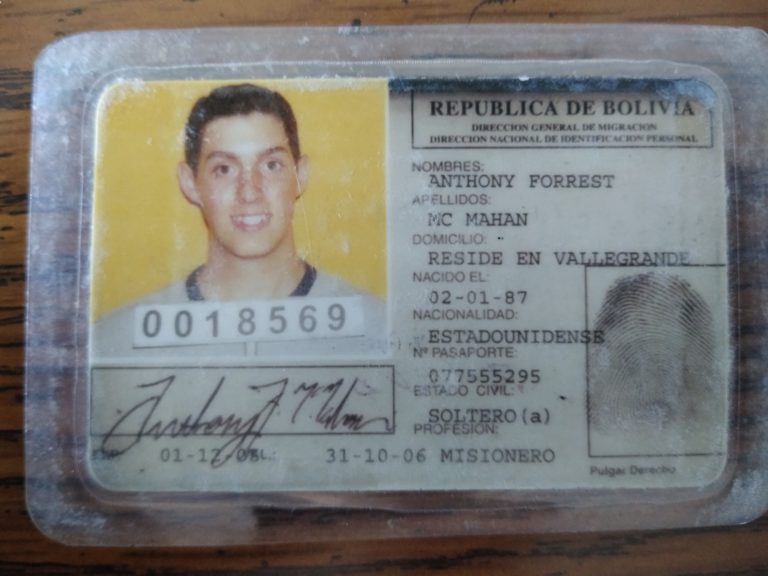
This was my 5th month living in Bolivia. And I love Bolivia. Vibrant and eclectic, Bolivian culture has no equal. Perhaps being locked in by five other south American countries has preserved its bold flavor. I can close my eyes and still see bright and colorful dresses. I hear flutes of many varieties. I smell the salteñas (a type of meat-filled pastry). And for some reason, the smell of burning propane reminds me of the propane mantle lanterns that gave off light. I was traveling and occasionally staying with, Devon and Jenny and their raft of boys (all of which behaved better than I, but that is a story for another time). We were in the city of Santa Cruz for a couple of days. The never-ending sea of paperwork demanded that we present ourselves in an official capacity. And after several hours of filling in forms and standing in lines, we were simply ready to get back to our rooms.

After arriving at our destination, we clambered out of the taxi, paid the driver, and watched him speed away in a cloud of dust. At that moment, Devon began spinning around like a dog chasing his tail.

“Where’s the backpack?” he choked.

All the color left his face as he realized that his backpack was behind the last seat, in the hatch.

“What was in it?” I asked.

“Our passports, our money, everything important!”

If you are reading this and wondering what could be the worst-case scenario for international travel, wonder no longer. The odds of the situation improving after you lose your passport and money are comically low.

But we knew a guy.

In fact, we knew the guy who was a driver of another taxi. And he knew the guy that ran the taxi dispatch. And the dispatcher knew all the taxi drivers. And they actually found our driver.

He returned the backpack, passports, money, and all.

And instead of going to the American Consulate, we just went home.


anthony forrest

Travel Journal, 18

Tube and the Laughing Man

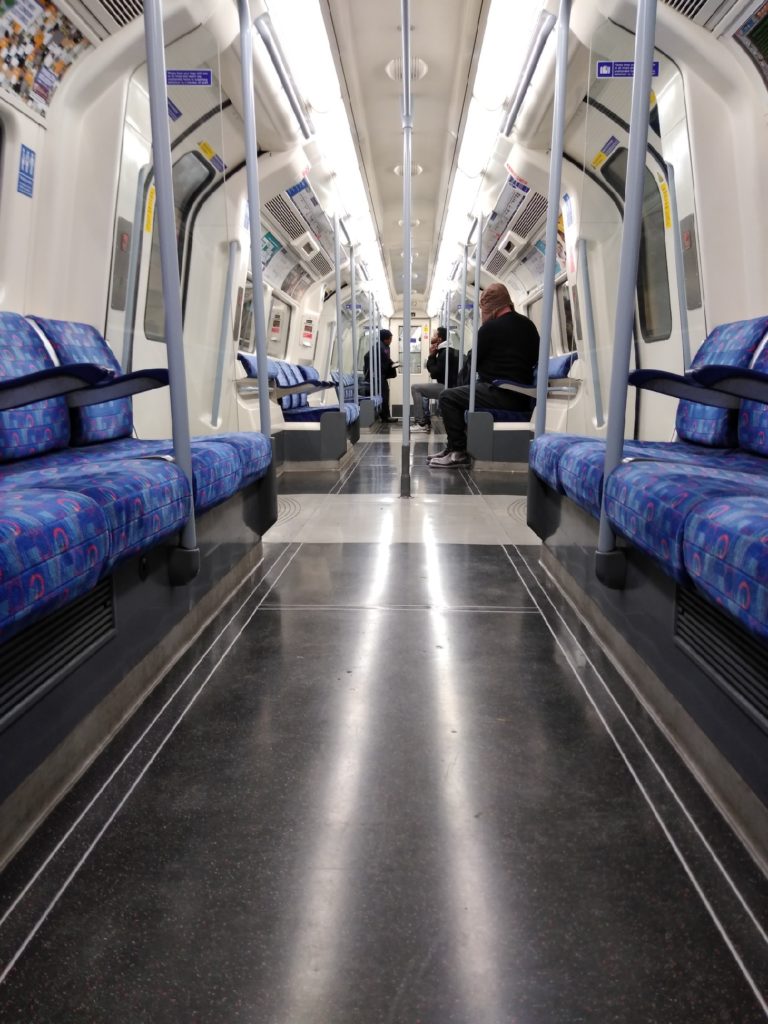
The fluorescent lights flicked off then on in the Tube as we rode the Underground subway back to South Hampstead. Every head bobbed back and forth like Chinese lanterns on a windy day. Most eyes peered down at their respective phones. Some sat with solemn looks; end-of-the-busy-workday-in-London kind of looks. Fellow tourists perused tour maps. Construction workers with yellow vests and dust-covered work boots fingered cigarettes, awaiting their stops.

A canned voice from a speaker squawked from above, “The next stop is …Green Park… station. Change here for the Victoria and Piccadilly Lines.” We came to a slowing stop and a human voice said dully, “mind the doors please. Mind the doors.”

A man stepped onto the train. He was engrossed with his phone. Long grey hair fell to his shoulders and a wide smile sat under a wiry grey moustache.

He sat down right next to me.

Throughout the remaining eight minutes of our ride, the man next to me would simply burst into a goofy giggle, unashamed of the fact that he was producing the only sound on the train. After a while, I just couldn’t take it any longer. I had to know

“What’s so funny?” I asked.

Unfazed, he turned to me and showed me his phone.

“A book,” he squeaked.

“It must be a funny book,” said I, smiling back.

In a dense accent, he said, “It really is quite funny!”

And then he turned back to his book. The automated voice announced our stop. I turned to my new friend and told him to enjoy his book.

“Ah will, mate, thanks.”

And then we stepped off the train. It’s just nice to see a happy person enjoying a funny book.


anthony forrest

Travel Journal, 17

Foreign Bathroom Series

Chapter Three, Floor Towel

The three of us gazed into the plastic closet. Roughly four feet by three feet, this was to be our bathroom for the next three nights. If it’s just my wife and I, we can typically handle anything. But this trip was different. My mother-in-law was with us. Now, that’s not a bad thing. I have a wonderful relationship with my wife’s mom. I’m so blessed to have such a woman in my life. However, I am not used to staying in the same room as her, much less using the same tiny European bathroom. She was the extra variable.

Americans, like myself, are used to a certain comfort when it comes to size of bathroom and shower. Our hotel room in Paris boasted your standard fare European facilities. The Teacup Poodle of bathrooms. The shower, sink, toilet, door, and walls were all made of hard plastic. It looked like a prefabricated room that somebody had dropped into place. We looked around and discovered that there were only two towels. But I got a third towel from the desk.

After a long day of walking and seeing the sites, it’s nice to take a hot shower. But such a tiny plastic room never dries. It simply drips and steams until you finally leave, wondering how the next tenant will handle such a miniscule bathroom. I cleaned up, shaved, and changed. Opening the door, my wife poked her head in and asked, “where did you get that towel?”

“Which one?”

“The one you’re standing on,” she continued.

“Oh, that’s just the floor towel,” I said, confidently.

“Floor towel?”

“You know,” I condescended, “the bathmat.”

She looked at me, confused, “we only have the three towels. You had to get another one from the desk, remember?”

For three days, I had been using my sweet mother-in-law’s towel as a bathmat. But she never said anything. I doubt that she had a dry towel that entire trip.

Next time, I’ll ask for an extra floor towel.


anthony forrest

The Mirror

Another rough night in the airport. I balanced my toothbrush on the counter ledge while I splashed my face with water. I know I shouldn’t complain about travel. God has blessed my wife and I with the ability and opportunity to see, learn, share, and discover unmeasured blessings during our travels. But each time I sleep on an airport floor, I get a little broken—little more bent over, like an old man having lived an old life. But fresh clothes, toothbrush, and face-splash of motion activated sink water were slowly injecting life back into my soul.

Glasses back on, I look up to survey the damage.

Not too bad.

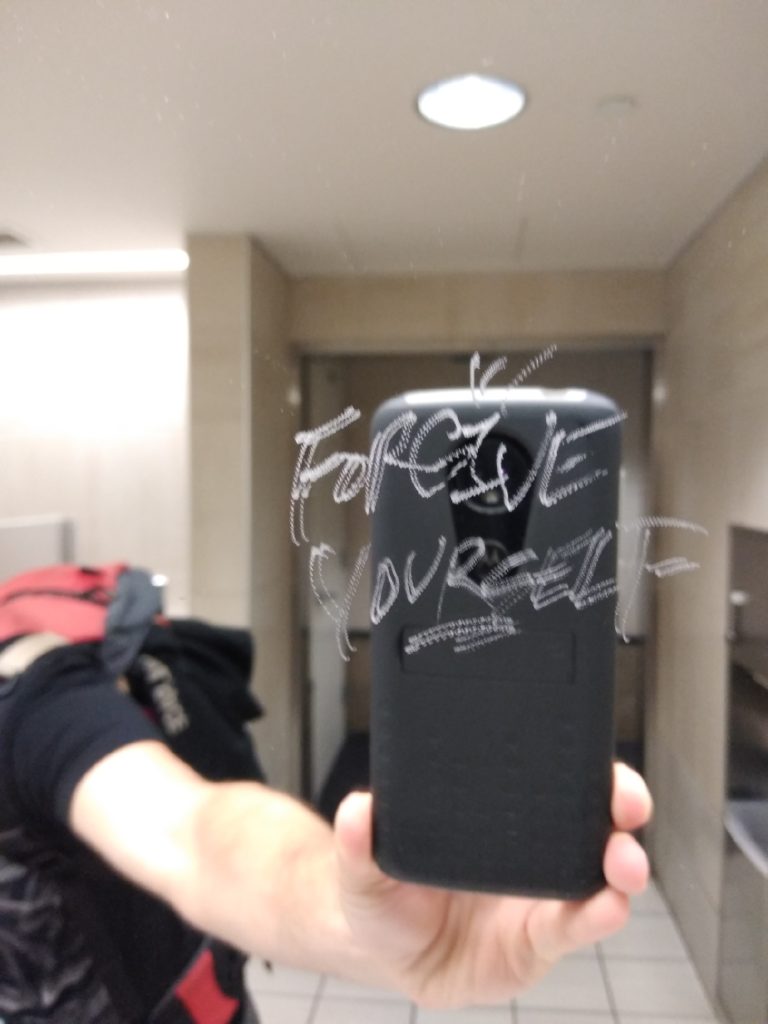
I turned to walk out of the bathroom and spotted something out of the corner of my eye. Etched into the mirror were these words,

“forgive yourself.”

I’ve seen these words before. They’re all over social media, self-help books and blogs, and on the lips of many popular Christian speakers.

Standing there, I wonder what this person has done. He has gotten himself into trouble, and now he’s looking for answers. He wants to be forgiven. But he looks to himself for answers. He seeks in vain. How can any of us expect to save ourselves from ourselves?

There is but One who has promised forgiveness. God grants it—freely. Though our sins are like scarlet, He makes us whiter than snow. He pardons with a smile. So look not into the mirror seeking answers within yourself.


Stand and peer

Into mirror

To seek to

Know your soul


Turn and look

Read like a book

The narrative

Of your heart


Tune your ears

And listen with tears

To a song

You do not know


Rest in peace

For His love will not cease

God’s knowledge of you

Is enough


anthony forrest

Travel Journal, 16

Ten Years On

My flight pulled up to the gate at SEATAC airport in Seattle. I had all of my carryon items on my lap, ready to go. But all the preparedness couldn’t bring back the time we’d lost. As I gazed out the window, the flight next to me pulled away, and began taxiing out of sight. My next connection was tight to begin with. But we sat on the tarmac in Dallas for 25 minutes and even lost time in the air. I thumbed through my book and found the tickets. The departing flight that I just saw pull away was mine.

My classes had finished up in Texas and I was now trying to get to Alaska. Christina took a work opportunity for 10 days up in beautiful Ketchikan. Southern Alaska stands out as one of the most perfect places in the US. In an area known as the Inside Passage, Ketchikan boasts temperate weather, stunning scenery, and great food. We had a plan. I would meet Christina there after my classes were over. To top it off, it was our anniversary.

But alas, there I stood, looking at an empty gate. The next flight to Ketchikan was…tomorrow.

Simply gutted, I tightened my backpack. If I was going to be stuck in Seattle for 24 hours, I was going to enjoy it. Now, I could regale you with tales of taking the train to downtown Seattle. Or tell you about amazing fish and chips at Pikes Place Market, where a super old guy was playing a beat-up piano on the sidewalk. Or maybe wax poetic about the local coffee scene.

But none of that matters because I was alone. Traveling solo might sound adventurous, and certainly can be. But soon, you find yourself looking to share the adventure. And the woman with whom I share all things was in Alaska, waiting for me.

For ten years I have had the perfect travel partner.

For ten years we’ve shared experiences.

For ten years we’ve sat next to each other on planes and busses.

For ten years we’ve eaten strange food, side by side.

For ten years we’ve been joined at the hip.

A decade of togetherness.

A decade of marriage.

Happy tenth, Christina.

It’s been a joy, near or far.

Home really is wherever we go together.


anthony forrest

Travel Journal, 15

Youth Hostel

Ah, the youth hostel.

The briefest mention of the word hostel evokes negative thoughts of all sorts. The mind might go to images from horror films about a small group of friends staying at a hostel in a foreign country, captured later, probably murdered. Mention a youth hostel to anybody and take notice of incoming looks of disdain mixed with pity.

“Do you want to die?” They balk. “Hostels are dangerous,” they continue, in full knowledge that all they know of hostels has come from the internet and B movies. But movies would have you believe that everyone’s a killer and the world is more dangerous than it really is.

The biggest risk at a youth hostel?

Feeling old.

Cheap prices and hip vibes draw university students and young travelers into the hosteling world—hence the word youth. Some hostels have huge sleeping quarters, a rambunctious night life, and a very questionable shower situation. But not this hostel. It had beds with privacy curtains, private showers, and a full breakfast.

After a long day, my wife and I cleaned up and went to the group room (a sort of lounge area). We sat reading in the dim light, sipping our hot beverages. A pack of Vietnamese tourists chatted loudly next to us. And a few Russians played Xbox. Presently, one of the hosts came in and began personally inviting people to the bar downstairs. They were conducting “Fast Friends.” We listened in as he explained to a Jamaican man that every Friday, they give out free beer and do a sort of speed dating to encourage making new friends. Maybe we’re getting old. But this just didn’t sound like our scene.

We tried to polish an excuse before he got to us.

“We’re just in the middle of a good book.”

“Oh, it’s nearly time for bed.” (8 p.m. mind you)

“Our TV program is about to come on.”

“I think it’s Lawrence Welk.”

“I just took out my dentures.”

“We’re working on a colonoscopy prep.”

“There’s a casserole in the oven.”

“How many stairs are there?”

“But it’s Friday; I wash my hair on Friday.”

But alas, the man took one look at us in our cozy pants and tea and gave a weak hand gesture and invite.

“You two good?” he asked.

“Yes,” I smiled back, “we’re good.”

He didn’t really try too hard. He turned and left, and we felt just a little older for it.

The next morning, I came back to the group room for a cup of coffee. Three guys eyed me from the corner until one of them piped up.

“Where are you from.”

“America,” I said.

“How old are you?”

But before I could answer, he jumped in, “let me guess. You’re 25.”

I just smiled. Maybe I am still young.

Maybe I’m still a youth.


anthony forrest

Travel Journal, 14

Altitude Sickness

Our tiny plane hummed and groaned and shook and rattled as we coursed through the Mexican sky, into the Sierra Madre Mountains. Below, I peer into the Copper Canyon, home of the famed “running tribe,” the Tarahumara. Our destination lay not far ahead. In fact, the people we were visiting are missionaries to the Tarahumara people. Canyon after peak after sheer-falling cliff passed by in that slow-but-really-actually-fast way that things seem to pass beneath you when you are flying. We typically fly commercially. But not here. Commercial flights don’t go where we were going. It takes 12 hours by 4×4 vehicle on laughable roads to get to this part of Mexico.

“Is that the strip?” I ask, in a semi-confused tone. The questionably short, dirt landing strip was perched on a plateau at nearly 9,000 feet above sea level. What made it slightly terrifying was that it was on a hill. An actual hill. When the plane lands, it lands up hill. When the plane takes off, it takes off down the hill. With expert skill, our pilot adjusted flaps, airspeed, and altitude and gently lighted us back to earth.

Stumbling out of the plane, we took a deep breath. This whole trip had been nonstop hustle. From Minneapolis to Salt Lake to El Paso we flew. Then we drove the five hours from the boarder to Chihuahua City. We ate late night dinners in friendly homes. Rose early to go here and see that. Greet this person and go to that meeting. Spend unexpected two hours on phone. And then jump on 4-seat Cessna 206 to fly two more hours. It was absolutely worth it. But it was also terrifically exhausting.

And yet, here we stood—taking in this view, this mountain air. This excursion to the mountains was exactly what we needed.

We went on a hike before supper. What could be better? But as we trotted along the edge of the plateau, we were getting more and more tired. Perhaps the long week was catching up with us. Our hike was getting brutal, despite the easy trail. We were sucking wind hard by the time we got back to the house.

We both felt terrible. Dizziness, slight headaches, and on top of it, we were both very pale.

Technology is great. So is medical knowledge. I have an app on my phone that will measure oxygen saturation (spO2) in the blood. And as a paramedic, I kind of already knew what was going on. And the 90% spO2 reading on my phone confirmed.

Altitude sickness.

In Minnesota, we live at 1,100 feet. And this day we had flown directly to 9,000 feet and went for a hike. Fortunately, our symptoms were not life threatening. But that night we laid there in bed, literally struggling to breath. That being said, our trip to the mountains was indeed wonderful.

One could say that it took our breath away.


anthony forrest

Travel Journal, 13

Chile Pequin

The Sierra Madre Mountains are stunning: pines, cliffs, rolling hills, and alp-like mountains as far as the eye can see. After our plane landed, we stood there amazed. Our hosts greeted us happily and showed us around their mountain home. After we got settled, we toured the local area. The mission hospital, the local church, many warm-hearted people, then we made a quick stop for some fresh blue corn tortillas.

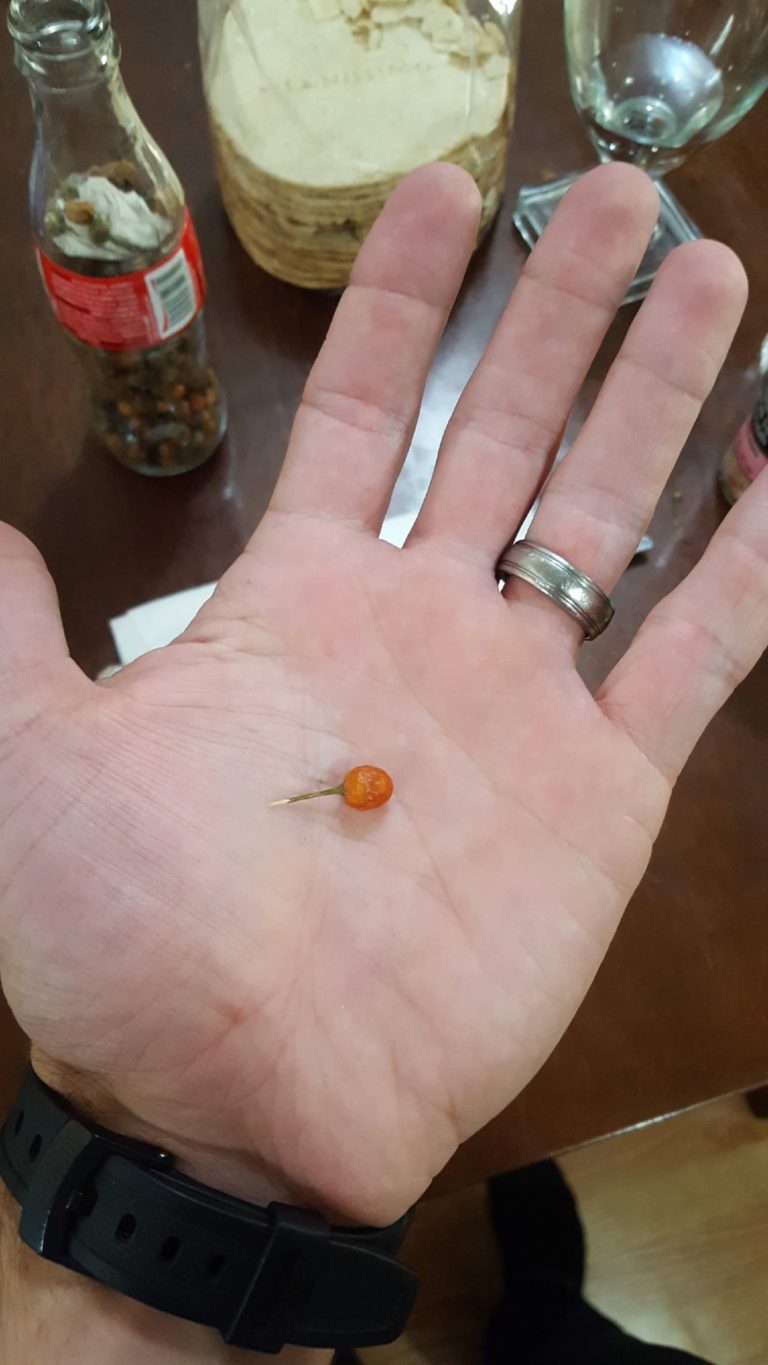
Later that afternoon, we tucked into some of the local fare (including those fabulous tortillas). Also included in the meal was a bowl full of tiny peppers.

“Would you like some Chile Pequin?” our gracious hosts ask.

Are Mexican mountain tortillas blue? Of course I want Chile Pequin.

“Sure!” I bluffed.

Actually, I had no idea what they were. But they were about the size of a pea and dry. The host handed me a little wooded pestle and I went to work on the pepper. After a few flicks of the wrist, I dumped the contents onto my beans and rice.

Wide eyes flicked back and forth. Everybody waited in silence as I took my first bite.

Lava-firebrand-acid-rain fell onto my tongue. Great sweat drops beaded up and rolled down my jaw. It took a couple of tortillas, but the Chile apocalypse subsided. Eventually, those tiny peppers became my friends. And pretty soon I was grinding more.

All was going well, until after supper I reached up and touched my right eye.

Out of nowhere, a demon guided freight train ran over my face. My eyelid slammed shut. I was soon going to have my answer on how I would look with an eye patch.

Without hesitation, our host stood up and produced a tiny plastic cup.

“Here,” she said, “pour this goat milk into you eye.” It was so rapid and I was in so much pain that I didn’t even ask her, “how did you get that milk so fast?” Or, “is this a goat-milk eyewash approved cup?” Or, “where is your goat?”

I poured the goat milk into my eye and the pain was instantly washed away.

Chile Pequin is good.

Goat milk is better.


anthony forrest


« Older posts Newer posts »

© 2026 Travel and Verse

Theme by Anders Noren — Up ↑