stories of travel, medical missions, and more

Category: Travel Journal (Page 14 of 15)

Travel Journal, 12

Forced Companionship

We’d prefer to sit together, but sometimes it just doesn’t work out. I’m sitting in the middle seat next to a professor-looking gentleman with a book of sudoku thicker than his glasses, and a dude with large headphones and a propensity toward king-size three musketeer bars. 

Just across the aisle, my wife is pressed up against the window. Next to her sits two bridesmaids going to the same wedding as most of the passengers in the rows ahead and behind her. The rambunctious girls talk my poor wife deeper into the corner and I’m sure the giggling can be heard in the cockpit.

May God have mercy on her soul.

The professor folds down his tray and begins driving away with his pen at a well-marked notebook. On my left, D’Artagnan loudly tucks a chocolatey wrapper into the seat in front of him.

Ah, the beverage cart cometh.

I quietly sip my coffee and listen in as a lady directly behind me puts in her order.

“Could I get you something to drink,” the attendant asks, sweetly.

A stern voice replies, “just a half cup of black coffee. Just a half,” she bellows, “no more!”

Does she know that she can’t handle a full cup? Does she not realize she doesn’t absolutely have to finish a full cup? I giggle at her lack of self-control; but only because I get it.

“That looks intense,” I say, nodding to the professor’s notebook. Turns out he’s an actual professor. 

A legit one. 

At Dartmouth. 

He tells me that he’s working on international healthcare privacy agreements and other things I don’t understand. We hit it off and he regales me with tales of an old church in Oxford and 100-year-old oak timbers. He blinks excitedly through the wiry grey hair that covers most of his face. Occasionally he wipes his hands on his corduroy pants. Grey collar sticks out from disheveled purple sweater. He has conquered the professor look.

Planes force companionship. And though our new relationships may expire in two hours and thirty minutes, they are still worth forging. We’re all in this together.


anthony forrest 
Travel Journal, 11

A Needle Pulling Thread

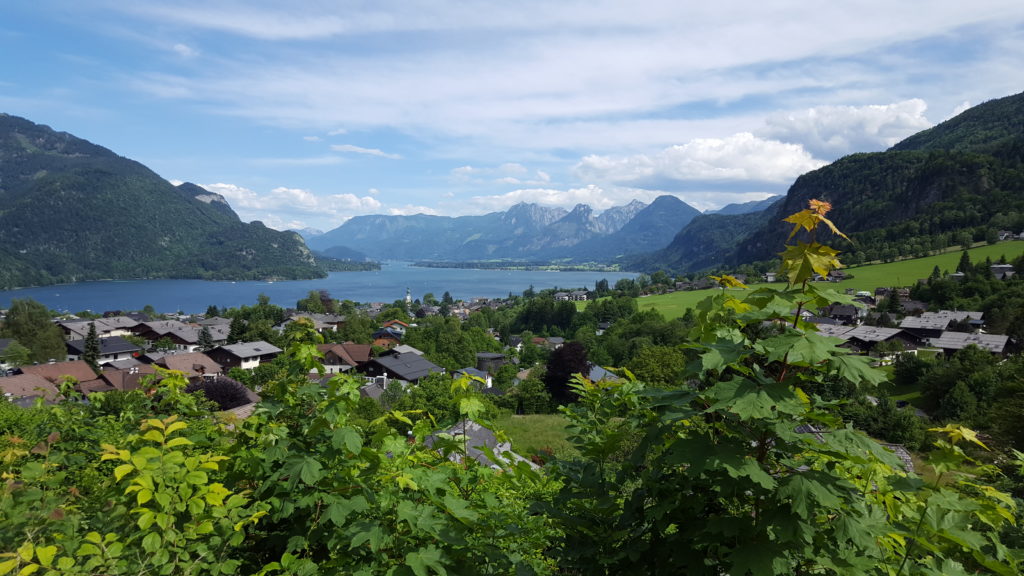
Our bus careened over the hill and down into another pristine valley. Pines passed by at a leisurely rate. And the sun shone through a break in the Austrian Alps. We typically never do this.

Tour busses and groups epitomize the type of traveler that I simply don’t want to be. I can see it now: a group of late middle-age women with fanny packs and vizors piles onto the bus. Each has a camera and one of those neck wallets that holds everything—you know, so it’s easier to steal. Catty laughs and group photos overtake the day. The sun comes out and on goes the sunblock and clip-on sunglasses.

The horror.

But this was different. The stunning mountains soar high. Crystal clear lakes lay at the bottom of valleys. Tiny towns with tempting bakeries beckon a visit. This is the Alps.

My daydream died in front of my eyes and my attention turned to the front of the bus. Music started blaring out of the speakers. Our tour guide began dancing up the aisle, sporting a microphone. She started singing.

“Let’s start at the very beginning…”

No.

“A very good place to start…”

What’s happening? It can’t be. I turned to my wife. Her entire face beamed a smile that didn’t quit. She knew what was going to happen next. The music picked up pace and our tour guide began passing the microphone from person to person.

“Do, a dear, a female dear…”

For the love of all that is holy, no.

“Ra, a drop of golden sun…”

She’s coming this way.

“Mi, a name I call myself…”

Don’t make eye contact.

“Fa, a long, long way to run…”

This was literally our first time on a tour bus. And I should have known there’d be a sing-along on a Sound of Music bus tour. And now it was far too late. This was happening. I looked up and our gleeful tour guide dropped the end of the microphone within centimeters of my lips.

I quietly gushed, “ti, a drink with jam and bread…”

She finished, “that will bring us back to do, do, do, do…”

It’s official: I’m a tourist.


anthony forrest

Travel Journal, 10

The Wall

“What this?

“You have drugs?

“Is for party?!”

We had heard this and other inquiries like it for several minutes now. All around us, heavily armed soldiers stared at us, unmoved. We had been in Jerusalem for only a couple of days and it seemed that we were already in trouble.

Please understand this: Israel is safe to visit. The news publishes the exception, not the rule. That being said, bad things happen, terrorists attack, and the middle east constantly wallows in unrest and tiresome Status Quo. While we boarded our flight to Tel Aviv, a commotion caught our attention outside the aircraft. Several police cars and fire trucks congregated between our plane and another. After a 45-minute delay, the pilot announced that we would be under way shortly. Upon arriving in Israel, our friends met us with wide eyes and concerned looks. Our flight had been the target of a bomb threat. Later that day, a terrorist in Tel Aviv stabbed and killed 9 people on a bus.

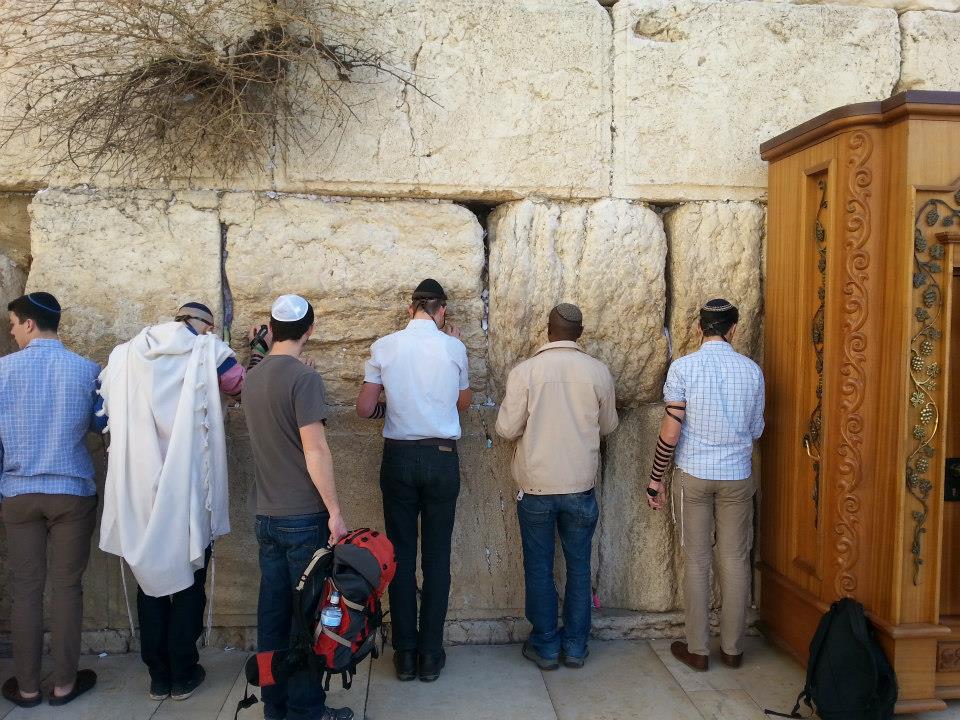
And now here I stood at the Western Wall, trying to explain to the small army of Israeli soldiers that the small clear bag of Tums in my wife’s purse was not actually illegal drugs. After they we entirely satisfied that we were not starting a drug distribution ring at one of the world’s most important religious sites, we were escorted through the gate.

Men and women are separated here. Men must have their heads covered and never turn their back on the Wall. Women must have their arms, legs, and heads covered. The name of the game is respect. With our respective head coverings, my wife went to the right side of the gate and I went to the left.

After all of the intense security and unsafe occurrences, my heart pounded even harder at the peace that stood in front of me: an ancient, 62-foot-tall, limestone wall. Small slips of paper inhabited every crevasse of the old stones. Each slip had a prayer for something—most of them for peace.

And I shouldn’t be surprised.

This is Israel.

The land of war.

The land of peace.


anthony forrest

Travel Journal, 9

Foreign Bathroom Series

Chapter Two: The Lav

A dull hum roars in the back of my skull. Has it always been there? It must have a beginning. I can no longer remember what it is like in the outside world. But the passing of time is very apparent. Ah, I remember now. The droning began when our flight lifted off in Atlanta.

I’m on a plane.

Slowly I peel my eye mask away from my travel worn face. It feels like I’m removing a rejected skin graft. As my eyes come into focus, I look around. This must be what 14th century England looked like. What disease has taken hold of these flying peasants? Twelve hours ago, we all boarded with such high hopes. Smiling faces anticipated adventure. Small families settled and tucked into in-flight entertainment. The meal service stoked the fires of happiness and several opportunities for drinks and snacks have since come and gone. But now the romance has worn off.

As I look around this refugee camp, it hits me: I have to pee.

Holding it is not an option on a 17-hour flight. So, I untangle myself from the tissue-thin plane-blanket, replace my tray table, and begin the journey up the aisle.

When I fly, one of the first things I do is take off my shoes. My feet swell while flying and I hate to wear my shoes for so long. I opened the door to the bathroom (lavatory or lav). The garbage overflowed. Toilet paper lay strewn everywhere. And the little sink was filled with a residue of some scummy liquid. An airplane lav is disgusting at the beginning of a flight. But 12 hours in? You’d better be on a prophylactic antibiotic.

I stepped in to get to business and quickly realized that I was not wearing my shoes. Immediately my feet were soaked.

Water? I will never know. But deep down, I know the truth.

And I’ve learned my lesson:

Going to the airplane bathroom in solely one’s stocking feet is fraught with consequences.

anthony forrest


Travel Journal, 8

Bird Water

We gazed back and forth—at the well, then up at the water storage tank. The only running water the farm had was a well system at the far end of a property. As water filled the well, a windmill pumped the water up and out, into a water storage tank 25-feet in the air. From there, the water gravity fed the Hacienda and the rest of the buildings.


For the past week, we had been experiencing reduced water pressure. And nobody knew why. So, there we stood, investigating. It was finally decided that the best course of action was to climb the tower and peer into the 600-gallon tank. We soon discovered that the tank was full of crystal-clear well-water. However, the two-and-a-half-inch pipe which fed the property was plugged.


Something was in there.


I might mention now that though my Spanish had improved greatly since I began living in Bolivia, there were still many words I did not understand. To make matters worse, the local dialect was awash with a rich Quechua vocabulary.


We both hung off the side of the sky-high tank trying to come up with a plan. It was decided that he would cut the pipe with a hack saw and I would hold my hand against the end of the pipe, holding back thousands of pounds of water.


Brilliant.


Surprisingly, it worked. Not because of my brute strength. But because of science reasons which to this day elude me.


As I gaped at my uncanny ability to stem this watery force of nature, I looked up and saw that my fellow tank repairer’s face turned an unpleasant shade of green. He looked up from the end of the pipe and coarsely whispered, “ch’uwaku.”


Not a Spanish word.


I scraped the bottom of my mind this new word and meaning. I asked for clarification and to my horror, found out that a bird (ch’uwaku) had died, been sucked into the tube, and evidently plugged our water source.


In silence, we finished repairing the tank. He disappeared and later returned with a jug of bleach. As he poured a ¼ cup into the tank, he looked up at me and said in a mix of Quechua and Spanish, ” bird water.”


anthony forrest 

Travel Journal, 7

The Chair

The fog lifted and the clouds drifted away, revealing a warm sun. I at the edge of a duck-infested fountain. The day had been filled with perfect clichés—cobbled streets, old cathedrals, and romantic statues. A perfect Paris day.

Hearing the bells at Notre Dame had meant more to me than I’d thought it would. There was something haunting about the ever-looming tower, protected by the watchful eyes of Gargoyles. The bells sang out and rang the hour—warm and mysterious.

I now relaxed at a fountain near the Louvre, eating a croissant and feeding the little birds directly from my hand.

A screaming 20-something cut though the ambiance. She walked aggressively up to her presumed boyfriend and began shouting in French. They argued loudly for a while.

My birds flew away.

The guy on the receiving end of this balling suddenly exploded. He picked up a metal chair and hurled it into the water.

My birds flew further away.

She was apparently part of a group. Her comrades beckoned her to give up the violent debate and move on. Before they left, a couple of guys did try to retrieve the chair. A kind gesture in a dark moment. But they eventually gave up.

No matter where you are or what beauty surrounds you, there will always be somebody screaming and throwing chairs into fountains. It’s human nature to ruin the good things, ruin peace.

But the angry girl and her angrier boyfriend eventually left. Heads and conversations returned to their previous state.

And even my birds came back.


anthony forrest

Travel Journal, 6

New Friend Dave

The mobile passport app saves frustration and loads of time. Prior to landing back in the US, the user simply takes a selfie, adds passport information, and answers a few simple questions. When walking into passport control, the traveler bypasses all lines and shows a Homeland Security agent their phone. It’s a breeze and very efficient.

But no time saving app or brilliant travel secret was going to help us make our flight. We landed, collected our bags, breezed through passport control and customs, and promptly missed our flight.

It wasn’t even close.

Although we live close, getting a shuttle home wasn’t going to happen until the next day. Cars were outrageous for a one-way rental. Taxis were even crazier. Time crept on and we continued to trouble-shoot. It was looking like we’d be spending another restless night in an airport. Though I am no stranger to the comforts of a scum-encrusted patch of carpet near a closed Wok-n-Roll, I would have much rather slept in a bed.

There we sat—right outside of customs in the baggage claim. What could we do?

I prayed.

“Lord, give us just a little glimmer of hope. I hate to wish that somebody else missed this exact flight, but if they did, send them my way. Maybe we could split a car rental. Amen”

Opening my eyes, I saw an older guy walked our direction, talking on his cellphone.

“Yeah,” he bellowed into the phone, “I missed flight! I’m thinking about renting a car.”

I collected my mouth off the floor and introduced myself. We were heading north. And so was our new friend Dave.

Thoughts crept into mind. What if he’s a serial killer? It was unlikely, but if he was, we never “found out.” With car rented, Dave kept us company, regaled us with stories from his childhood, and drove the whole way.

We won’t soon forget Dave.

We also won’t forget how God answered prayer. That was perhaps the quickest and most specific answer to prayer I’ve ever witnessed. Though it was a simple request, God showed Himself once more that He is a God who hears. Earlier that day I read in Psalm 6 that, “The Lord has heard my plea; the Lord accepts my prayer.”

I’m thankful for Dave. And I’m thankful for a God who hears.


anthony forrest 

Travel Journal, 5

Foreign Bathroom Series

Chapter One: Bidet

Names have been changed to protect the innocent (also embarrassed).

I peered deeply into the strange toilet. Along the side of the foreign commode several buttons and settings looked back at me, questioning my every move. To make matters worse, I couldn’t even read it.

No English.

What to choose? Back home I have one setting—flush. But here? So many options. It was a good thing that this was just practice. Call it a “dry run.” The panel had ten options. The first one looked promisingly like water. I pressed the button and listened for the sound of a successful flush. To my horror, a robotic arm extended from the back of the bowel and paused ever-so-briefly.

“Bidet,” I yelled (out loud mind you). And, faster than I could close the lid, the little arm began spraying water.

Upon closer inspection and further use, the electronic bidet in our hotel bathroom also had a seat warmer, temperature setting for the water, and a speaker that played the comforting and bladder stimulating sounds of a flowing stream.

Some friends we were traveling with met up with us later that day. I asked James what he thought of the toilet in his room. With a crooked smile and a breathy giggle, James said that he though the bidet was, “very accurate.”

anthony forrest

Travel Journal, 4

Throw Coins

(story below)

Men throw coins seeking grace finding none.


With clapped hands they bow, but not to the Son.


In Danse Macabre their culture sways till finally in death’s arms they lay.


Have they hope in this dire state?

Where will they find grace?


Beyond a doubt, one of my favorite places to visit is Japan. Smiling faces, terrific food, ancient structures, mystical remnants of forgotten wars, and friendly people make up a culture that warms my heart each time I go. 

Most of the people in Japan observe Shinto, a religion made up of mysticism, spirit worship, and ancestral longing. On the outside, Shinto is beautiful. I travel to Shinto shrines every day I am in Japan. Towering pagodas and looming archways beckon followers to bow, clap, buy luck, and recite prayers.

Albeit beautiful, every time I visit a shrine, I walk away with a sense of emptiness. All the ritual practices and rigid rules leave the worshiper fallen short of perfection. In a sense, Shinto is puzzle missing pieces. It is up to man to maintain a connection to their ancestral past. It is up to man to live up to expectation of Shinto. It is all up to man. Hopeless, graceless, and endless. If man is the end all be all, count me out.

The God of the Bible gives hope, grace. Second chances and forgiveness abound. It doesn’t come from me. And that’s a good thing.


anthony forrest

Travel Journal, 3

Too Many Señoritas

My dad and I gathered our unorganized gear and stumbled out of the Jeep. Both of us had dealt with juggling schedules and flights just to make it this far. He flew in on the red-eye connecting through Guadalajara. And though my flight was direct from Minneapolis to Cancun, my brutal night shift had left me depleted and groggy.

Cozumel, Mexico is beautiful. Sure, the island is nice. But I’m talking about what’s beneath the surface of its perfect waters. We were now headed to Palencar Reef off the southwestern coast of the island. The scuba diving in Cozumel is some of the best in the world. Still waters, abundant sea-life, and a massive coral reef create a diver’s paradise.

Sea-Selfie

Our boat (The Chingilada. No idea what that means, don’t ask) showed up and our captain and dive master began loading tanks and gear. The sun shone bright, the water was warm, and the boat crew had fresh-cut pineapple. Even though we were tired, this was going to be a perfect day.

Right before our boat left the marina, a taxi pulled right up to the pier. Two very beleaguered middle-aged Americans piled out of the vehicle.

“Sorry we’re late,” growled one of the men, orange-haired and sunburned. “Crazy night.”

They hurled their gear into the boat and fell exhausted onto the bench across from me and my dad. As terrible as we felt from our long days of travel, we were a picture of health compared to these guys. I leaned forward and said over the sound of the boat engine, “you oaky?”

A pause.

The other guy took off his sunglasses and groaned with bloodshot eyes, “Too many señoritas.” They were obviously having a completely different Mexico experience than we were.

anthony forrest

« Older posts Newer posts »

© 2026 Travel and Verse

Theme by Anders Noren — Up ↑