stories of travel, medical missions, and more

Category: Travel Journal (Page 12 of 15)

Travel Journal, 34

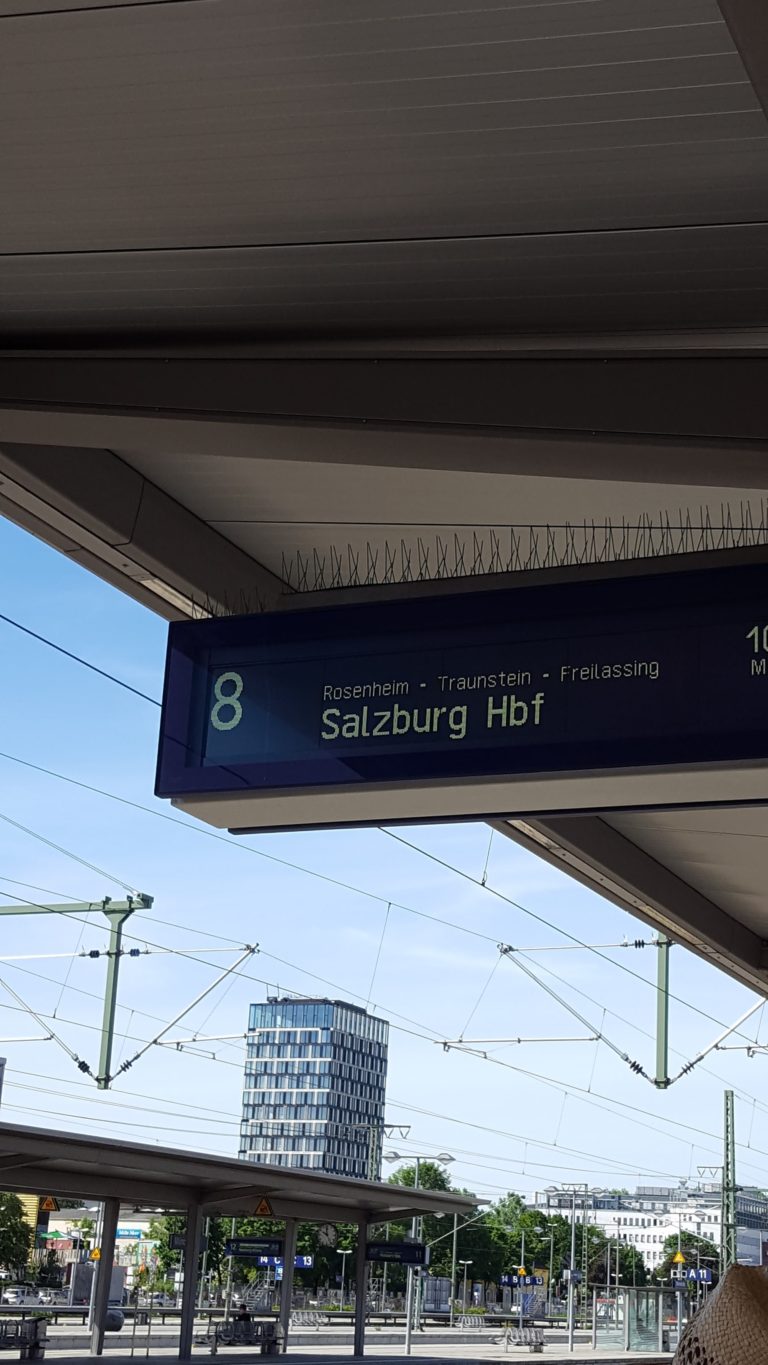
Train to Munich Airport

Can You Picture It?

A member of Minnesota royalty sang a very popular song in the 80s. The first line asks you to imagine a scenario. So, I’ll ask your permission to imagine something with me. If you, the reader, weren’t reading this, I would ask you to close your eyes. But in the meantime:

 “Dig, if you will, a picture…”

People begin to filter into the gate area. It’s an hour before the flight, and passengers are getting comfortable. A voice from overhead squawks instruction that I won’t be following since I don’t understand German at all. I settle in and begin with my routine people-watching. Throughout the world, and in every airport, it’s all the same. Travelers are pretty hard up to find anything uncommon in any airport, whether your flying out of Germany or Jakarta.

Small families wrangle upset children and fend them off with juice and stern looks. Couples snuggle and glance at boarding passes. Business men wander around talking to themselves or other (invisible) business men. The flight crew walks down the hall and up to the gate area. The pilot laughs with attendants and drops his leather jacket. And nearby, an abandoned passenger sleeps on the floor awaiting an unknown departure time.

Suddenly, an extraordinarily frail and presumably old woman shuffles into sight. She carries one small bag. She is a nun in a light blue habit. I’ve never seen such a quaint sight. And I’ve never seen a German nun in an airport. I turn away for a moment, but then am nudged by my wife.

“Look at that,” she whispers.

I look and see the nun reaching into her bag.

Can you picture it? An old German nun in an airport? What does she retrieve from her bag?

The Bible.

A rosary.

Her knitting.

A book.

Or, perhaps a handkerchief.

The uncommon is just that, uncommon. And rarely does anything actually surprise me about commercial airline travel. But it definitely made us chuckle when the old, frail nun reached into her bag and retrieved a bottle of beer. She cracked it and shakily lifted it to her lips.

I don’t think there could have been anything more uncommon for us to see that day than a frail, old nun enjoying a bottle of beer before a flight.

anthony forrest

Travel Journal, 33

Foreign Bathroom Series, Chapter 5: Dutch Hostel

Names have been modified to protect the innocent (also, embarrassed).


The restroom situation at a hostel is always a gamble. One friend of mine told me of a trip to Singapore involving a hostel with a mixed gender toilet and shower room. He was mortified. Then again, other countries and places offer great privacy and comfort. Think of it as toilet roulette.

I was traveling with a dear friend. Let’s call him JJ. We met up at Schiphol airport in Amsterdam to do a rapid-fire, two-day, whirlwind, nonstop, café to café, coffee tour of the area. In under 18 hours, we drank cappuccino after cappuccino in western Europe, covering 45 miles of the Netherlands. Our coffee excursion included the best cafes in the Netherlands, culminating in our seventh coffee bar in the hip college town of Utrecht. We drank and talked for hours, bouncing from hip spot to cobblestone street and onto the next slinger of the black juice of life. Until finally, our hearts could no longer handle anymore caffeine and our bladders howled with the strain of frequent emptying.

We had decided on a hostel for the night. And after some clumsy navigational errors, we stepped into a tight townhome with a classic youth hostel vibe. Guitars hung on the walls, collegiate hipsters lounged with oversized headphones, and the whole placed smelled of marijuana. We arranged to stay the night in one of the many bunk beds on the top floor. We climbed and climbed. With six (!) sets of spiral stairs now underneath us, I poked around and found our room. It was a sprawling empty area with no less than twenty bunks. Each bunk was the classic metal-frame bed with thin plastic mattresses, half of them permanently stained. It would have to do—although JJ was on the fence. With no bag lockers, we would have to take our bags with us to dinner—unless we wanted to graciously donate our belongings to a patchouli-smelling backpacker.

On our way out, we saw the bathroom. It was a single door labeled toilets and showers. Setting his bag on the floor, JJ said, “I’m just going to use the restroom quick.”

He pushed the door open.

“Oh,” he balked with a start, “I’m sorry!”

“It’s okay! No worries,” said a clearly female voice from within the bathroom.

JJ closed the door, turned his beet-red face to me and said, “there’s a girl in there. And she’s not dressed.”

Group restroom. Group toilets. Group shower. Zero privacy. This is not uncommon in Europe.

That was the proverbial straw on the proverbial camel’s back. We collected a refund on our night and took the train back to Amsterdam. Hotels have nicer bathrooms anyway.

anthony forrest

Travel Journal, 32

Borders

My first memory crossing an international border eludes me. As I understand the tale, my mother and father carried my baby self aboard a plane and into Canada. They tell me that during the plane ride I became, shall we say, violently explosive. I apparently went through most of my clothing during that one trip. Since then, I have crossed international borders dozens of times. The experience continues to be adventurous. However, I am proud to say that I have not had a similar gastrointestinal event—not yet anyway.

Crossing an international border is almost a religious rite. Whenever I step onto foreign soil, I stop for a moment and mentally mark the event.

I am here.

I am no longer where I was.

Right now, my life is different.

For the traveling visitor, differences in culture, time, food, and simple daily life clearly reveal themselves. In some lands, stores don’t open until almost noon. Some places don’t eat dinner until 10:00 p.m. Some people talk constantly, others never so. One group prays five times a day like clockwork. Another group goes to mass every morning. Some gestures are rude. Other gestures seem rude to us, but not to the people around us.

My wife and I walked into the small, sunlit cement room. Two border guards accompanied us to the desk of their superior. We were crossing from Myanmar into Thailand. (Some minor issue occurred during the crossing, but was easily resolve with our visit to the border guard. But this story is not about the problems, it’s about cultural differences.) Our guard escort handed his boss our passports and he began perusing them. He sat at a low desk with a low chair. He suddenly looked up and made a muffled comment. I leaned in to try and understand him. I eventually squatted down on my haunches, to his level. Immediately, everybody in the room rushed to me and earnestly implored me to stand up. Everybody was saying no, no, no and shaking their heads. One of the guards hurriedly presented us with chairs. We eventually cleared up the issue and were on our way.

I found out later that squatting down in that manner was offensive and eluded to a certain, shall we say, toileting motion. I’ve squatted down so often that it’s mindless and second nature.

Around a campfire.

Looking at books on the lowest shelf.

Talking to a toddler.

Every difference is clear. But the cultural differences that I rarely ever pick up on are my own. It is easy to think that everyone else is different. But thinking that I may be the different one catches me off guard. But we all have differences. Simply recognizing those differences and respecting the culture is the first step to softening those borders. For in finding our differences, we better know our similarities.  


anthony forrest

Travel Journal, 30

Earbuds Out, Smiles On

Entertainment screens on the back of airplane seats are not a recent advent. My first experience with in-flight TVs were drop-down screens playing one, perhaps two films during the flight. This luxury came only to those willing to fork out absurd amounts of money for the accompanying headset. Now, most major airlines in the US have loads of in-flight entertainment. One major airline boasts over 3000 titles from which to choose.

And yet, on every flight longer than three hours, I can look over at my wife’s screen and see that she is watching the same movie she always watches on long flights, The Sound of Music. And I’m not much better. On flights longer than 6 hours, I gravitate toward Dances with Wolves. With new movies released monthly and tons of other options, you’d think we would branch out. But alas, no.

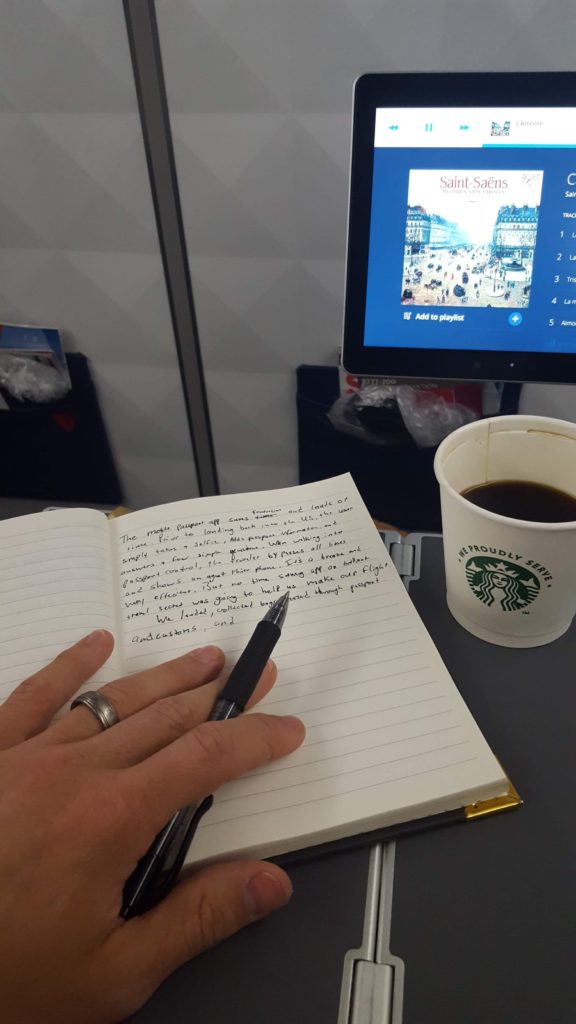
I so easily become engrossed with my movie that it can be easy to forget the goings on and the everyday business of the flight operations: passengers filtering in, pre-flight announcements, those safety messages that keep getting trendier, and finally, the beverage and snack service. I’m usually deep into my movie by then and forget to press pause on the screen. I fumble with my headphones and struggle to get the tray table down. I look at the attendant and they look back. I ask for what I always ask for: black coffee. I repeat myself because nobody can hear anything. Then, with coffee in hand, I get back to Lieutenant John Dunbar and his heartwarming efforts to understand the Lakota culture.

But some people aren’t so fortunate and forget to stay awake for the service. Or maybe they’re not paying attention at all. I was three rows back from a gentleman who did just that. I watched with interest as the attendant tried to get his attention and take his order. He could not be pried from the screen. She moved onto the next row. And as soon as she reached it, the guy awoke from his stupor and flung his arm back to try and catch her. Consequently, he grazed her with a backhand. She turned and agitatedly took his order. I could hear the attendant complain loudly to her coworker.

“Why don’t they just pay attention? They know that we are coming!”

On and on she went. When the attendant got to me, I tried as hard as I could to smile and cheer her up. I asked how her day went and she told me in no uncertain terms that the guy three rows up had hit her. She was clearly not having a good day before that, but this was the nail in the coffin—and we still had 11 hours.

If there is one thing to remember about a flight, it’s that the attendants work hard and it does not feel good to be ignored. You never know what kind of day somebody is having.

I’ve made it a point since that incident to be ready for my attendants, earbuds out and smiles on.

anthony forrest

Travel Journal, 28

The Holocaust, Pearl Harbor, and Meaningful Travel

I have said this before, many times. And I will, no doubt, say it again.

Traveling is different than vacationing.

Sometimes, after walking in work or church or upon meeting a friend for coffee, I will hear a question that I get a lot.

“Were you on vacation?”

It’s a good question. Friends and acquaintances see pictures of my wife and I on social media. Perhaps we’re standing near an old statue in another country, or eating barbeque in the deep south. We have smiles on our faces. We are indeed enjoying ourselves. But to say that we are always vacationing would not be accurate. But it’s unfair to drop into a philosophical discussion on the subtle (and not-so-subtle) differences between travel and vacation when having a five-minute chat. It’s more important than that.

While vacation may appear the same as travel, it is vastly different. But I’m not going to begin bashing vacation. Sometimes you just need to sit on the beach and take in the ocean breeze. Taking a break from the stresses of career and life in general helps to reset the mind and greatly benefits emotional and mental health.

Please, by all means, take a vacation.

But how does one travel? Most of the time, travel wears on you. Travel tends to be a lot of work. It involves less rest and relaxation. And when you get back, all you feel like doing is sleeping. But if it’s so much work, why travel at all? Because travel is growth. It informs your soul and changes your perspective on life and the lives of other people.

Mark Twain published Innocents Abroad in 1869, but I think his words cut deeply into today.

“Travel is fatal to prejudice, bigotry and narrow-mindedness, and many of our people need it sorely on these accounts. Broad, wholesome, charitable views of men and things cannot be acquired by vegetating in one little corner of the earth all one’s lifetime.”

June, 2017

We stepped off the train into the heat of the German summer. We had not planned on this. However, our flight out of Munich back to the US wasn’t scheduled to leave for 8 hours more. One of the biggest travel tips I give others is to not miss opportunities, especially when you have extra time. We had extra time. And not too far from Munich lies the small city of Dachau. If that name sounds familiar, it’s probably because you heard it in a history class. Atrocities happened here. It was the first of many concentration camps during WWII. Thousands of people suffered and died at the hands of an evil regime. Jews, Catholics, political prisoners, homosexuals, gypsies, and anybody else that didn’t fit rightly into the Third Reich’s false picture of utopia, were imprisoned here.

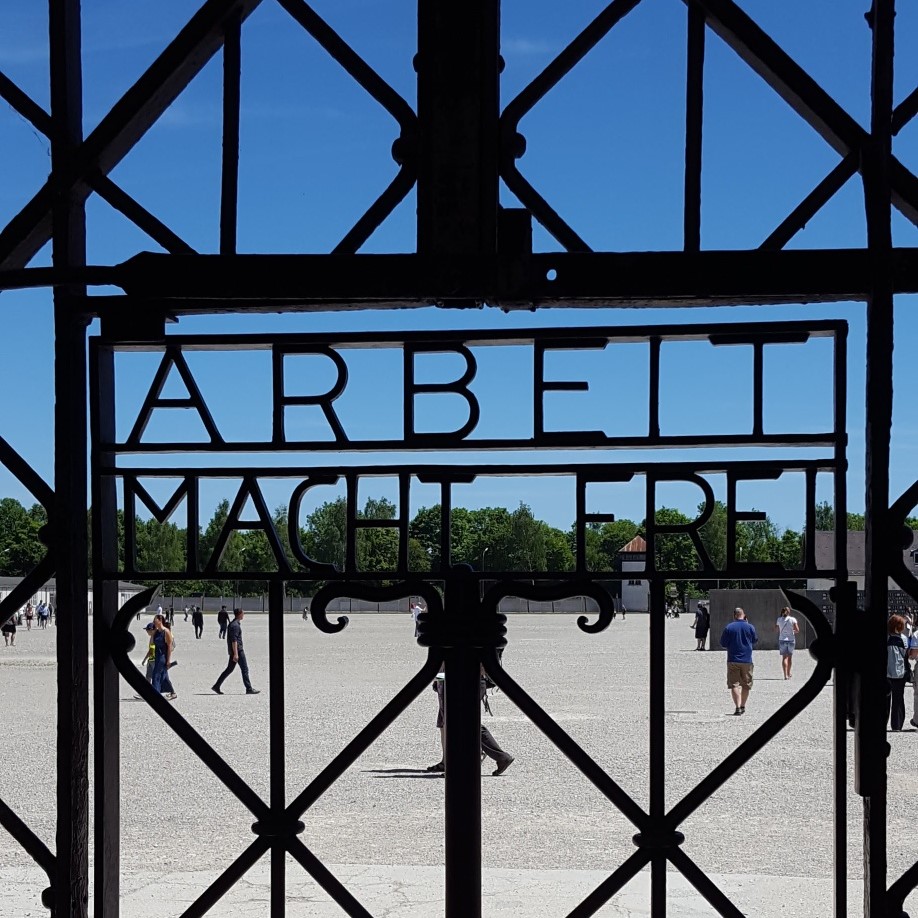
We carried our bags on our shoulders because we couldn’t find a luggage locker at the nearby train station. We payed our fee and entered the massive complex. Overhead a cast iron, barred sign read “Arbeit macht frei.” Work will set you free.

It never did.

Acre after acre of sprawling complex-turned-memorial displayed pictures, signs, statues, and artifacts of the evil capabilities of mankind.

This room was used for solitary confinement.

The poles over there are where the Nazis used to hang rulebreakers.

See that door? That leads to where the “doctors” performed medical experiments.

How fitting that we were stuck with hauling around our luggage for three hours. But the weight we felt that day couldn’t have been made worse by a couple of bags. We sweat and staggered around until we couldn’t take it anymore. We could have spent two days studying and viewing the Dachau Concentration Camp. But there was no way. We can only take so much death and dying in one day.

Come, follow me to Hawaii.

May, 2018

Our mothers joined us for a fantastic and relaxing adventure to Oahu. We drove the island, ate tons of great food, relaxed, and spent time by the ocean. Most of it was vacation. But it had one blemish, leaving a bitter (but important) taste.

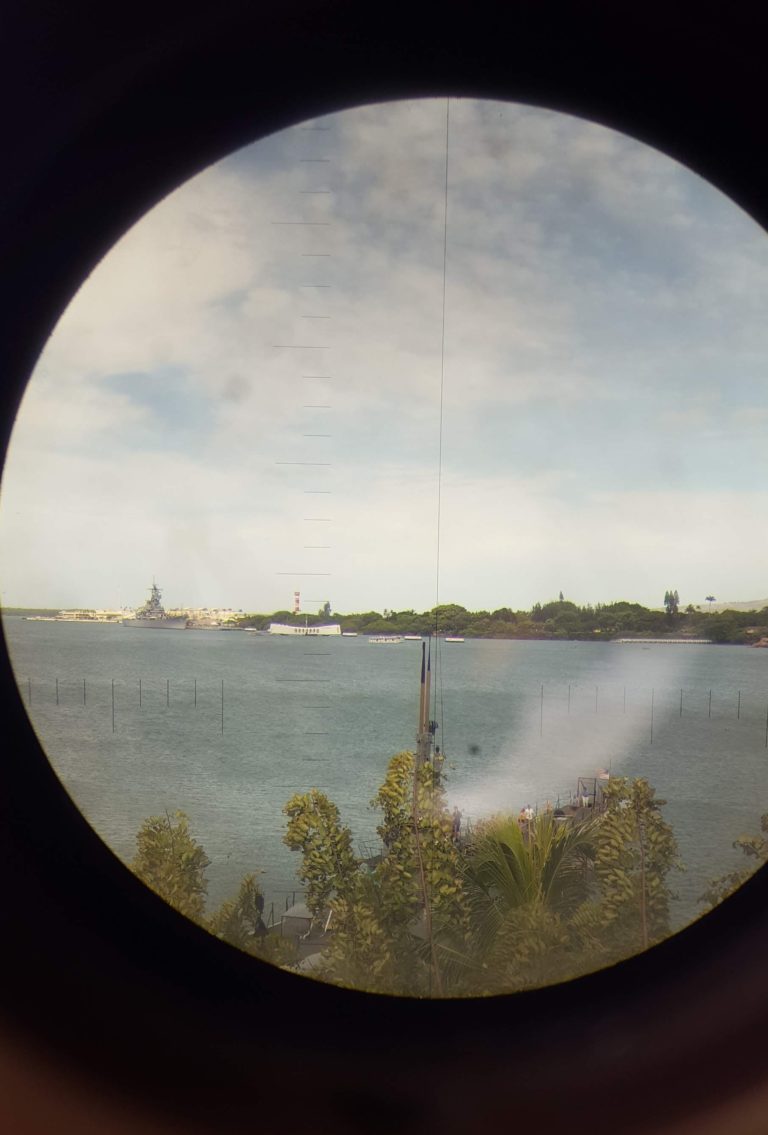
We stood near the bay at Pearl Harbor. Thousands died here during a surprise attack from an exotic country with which we weren’t even at war. The Imperial Japanese military carried out one of the most iconic and deadly attacks of the 20th century. Their goal was to destroy US aircraft carriers, delaying or preventing any US involvement in a brewing Indo-Chinese and Pacific conflict. Though no carriers were destroyed, thousands of people lost their lives. The US entered into war with Japan the next day. Americans died. Japanese died. And though we tend to think about “who won” WWII, nobody really won. Everybody lost.

Our boat cruised the watery graveyard. We saw pieces of ships rising above the sea, as the guide spoke of bombs falling and fires starting. I imagine battleships, full of fuel oil, leaking into the ocean. An oil slick on the surface, six inches deep in some places, ignites into a black-smoke fire. Bombs drop onto ships. Seamen leap to avoid death, only to find it faster in the hellish, burning ocean.

The visit to Pearl Harbor was amazing, but not because it was fun. It was amazing in the truest sense. Loss of life should always amaze. The incident was not that long ago. And it was perpetuated by fellow humans. Pearl Harbor changes you; teaches you.

Not every traveling experience will brand sadness into your soul. But sometimes it will. Neither Dachau nor Pearl Harbor are good places to vacation. But they are excellent places to travel. Taking the time to travel is soul-instructing and character-changing.

Travel if you dare to better yourself. Gather your bags and make a personal journey. Grow yourself and become more human. Release the prejudice in your grasp. But take caution, traveling is not for the faint of heart.

For travel can be fatal to preconceptions.

And it is much different than going on vacation.

anthony forrest

Travel Journal, 27

Limestone Mourning

Wednesday, February 20, 2019

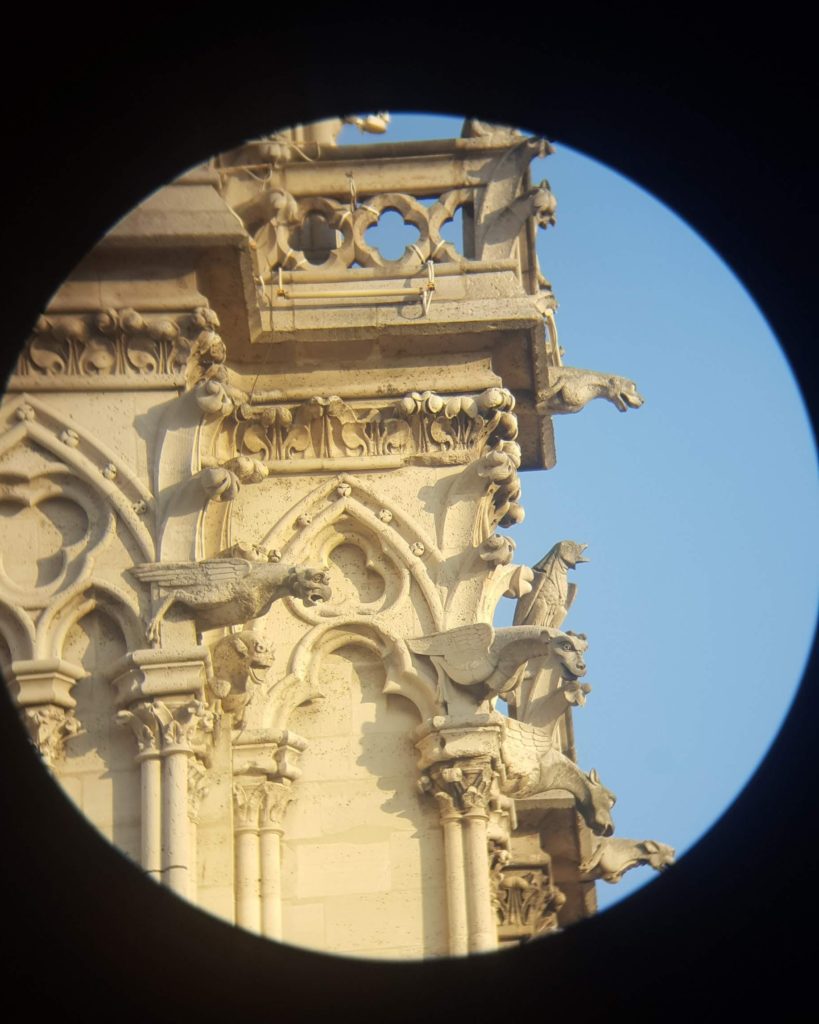
We stood on a cobblestone walkway in front of the ancient building. The Spring had yet to grow warm, so we huddled together and braced ourselves with coffee and miles of walking. But we were now stopped at one of the most iconic places in all of Europe—the Cathedral of Notre Dame. The sister-towers loomed over Paris like silent secret-keepers. The gothic construction gives a feeling of mystery. It makes you feel like you don’t know everything. Gargoyles and other creatures of fictitious wariness stand eternal guard, hanging off the limestone façade. If it wasn’t a church, and there were no sounds, and every person around me were suddenly gone, the cathedral would frighten me.

Over 800 years old, Notre Dame has stood like this, guarding Paris. It has not stood unwaveringly. The structure went through a reckless youth and horrific mid-life crisis. Originally a place of worship, the cathedral has been used for everything from a storehouse to a revolutionary headquarters. It’s fallen, broken, burned, and collapsed in the earlier days. From rebuilding to revolution to restoration and renovation, Notre Dame is now an icon of traditional Catholicism, artistic freedom, Gothic beauty, and outright French Nationalism.

Notre Dame is France.

Monday, April 15, 2019

One month later, we sat in our living room watching Sky News out of the UK. They were playing continuous coverage of the burning of Notre Dame. During a renovation, the building caught fire and ignited the buttresses and vaults and frames and trusses. Miles of hundreds year old oak burned like a tinder box. France stood in horror.

Soon the social media stories circled. Ideas and opinions surfaced.

Should the world care so much about some building?

There are people starving and we’re going to spend how much on rebuilding?

Is this a picture of the declination of French nationalism?

Perhaps the destruction of Notre Dame is symbolic of a crumbling religious foundation in Europe?

I can’t say the truth of the matter. But I do know that the world is a little emptier without Notre Dame. Our world is often polarized, ugly, uncertain, and fear-filled. Places like Notre Dame stand as a reminder of days past. It teaches us the history of mankind. Helps us not to make the same mistakes. It fights for peace. It keeps the mystery alive. It reminds us that there are things we just don’t and may never know.

But most of all, it reminds us of beauty.

Notre Dame is France.

Notre Dame is us.


anthony forrest

Travel Journal, 26

Connection

My eyes opened. Turning over in the bed, I picked up my cell phone and checked the time. The bright screen showed 3:00 a.m. I was not surprised.

“Sweetheart,” I whispered, “are you awake?”

“Yep,” came the very awake-sounding voice of sleep-deprived wife.

Ah, jet lag, you enemy of travel. You unwanted companion of every trip. We turned on the light and rolled out of bed. This was our first night in Salzburg, Austria. The next few nights would go easier, but the jet lag would have its grip on us until the end of our trip. After we ate a snack, I looked at the top bar on the screen of my cell phone. It was connected to the free internet provided by the tiny inn.

Over the past decade, internet connection and connective communication has changed more than anything else in travel. Wireless internet is now readily available in almost every café, hotel, gift shop, and even city. Most of the time we travel we simply wait to use our phone until we connect to one of those free sources. And when we want constant connection, we always have the option to rent a wireless internet device.

In Tokyo, for example, one simply has to walk through the airport to see booths renting hotspots for a reasonable price. For 20 bucks, I can throw a little device into my backpack. Everybody traveling with me can then connect to the internet. It’s brilliant. The more technical connective option is to use a different SIM card. But that’s a deeper level of geek than I’m willing to get into right now.

Twenty years ago, many places across the world had spotty (if any) land-line telephone service. Running lines and poles and making physical space for the telephone is more involved than you may think—and unreliable. At some point in the past couple of decades, technology jumped from not being able to have a land-line telephone, directly to crystal clear cell phone service. It’s mind-blowing.

“Should we call my parents?” I said.

“What time is it there?”

“Oh, about 6 p.m. yesterday.”

I tapped the free app on my phone and it began to ring. Soon, the smiling faces of my mom and dad in California popped onto the screen.

Worldwide connection has not made travel less interesting or less valuable. It has made travel more accessible, doable. Connectivity allows the traveler to share experiences and keep in touch with loved ones.

Easy worldwide connectivity is one of the most positive aspects of modern travel.  


anthony forrest

Travel Journal, 25

Prologue to a Night Dive

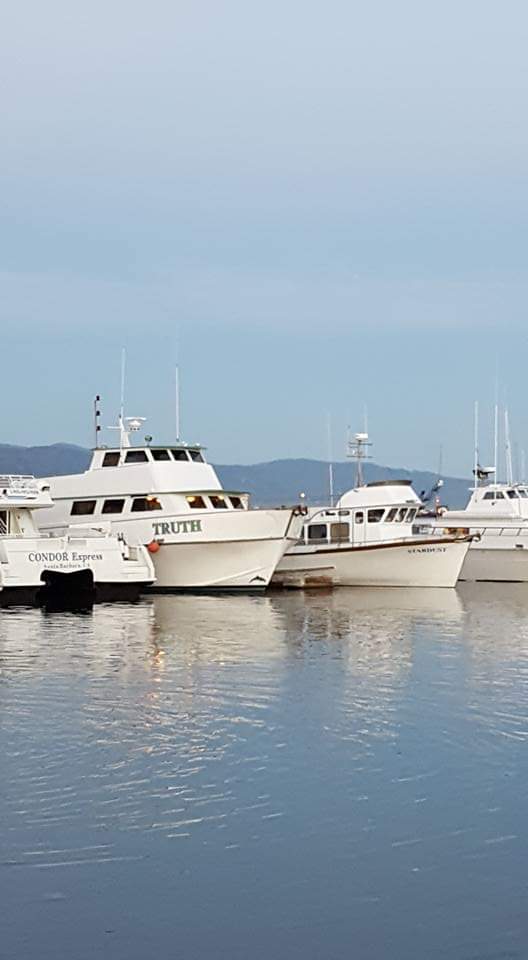
Before I opened my eyes to see my surroundings, I could hear and feel and smell my whereabouts. My sleeping bag was wrapped tight around my neck and shoulders. The three-inch pad on which I slept the night before provided shocking amounts of comfort. And the gentle rocking back and forth had lulled me to sleep. When we boarded the Truth, my dad said that we needed to pick out bunks close to the front of the boat. Not only would the boat’s listing and swaying feel gentler, but the nearby engine compartment would give off a drone that would muffle all other sound.

And he was not wrong.

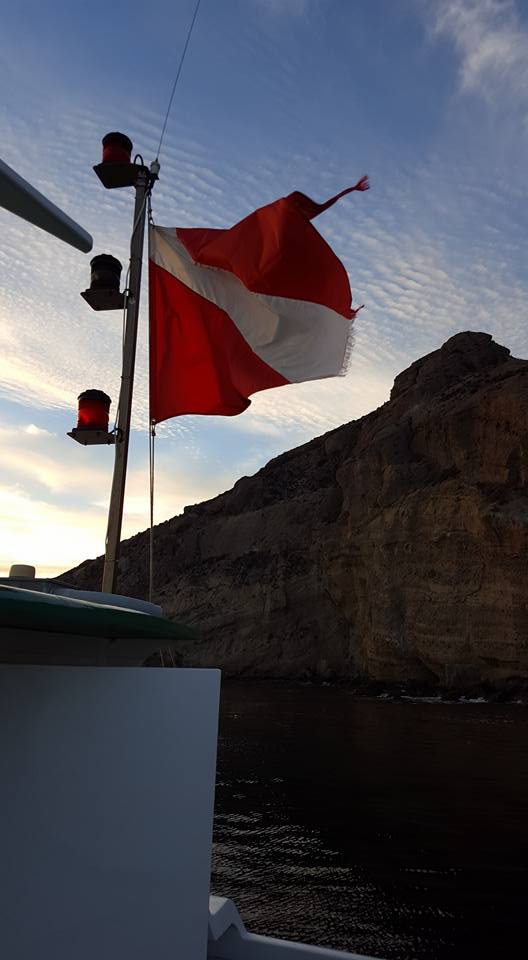
From above, smells of coffee and bacon floated down the hatch. I opened my eyes and saw the California sunshine peeking into the boat. The 80-foot Truth listed gently and the diesel engines continued to hum. We boarded last night and shortly thereafter, made our way to the Channel Islands where we would be diving the cold kelp forests of the California coastal islands.

I swung my legs off the upper bunk, trying not to kick my dad in the face. Each step on the wooden ladder creaked under my dirty bare feet. Topside, I was met with smiling faces of neo-hippy dive masters and deck hands. They live for this.

“Coffee?” asked a 20-something with blonde dreadlocks.

“My people,” I thought.

I wrote my name with a dry erase marker onto an aluminum mug. Taking a sip, I looked out at a nearby island. The sun was up and warm, but not hot. Smalls ocean swells promised lovely diving. And misting saltwater somehow made the black coffee taste even better. We would be diving for two days, all day. The crew of the Truth knew how to give their divers a good time.

Coffee anytime.

Tons of food.

Comfy bunks.

Hot showers.

Gear setup.

And bottomless tanks of all the air you could breathe.

This was going to be incredible. My dad had roused and breakfast was getting under way. This was the life. We love to dive together. We know how each other thinks and we are very comfortable as dive partners. We love the adventure.

In fact, I would be going on my first night-dive tonight. And with the two of us indestructible dudes diving together, what could go wrong?

anthony forrest

Travel Journal, 24

Night Dive, chapter 2

Underwater navigation is fairly straightforward. At least, it’s usually straightforward. Our goal for this night-dive was to descend along the anchor line and dive along a wall in one direction. When our tank pressure read the agreed upon psi, we would simply turn around and go back to the anchor line leading to the boat. The boat light suspended right above the water would also assist us in finding our way back.

But we ran into an unexpected current. We decided to end the dive early. The strong current fought us the entire way. So, as we turned around to head back, the same current we had been swimming against tossed us around like underwater windsocks. The flashlights in our hands flicked back and forth announcing our distress to nobody. We straightened up and got our bearings only to discover that we were moving at an incredible rate. Who knew how fast we were going, and how far? I caught my dad’s eye and made the “something’s wrong” hand motion. He agreed. And through further dive signs, we decided to surface. The good news was that the boat light from the Truth was right over head.

Perfect. It was looking like our navigation wasn’t wrong after all.

Each dive should be ended with a “safety stop.” When the diver surfaces, he or she stops the ascent at 15 feet and waits for a few minutes. It’s an extra measure of caution. And as we hovered at 15 feet, something seemed off. The boat light overhead shinned much brighter that I remember. And when my head cleared the black surface into the above-water night, I realized that the boat light was nowhere to be found.

I had seen a blazing full moon the whole time. My heart dropped into my fins. As my dad surfaced, both realized what had happened. The current had dragged out passed the Truth and we missed the anchor line. We looked around wildly for the boat and saw it far in the distance, more than a football field away. And with each passing moment, the current pulled us farther and farther out, into the open ocean.

Our only hope was a drift line that the boat crew threw out after they had apparently realized that there was an unexpected current. At the end of the line was a buoy, but it was still some distance from us.

We did the only thing we could do, swim.

And swim some more.

We finally reached the buoy, and had begun pulling our way back to the Truth. But it was taking forever. We would wear out long before we’d make it back. With my light, I signaled the boat crew that we were in distress. And they were ready. In fact, the crew had a zodiac boat in the water. We were not the only divers having trouble. Several minutes later, our relief arrived.

Back at the Truth, we offloaded our BCs and heaved them onto the deck. Flopping ourselves back onto the boat, we simply groaned. What was supposed to be a fun, adventurous, exciting, and new experience, turned out to be all of those things—with the exception of fun.

But adventure ofttimes comes at a cost. And it’s often only fun when you look back on it. A friend of mine calls that “type 2 fun.” And that night-dive certainly qualifies.

My dad and I sat, still in our wetsuits, dripping onto the deck.

I turned to my dad and said in an only semi-sarcastic tone, “well, it’s no fun unless somebody almost dies.” 


anthony forrest

Travel Journal, 23

Night Dive, chapter 1

Just off the coast of California lies the Channel Islands. The most popular island in the Californian chain is Catalina. My dad and I had boarded a dive boat, the Truth, the night before. One of the most interesting ways my dad and I can spend time together is through scuba diving. Though I have only been diving for a few years, he has been certified for over 30 years. We were in the middle of our three-day dive trip and things were going swimmingly (forgive the pun). 

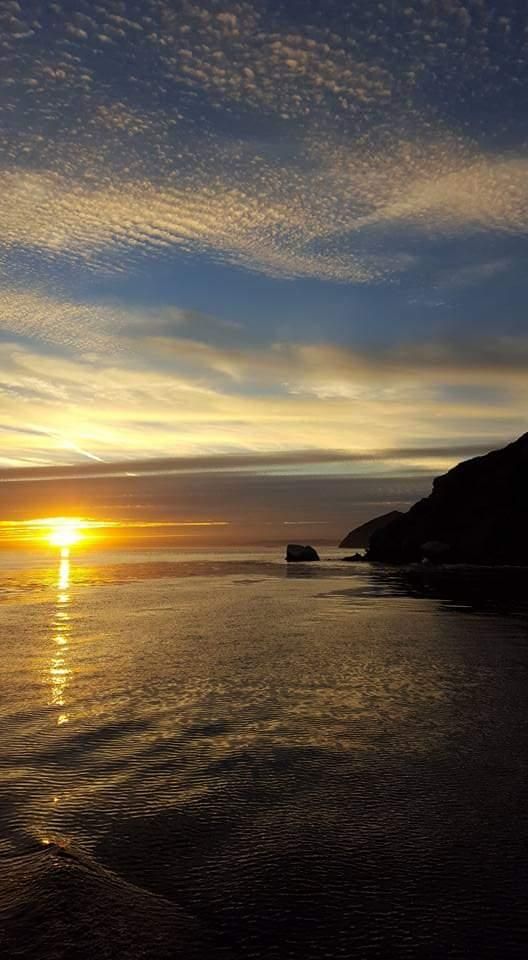
After a fantastic steak dinner with all the fixings, a night dive opportunity was announced. Our captain had anchored us against a sheer rock wall that led to a point, then eventually, to open ocean. The sun dipped beneath the horizon, revealing Van Gogh colors on a twilight canvas. But soon, those colors were gone and the night came, accompanied by a raging full moon. On the deck, we hung our buoyancy compensators (BC) on fresh tanks and connected regulators. After testing our equipment, we each tied a glow stick to our gear. I had never done a night dive. My dad had the experience, but it had been over 25 years. Wetsuits on, gear applied, masks over face, we put on our fins, flashlights in hand. One after another, divers waddled to the side of the boat. At my turn, I stood on the edge of the boat and looked down into the opaque water. At night, the ocean does not look like the ocean. It looks like a liquid surface to another world. The surface of the water looks like it could, in fact, be solid; moving, but solid. I held my fingers to the face of my mask and pressed my palm against the regulator in my mouth. With one big step into the nothingness, I fell, gracefully, I might add, deep into the water. Everything disappeared, with the exception of the beam of light protruding from the flashlight in my right hand. I pressed the button on my vest to inflate my BC, and slowly floated to the surface. 

Soon, my dad was in the water as well. Our plan was simple. We would follow the anchor line to the ocean floor, which was about 65 feet below the surface. When we got there, we could look for lobsters, explore, or do whatever we wanted. But we must not get separated. We agreed on this plan at the surface, then began our descent. We followed the 30-degree sloping line to the bottom of the ocean. By this time, I realized that I could see a light. This was a comfort to me. The dive crew on the Truth had told us that a flood light would be hung just above the surface to assist our underwater navigation. Some divers love night diving. They swear that it is simultaneously the most peaceful and the most exciting time to dive. Ocean life that you don’t normally see, comes out for the night life. 

At depth, we began to swim along the wall, seeking out lobsters to fill our game bags. But there were no lobsters. And we both knew why. As soon as we got to the ocean floor at 65 feet, we realized that a massive current was making swimming very difficult. We struggled and kicked against the current for several minutes. I was struggling to maintain heading and control. No lobster in his spiny little mind would be out in this. I turned to my dad and we both seemed to understand what the other was thinking, “we are in over our heads.” I made the motion to turn around and head back. But as we did so, the current pushed us hard in the other direction. Flashlight beams bounced off of rocks and kelp got tangled in our tanks. Any grace we had at the beginning of the dive was now gone. 

We were in for a wild ride. 

anthony forrest

« Older posts Newer posts »

© 2026 Travel and Verse

Theme by Anders Noren — Up ↑