stories of travel, medical missions, and more

Category: Travel Journal (Page 11 of 15)

Looking Glass Series, part 2

Of Strong Hands and Reservations

Travel Journal, 45

Would you like to hear a confession?

I had never had a massage. I’ve heard tell of two-hour-long massages. A complete stranger touching a rubbing my body in a calculated and meticulous way just hasn’t ever attracted me. And then when they’re done…you pay them. Paying for a massage seems a little, shall we say, illegally scandalous?

But this story is not about preconceptions. It’s about stepping into and through the looking glass, breaking down barriers. It’s about trying strange dishes and going strange places.

It’s about strong hands.

I walked into the house and found my dear friends from college (eons ago) speaking with their language tutor. As they chatted, I disappeared to shower away the travel-blues and airplane funk. Even more than sleep, I find that a cup of coffee and a hot shower cures most ailments and alleviates most travel woes. But if I was asked to nail down one negative aspect of travel, I would immediately reply with, “back pain.” Sitting knees-to-chest on a plane and sleeping in all manners of positions wreaks havoc on my body. And though the hot shower helped, it had been nearly 8,500 miles of airplane travel to get here.

After cleaning up, I joined in on the English side of the conversation.

“You okay?” I was asked, upon sitting. I must have winced.

“Oh yeah,” I lied.

“Are you sure?” My poker face could use some work.

“I’ll be alright,” I confessed, “my back just gets sore when I travel.”

Translations ensued and bilingual discussion commenced. It was decided (for me?) that I should get a massage. But I have never had a massage, said I.

No matter, said they. I needed a massage—but not just any massage.

No.

The only hands with power enough to lift the dark discomfort from my body were the hands of the great Pak Omar. Who, you might ask?

“His hands are like magic,” said the local language teacher. But finding him could be difficult. And for the next several days, we tried getting in contact with him, to no avail.

I was not sure if he even existed—this magical remover of back pain. Was he a legend? A name whispered in the wind? Was he a story fathers with aching backs believed in, like a pain soothing Santa Clause?

But finally, one day, we received news of his whereabouts and an appointment was set.

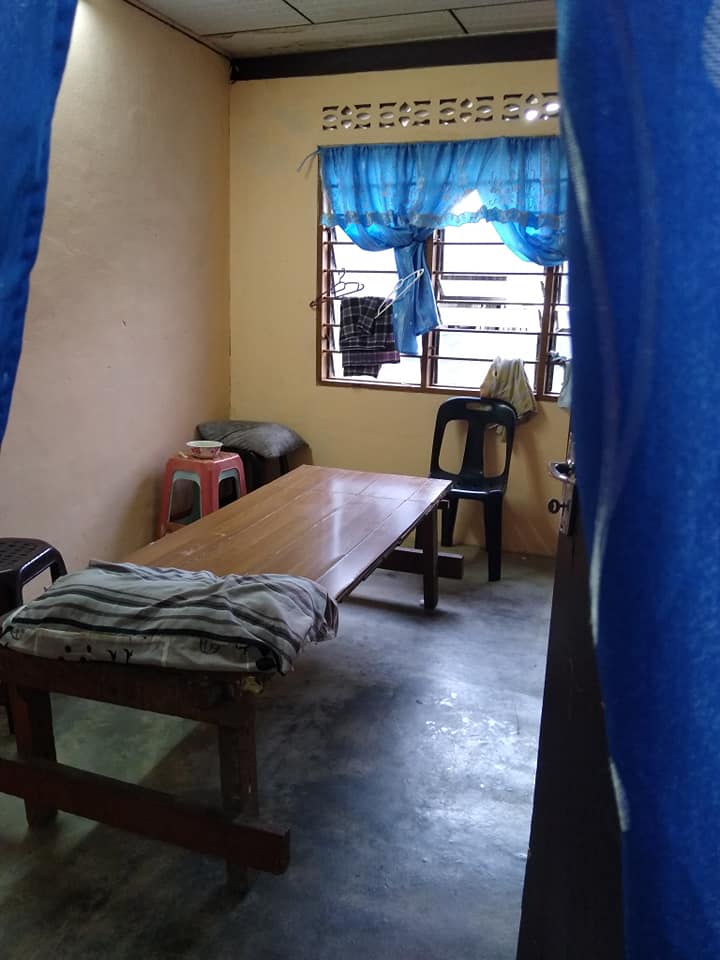
We pulled up to the small home to find Pak Omar waiting for us. We removed our shoes and he led us into the house. A couple of wooden benches lined the wall and two children watch a television on the floor. Omar disappeared and reappeared wearing what looked like a nicer, new shirt. I took his hand and noticed the sheer strength in this elderly Malaysian man (who, by the way, is greatly respected in his community).  My friend communicated my back-pain. He led me into a small room with a little wooden table, a pillow on one end.

Face-down, I laid on the cold wood and Pak Omar went to work. With those powerful hands he poked and prodded and whittled away the knots. Sometimes it felt like a waterfall of relief. And sometimes it felt like he was running me over with a large truck. But after twenty minutes, I knew I was a different man. Not only did I find relief from my back pain, but I now understood massage. But then he sat me up and looked at my shoulders.

With grunting, we tried communicating. He told me to turn my head from side to side. I did. Then I told me to reach and touch my toes. I did that, too. But he was not pleased with my performance.

Soon he put me on the floor. And before I knew what was going on, he sat behind me, wrapped his legs around and under mine and used an English word that frightened me.

“Relax” 

And with little notice, he started cracking my back and shoulder like twigs and branches. I stood up in a daze and Pak Omar went to work on my shoulders and neck.

I must have gotten the premier package, thought I.

But when all was done, I felt like a little Lego man who had been disassembled and then put back together. And boy did I feel great.

We shared a cup of tea and, without any language skills, talked about nothing. We just smiled and grunted back and forth.

Both my friend and I got massages that day. And it cost us 12 US dollars, for both of us. If I lived there, in the beauty and wonder of Malaysia, Pak Omar would have a steady client in this weary traveler.


anthony forrest
Looking Glass Series, part 1

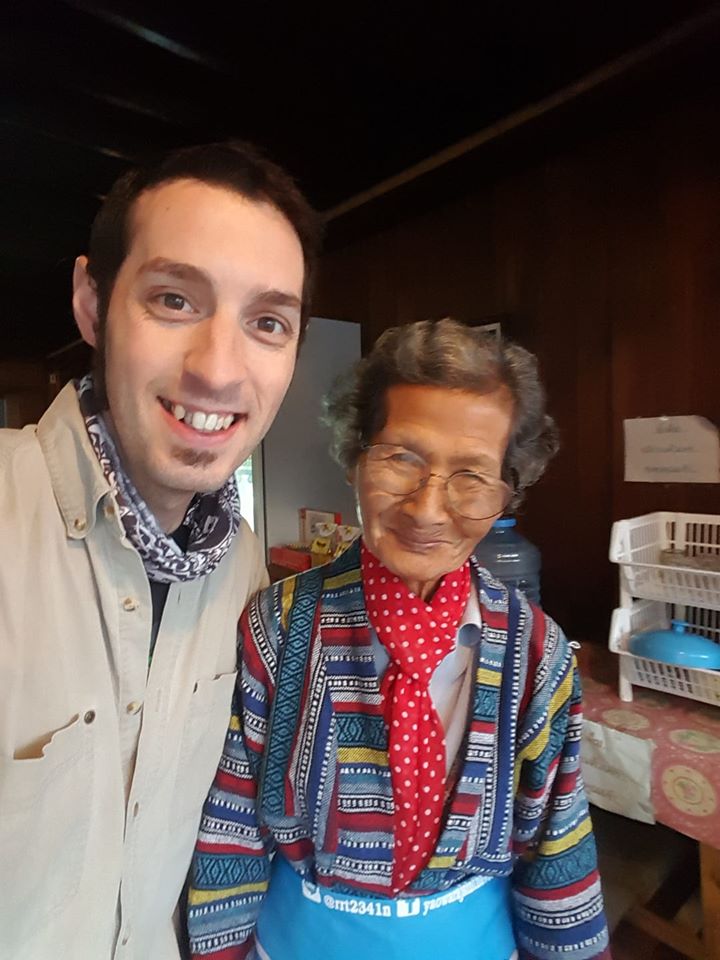
I heard from a local freind that she is still making soup. But she is moving a little slower now, and in a wheelchair.

Of Blood and Barriers

Travel Journal, 43

A few moments in my life stand out like turning points. Not in any kind of big way, like major life trauma or distress. These points have simply made me think about life in a way in which I never had before. I call these moments “looking glass” moments. Alice discovered so much behind the looking glass. She stood staring into a mirror that reflected her own image. But she had the courage to step through and see a whole new universe of existence, full of new experiences. Imagine if Alice never stepped through the glass. Or if she never followed that white rabbit. I don’t know about you, but my childhood would have been incomplete without opium smoking caterpillars and clearly mentally unstable wearers of hats.

In the end, it was Alice’s decision to step through the mirror that gave her new experiences and introduced her to a new world.

One such moment happened on a January Thursday in Chiang Rai, Thailand. Myself and two friends arose early in search of coffee. To our delight, the prevalence of coffee bars in Thailand is only outmatched by the quality thereof. I sat on a small metal chair in the cool of a Thai morning, sipping a cappuccino.

The sun rose on our morning coffee and Buddhist monks appeared silently, collecting food offerings from store owners who bowed low in reverence. Attached to our little coffee bar was a noodle shop attended by a smiling, old woman. She placed a carton of soup on the ground and bowed. As the monks passed me by, my senses were overcome by the smell of morning noodles. With pointing and grunting, or perhaps hungry eyes, I communicated my lack of noodles. Soon the old woman placed a bowl in front of me. I gave it a quick stir with a large spoon and chopsticks.

I took a sip and the dark, savory broth filled every pore of my soul. I’m sure my eyes dilated and new neural pathways opened giving me access to more of my brain. I wielded the chopsticks like ancient swords, consuming noodles and soup with a cathartic passion. As I ate, I saw several pieces of meat which were foreign to me.

“What’s this?” I asked a friend. I lifted a piece of the meat with chopsticks. Some discussion took place between the old woman and those who spoke Thai.

Hesitant eyes looked my way.

“Blood,” they said.

I was floored. But not because I was repulsed. I was surprised because my first instinct was not to push the bowl away from me.

I was shocked.

“How can this be so good?” I gasped, out loud.

If a bowl of noodles with a meat made of blood in the north of Thailand can so easily open my senses and break down the walls of my comfort zone, what else have I been missing?

Perhaps much.

But to answer that question properly, we will need to go to Malaysia and meet a man named Pak Omar. He will have more answers for us. 

anthony forrest


*this series will publish each week through the end of January

Holy Night

Travel Journal, 43

I slung my well-worn backpack over my shoulder and stepped onto the escalator that leads down to the baggage claim and public transportation area of the Minneapolis/St Paul Airport. The good news was that my flight had arrived early. The bad news was that my next flight wasn’t for another six hours. An early arrival was far from helpful today.

Last step of the escalator glided to the bottom floor of the airport. I walked off and into the direction of the light rail train stop. If I ever have a long layover at MSP, I’ll typically take the train to the Mall of America and Ikea. But let’s be honest. The only reason I go to the mall is because the train terminates there. I walk through it on my way to Ikea and those tasty little meatballs and stunning pre-fab furniture. It’s a great way to blow an afternoon before the final leg of a trip.

But as I strode past the luggage claim carrousels, a man pulling a roller-bag caught my eye. He wore a black overcoat and halted at a baby grand piano not far in front of me. Certain airports strive for interesting and fun ways to create atmosphere and culture. And MSP has several pianos. Sometimes a busker sits and plays, attempting to sell albums, and sometimes the pianos lie vacant. Such was not the case today.

I walked past him, not wanting to become the audience and, to be honest, not really caring too much about whether I heard him play. But I soon froze where I stood as he struck out the first notes of “O Holy Night.”

I turned and found a seat. He clearly knew what he was doing with the piano. He played and improvised on the old, old tune and extracted from it every ounce of Christmas. No sheet music sat in front of him. But off to his left side stood a phone, recording a video.

His music warmed the soul of this weary traveler. So when he finished, I clapped and walked over to introduce myself. He was an expat living in Quito, Ecuador. The medical work he did kept him busy in South America doing pro bono surgeries for children in need. This, the very embodiment of the post-haunting Scrooge, was on his way to Colorado for Christmas with his family. His adult daughter was on the other end of that video call, listening to her father play her favorite Christmas hymn.

Not every person celebrates Christmas. And not every person confesses Christianity. But for those of us that do both, Christmas gives us an opportunity to come together in common purpose: to live in kindness, love others, and spread a song of hope found in a Savior born to save. For yonder breaks a new and glorious morn and each soul captured by the appearance of the Christ has felt its worth. That leaves us with nothing to do but to fall on our knees in awe of such a holy night.

Merry Christmas,

anthony forrest

Land of the Nativity

Travel Journal, 42

We are greeted with clasping hands and a generous smile.

It is hard to know who said “shalom” first. But we all do at some point during introductions.

The man quickly catches a boy by the shoulder.

The little black-haired boy looks up at his father, who had stopped him in his play. The boy gazes up at his father, listening to the instructions. But in a couple of seconds, the boy runs off like a shot, out the door and down the alleyway.

Our host (also shop owner) eagerly leads the four of us to four tiny plastic chairs of differing colors. Color seems to be the theme running through Jerusalem. Brightly ornate scarves hang about us. Several languages color the air. And a dozen or more ethnic groups create a culture more colorful than any other on this earth.

And now I see the little Arab boy, running in his shorts and sandals, carrying something. He holds what looks like a platter suspended by three ropes tied at the top and held in his hand. On that platter are five small and clear glasses of green tea, whole leaves. The lad moves effortlessly through a nearby crowd. He enters the store and his father serves us.

It’s delicious and sweet—this tea, this place, this moment, everything. And all the uncomprehended Hebrew has me hypnotized. But I refocus and notice that our friends stand and begin moving into another room.

We are here with an objective.

We are here to find Christmas.

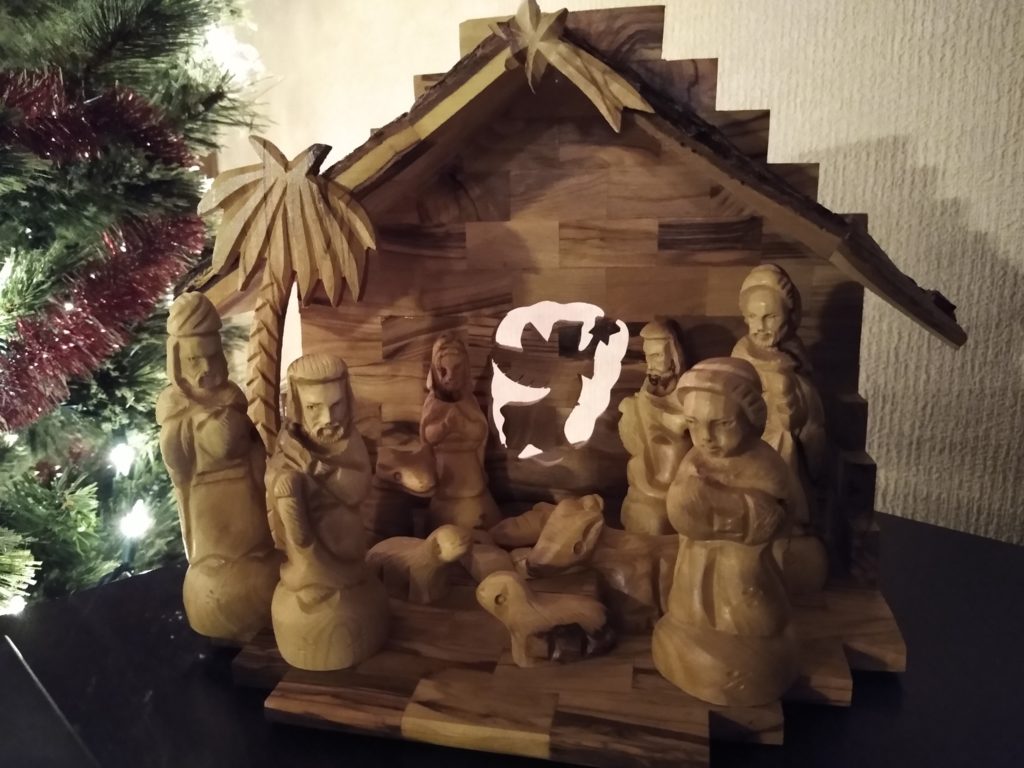
Presently, the shop owner and giver of delightful tea rummages through piles of olive wood carvings. First, he produces the hand-crafted manger; then Mary, now Joseph, baby Jesus, shepherds, wise men three, sheep, camels, ect.

It’s all here. He tells us, as is visible by the various models nearby, that he has crafted hundreds of Nativity scenes. He appears quite proud of his creation.

He should be proud.

His hands craft the very throne of the Majestic One. Olive wood is lowly enough to be hand-crafted and beautiful enough for a King; which, to me, seems just right.

Tis a King’s tale.


anthony forrest

Seamless

Travel Journal, 41

Both my wife and I grew up in small towns, I in the west and she in the north. We both remember dirt roads, corner stores, small communities, smaller buildings, and limited diversity. Though we live in a small town now, our lives are heavily peppered with city influences.

Traveling to cities over the years has grown on us. And though they may have their similarities, each city is different.

Our faces hit the sunlight as we climbed up and out of the hole in the ground. With subway stations every quarter mile or so, getting around is easy. All around us rose sky-scraping towers. And the streets were paved with the purest of golds—street food. At first blush, it looks like any other city, until, right in the middle of it all, a clearing in the concrete jungle reveals the Kabuki-za Theater.

No, this is not New York, Chicago, London, or Paris.

This is Tokyo.

Some cities claim to mix old and new. But no place achieves such a pure blend as Tokyo. To your left: Yodobashi Camera, selling technology that most Americans won’t see for years. To your right: a Shinto shrine that is older than most sovereign nations.

And the blend is seamless.

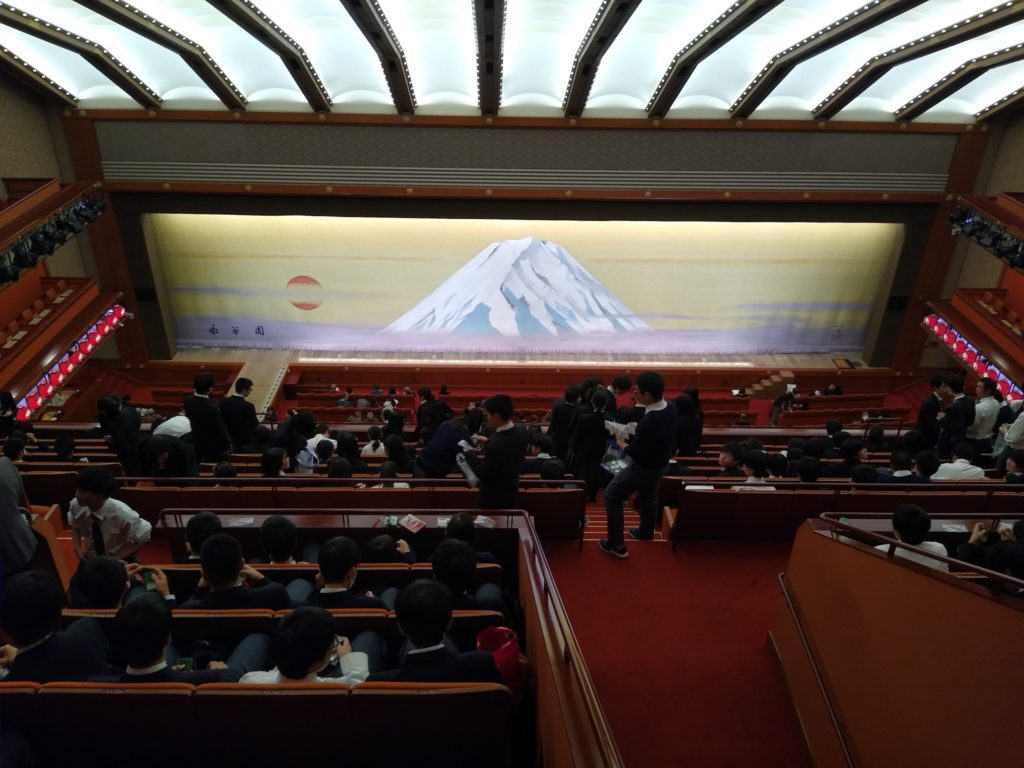
From the subway station we step onto the famous Ginza and up to the old theater. We wait in line to buy our tickets, just for one act. Our attention spans are far too short for five hours of theater. Nearly a hundred of us filed into the doors and up the elevator, onto the fourth-floor mezzanine of the theater.

A curtain hangs below. It depicts Mount Fuji—the Rising Sun in the background. The play begins; the curtain is drawn. The actors below dance and portray an ancient story from the olden-time, the time of the Samurai. Their movements are lavishly exaggerated. And the milky-white face paint can be seen easily from my seat in the balcony. Drums beat. Three-stringed tones of the shamisen call. The audience shouts strange encouragements to their entertainers on the stage.

Yet not too far away, on the busy street below, taxis take businessmen to airports. Women walk into Louis Vuitton Stores. And sitters in booths try to convince passersby to change their cell phone plan.

Seamless and new.

Timeless and old.

This is Tokyo.


anthony forrest


Friendsgiving

Photo courtesy of J. Jones at Epic Pathways, click above to check out his work.

Travel Journal, 40

This is not a story about traveling. It could be. I have a lot of stories (as by now I’m sure you can tell). Each one of them burst from my mind, begging me to tell them. This story, by all rights, should be a travel story. It should be; but it’s not.

As much as my heart races when I pack my backpack, as much as it thrills me to talk to people about travel, as much as I absolutely adore a group text about going someplace new, and as much as the thought of figuring out yet another foreign train system keeps me up at night, another aspect of travel gives me far more joy.

We sat around a table set for feasting. The table was laid with trimmings of a Thanksgiving Day. Though still a month away, we met together to celebrate one of the most important parts of travel: the friends that go with you.

This small group is niche and knit together by various ages of people from differing walks of life. It’s an uncanny collective, a peculiar mix, a match only made in heaven by a God who could see the dots that needed connecting. And connect them, he did.

The six of us have traveled to the far reaches of the globe in each other’s shadows. But this isn’t a travel story. This is a Thanksgiving story. (Friends-giving?)

We sat around a table in North-Central Minnesota, celebrating togetherness. Some of us live here. Some of us live across the world. But each of us belonged at this table. Travel has meant so much to us; seeing places and people and sights and scenery. But travel would have so little value had we done so alone. We’ve walked together, rode elephants together, driven cars on the other sides of roads together, and eaten ridiculous amounts of ramen together. When it’s over we go back to our respective lives. But we somehow find ourselves meeting, once again, in another part of the world, ready to take it all on, together.

The world was created for union.

It was meant to be experienced together.

So we held hands around a table of thanksgiving for friends and time spent together. Tears gushed as freely as laughter. We talked of the wide world that lay before us, and the memories behind.

Happy Thanksgiving,

anthony forrest

Travel Journal, 39

Is There a Doctor on Board? -part 2-

Read part 1 here

I looked at the scene before me. The flight purser was rushing around in a panic. A pale woman lay at his feet. Two other flight attendants hovered over her. And literally everybody else on the flight slept as if nothing was abnormal. And to make matters worse, there was a distinct possibility that we were going to have to divert the aircraft to Madrid, Spain to get this ill passenger to definitive medical care.

However, the everyday passenger may not know that a flight of this capacity and distance is more equipped to handle such an emergency than one might expect. The crew carries oxygen, a full medical bag (complete with medications and intravenous supplies), and a cardiac monitor and defibrillator. In essence they are loaded for bear.

But there’s a catch: nobody has a clue what to do. Sure, they are all trained in basic first aid and CPR, but their job is to be flight attendants, not medical professionals.

I leaned over and assessed the woman on the floor. She was clammy and complained of chest pain. Her heart rate was irregular and she was nauseous. However, her blood pressure was normal. We connected the electrocardiogram machine (because why wouldn’t a flight from South Africa to England have one of those?) and discovered that she was clearly experiencing a common heart problem called atrial fibrillation. In the simplest of terms, the top part of her heart was not cooperating.

Just then I realized that the purser had been breathing into my ear. I turned and saw his sweaty bald head uncomfortably close to my face.

“Do you want to talk to the doctor?” he asked.

“There’s a doctor here?” I was confused. I thought I was the only one helping.

“No,” he said, “but we can call him.”

The purser pulled me aside to the first-class cabin to the front of the aircraft. There sat a small desk. He picked up a phone and dialed a number.

“Hello?” A fellow American answered the phone. At this point, I was very impressed with everything that was happening. I explained to the physician all that had transpired. He hummed and thought and then asked me, “well, do you think that they should land the aircraft in Spain.”

This was not a decision I was expecting to make. I was hoping my responsibilities on this flight were going to be limited to whether or not I should watch Dances with Wolves again.

I swallowed hard and squeaked, “no.”

“Okay, well, keep an eye on her and if anything changes, call me back.”

Click.

The line went dead.

The purser was glad to hear we would continue on to London. “It costs the company over £200,000 to divert. Not to mention a scheduling nightmare for everybody. If she’s going to be okay, it’s better to just continue on!”

As I went back to our makeshift clinic, the purser asked if he could get me a drink.

“Coffee would be great, thank you”

I was shocked when he fired up an espresso machine and produced a porcelain cappuccino cup and platter. This scenario was getting ethereal.

When we finally landed, NHS London Ambulance Service pulled alongside the aircraft. I spoke to the British paramedic and they transferred the patient onto their ambulance, unceremoniously.

The crew was all smiles as my wife and I gathered our things. They thanked us over and over. This could have gone differently. We could have been getting off the plane in Madrid. But London was a welcomed sight.

anthony forrest

Travel Journal, 38

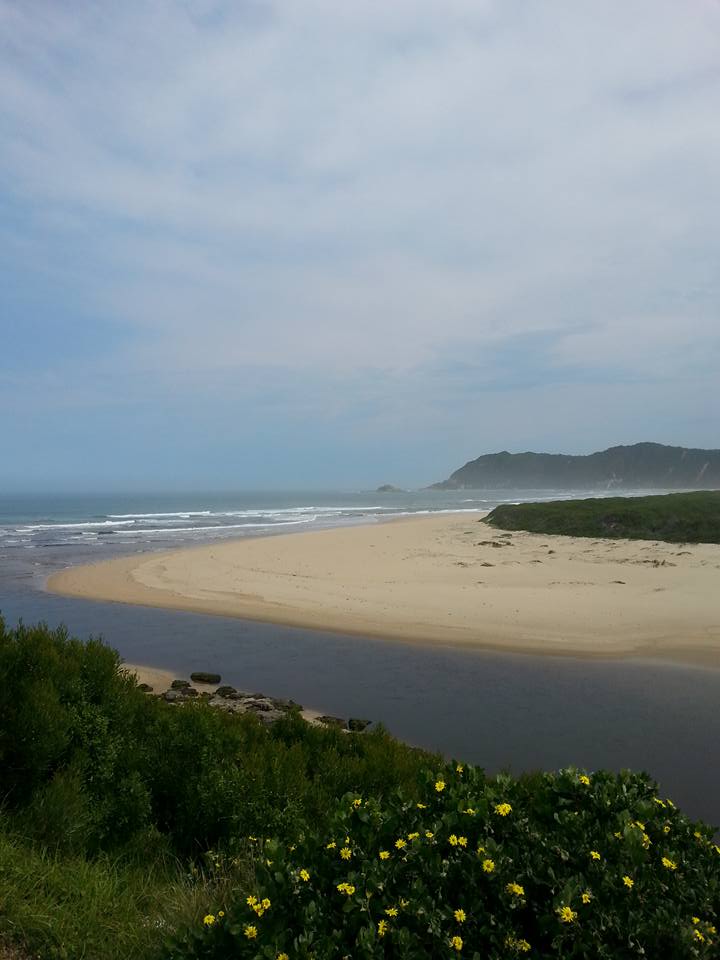
Sedgefield, on the western Cape of South Africa

Is There a Doctor on Board? -part 1-

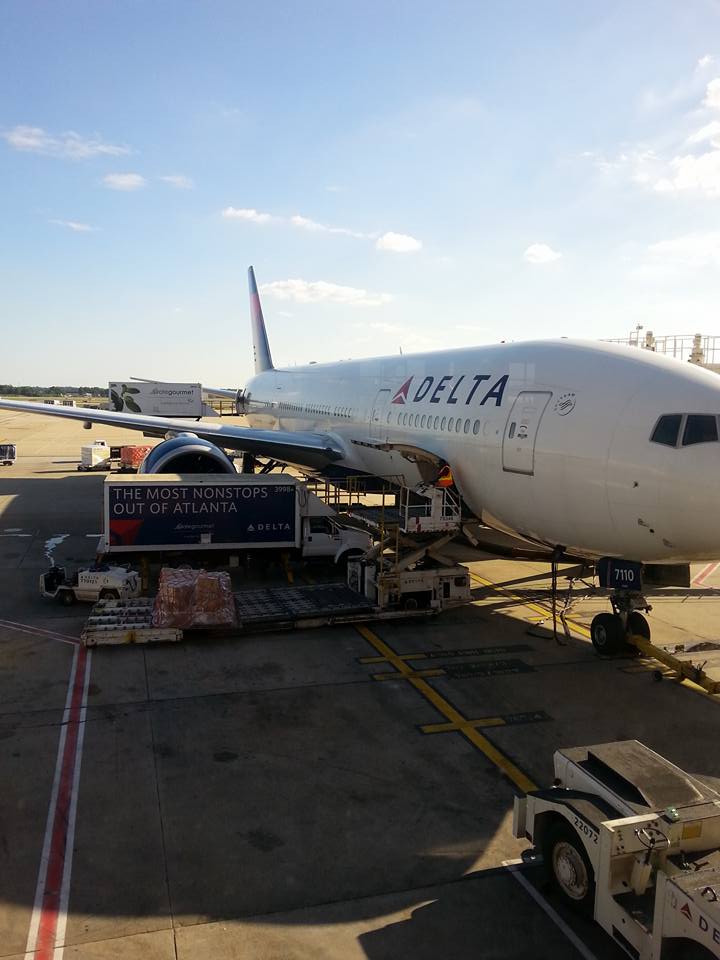
Through an unforeseen line of events, we now had to fly to London. Originally, we were scheduled to fly home from Johannesburg, South Africa on a direct flight to the US. That flight is nearly 17 hours long and spans from Atlanta to Johannesburg. And it is as long as it sounds. We were devastated that our already long trip home was now going to take even longer. We were able to reroute through London on Virgin Atlantic. There was a bit of good news, though. We’d have a small break between flying. Nobody wants to be on a plane for 17 hours.

I walked into the far aisle of our Boeing 767 aircraft and began glancing down at my ticket and up at the seat numbers. My seat was in the upper 30s. I must have looked like I was nodding—up and down, like a fool. My wife and I found our seats. And they were terrible. At some point in a large plane, the width of the aircraft shrinks. This means that a plane with seven seats across may dwindle down to five. And when it does, the seats in that row have rigid arm-rests in which tray tables are stored. If there is a way to make an airplane seat feel smaller, this is how.

Throughout the flight we dozed, watched movies, read, and I did a little writing. But even though this flight was shorter, it felt just as long as the one we were supposed to be on. Finally, with a pair of earplugs embedded in my scull, I fell asleep in an awkward position.

A faint donging noise sounded overhead. I pulled the eyeshade up and blinked. An announcement cracked but nobody moved. I pulled out an earplug just in time to hear, “…doctor on board?”

This piqued my interest, though I’m nobody’s surgeon. I am, however, a lowly ol’ paramedic who wanders the streets at night, lifting the sick-and-injured (and not-so-sick-and-injured) from the depths of the unhealthy darkness. I looked around at my fellow passengers. Nobody moved. In fact, everybody was asleep. My watch read 2 a.m. But I’m not sure which time zone. I took another glance around and made the decision to go to the front of the aircraft.

“I’m not a doctor, but I can help.” I said this to the small group of attendants huddled around a woman on the floor. She was laying in the middle of the floor in the bar area. And yes, this plane had a bar. “

I’m Terrence,” said a British man in a uniform, “the purser on this flight.”

I introduced myself and said that I was a paramedic. He looked scared and balked, “oh I’m glad you’re here. I think we may have to divert to Spain!”

anthony forrest

Part 2 to be published next Thursday, the 21st of November

Travel Journal, 36

Aedan and the Roots

Our bus pulled into the city of Ennis in County Clare, Ireland. The only other person to get off the bus was a talkative, late middle-aged lady holding her purse close to her chest. She was apparently the second cousin of the bus driver. After chatting with him for an hour during transit, she disembarked the bus and we made our way to the front. We exchanged pleasantries with the driver and soon found out that the purse lady was not the only talkative one on that bus.

Most of my conversations with Irish people had started the same way.

“Where are you from?” they would ask.

And every time, in all of my vast intelligence, I would respond, “the United States.” In case the point is in question, it is very apparent that I am from the United States, especially when I open my mouth. Further, the Irish have a deep affinity for the USA. And the feeling is mutual. During an extraordinarily dark time in Irish history, the American people welcomed Irish refugees and immigrants with open arms. Ireland had been devastated with a crop-killing blight, sending the island into the Great Hunger. Millions died, and help was nowhere to be found. The Irish flocked to the far reaches of the world, but mostly to the United States. But the relationship has been very reciprocal. Without the Irish population, the Civil War could have ended far differently. Our roots go deep into Irish culture, and millions of Irish in Ireland have family here. It’s nearly symbiotic.

Our conversation continues. Soon, we become friendly. Names are exchanged.

Aedan drives commuter bus all over the southern par of the island. He tells us of his family in the USA. He smiles with pride. And I can’t help but draw similarities between our two countries. All I can think of is how many people are doing the same thing right now in my own country—excitedly telling somebody of a long-lost family in Ireland.

Aedan tells of watching American TV in the 70s and how he had never had a milkshake until his first trip to America. He goes on and on and it’s refreshing. Aedan marvels at the beauty of the Grand Canyon. And I express my marvel at his Emerald Isle. Perhaps there’s a lesson there. But maybe not.

Our two countries have shared roots and connections that reach far deeper than this. But it is a beautiful thing when those roots occasionally spring to the surface.


anthony forrest 

Travel Journal, 35

The Cliffs of Moher

There are times during our travel when we seek out the “unvisited.” This world is dotted with tourist attractions and traps that draw people from everywhere. And often, these places do not attract me. The last place I want to visit is a crowded beach, an overfilled museum, or a man-made tourist trap. I would much rather be the only American walking through a market in Tachileik, Myanmar; or maybe be invited into a local’s home for tea. But not every trip has to be hellbent on avoiding every popular location. Some spots you should just see, busy and iconic or not. In fact, some of the most amazing places on earth are indeed “touristy.”

The Pyramids in Cairo.

A sunset in the Caribbean.

Have you seen the stunning exhibits at the British Museum in London?

How about the leaning Tower of Pisa?

Or the Grand Canyon?

Try seeing any of these (and more) without the crowds or acres of fanny-pack wearing tourists. But missing out on the iconic places on earth is just that—missing out.

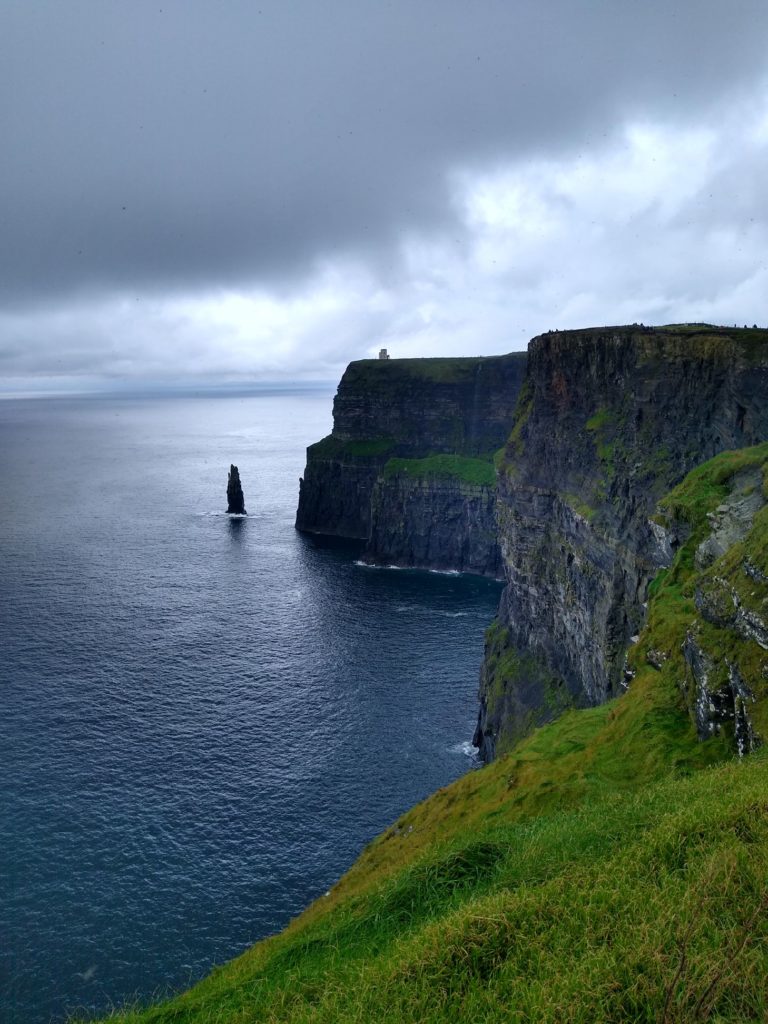
One such place is located in County Clare in the west of Ireland. Just south of the seaside city of Galway, runs a length of ocean-carved rock formations called the Cliffs of Moher. This location draws nearly a million visitors every year—and there’s a reason.

The raging sea hundreds of feet below slowly chip away at Ireland’s coast. At the top, strong cold winds create waves along the tall grass on rolling hills. The sheer majesty and the dramatic vertical plunging of cliffs evoke emotional overflow and speechless stillness.


Tall grass green

And short tufts too

Lay head

Sloping toward rough oceans

And not so blue

But grey and wild

A Wild Atlantic Way

Turning, curving

Rocky coast carving

Covered in ocean spray


Sudden stop


A drop

Without warning

Solid rock walls

Often trouble by storming

Stand as Garda

With enemies naught

Save wild waves

Who win (eventually)

All battles fought


anthony forrest


« Older posts Newer posts »

© 2026 Travel and Verse

Theme by Anders Noren — Up ↑