stories of travel, medical missions, and more

Category: Travel Journal (Page 10 of 15)

Field Notes, Peru

Photo Courtesy of Erica Woods

Part 2, A Bird Who Brings Bad News and Good News

Travel Journal, 55

Wednesday: It’s not worth it, save for the love of people—fed by an intense love for God.

He decidido seguir a Cristo. No vuelvo atras, no vuelvo atras…


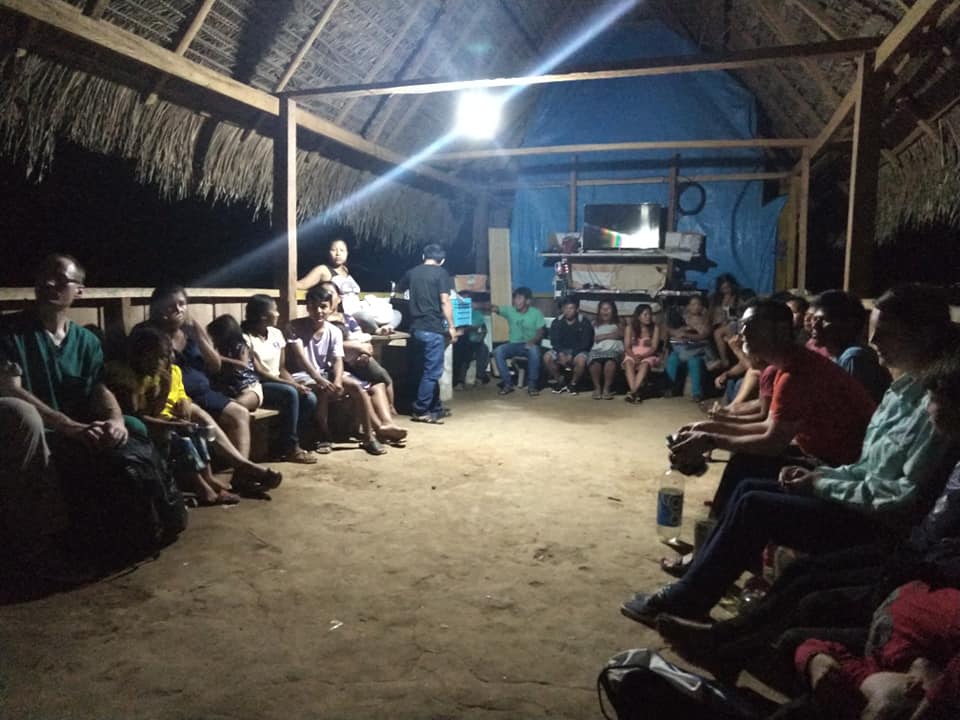
Each day, our team’s routine varied little. Pack the boat. Go to the next village. Unpack the boat. Set up camp. Host clinic. Eat dinner. Try to sleep in the insanity-inducing heat. But somewhere in that itinerary of jungle travel we always hosted a service of singing, Bible reading, and a telling of the greatest tale of all time.

Our boat eventually made it to the furthest village up the Las Piedras river. It’s the furthest that we traveled. It’s the furthest village up that river. And it’s the furthest up the river anybody is allowed by the Peruvian government. It took us 18 hours by boat to get here. On the map, it’s just a large space of green.

The Brazilian border lies up the river a mere 30 minutes by boat. And the village of Monte Salvado is the last outpost, bordering on a kind of refuge. Here begins an area of land which encompasses a mass of Peru set aside for indigenous peoples who have yet to be contacted—tribal people who want to be left alone. Last October, a group of these people attacked Monte Salvado and stole food, shooting somebody in the head with an arrow in the process. That was October, not 100 years ago.

But the Yine people live here nonetheless. And they thrive. But not without need.

Yes, the people that live along the Las Piedras river need medical care. And we gave it. But they need something else so much more.

When the missionary who led us on the trip first ventured into that part of Peru, the people there gave him a name in the Yine language. It’s unpronounceable for the American tongue, but roughly translated it means A Bird Who Brings Bad News and Good News. And when he traveled up the Las Piedras river, he did bring both bad news and good news.

The bad news was that each and every person in God’s creation is flawed, and completely misses the mark. Humankind is rebellious against God who demands justice. And from our conception, our veins course with sin. We have no chance of fixing this problem, because the price is too great.

But he also brought good news. God’s own Son payed the price. He was perfect and died to pay that price. He died in our place and made it possible to have a relationship with the perfect Creator. We now have only to turn to Him in belief.

This week of hosting clinics and services is far too much work. Long days, and hard work make it seem like it’s not worth the trouble. But these people need care for both body and soul.

They need to hear. And how will they hear without a preacher?

It’s not worth it, save for the love of people—fed by an intense love for God.

I have decided to follow Jesus. No turning back, no turning back…

anthony forrest

Related Tales:
Prologue to Field Notes, Peru: Return to South America

Part 1 of Field Notes, Peru: Medical Nomads

Field Notes, Peru

Part 1, Medical Nomads

Travel Journal, 54

Monday—Arrived 1715 at Santa Alicia. Long climb to village. Set up tents and ate supper. Held service. Early clinic in the morning.

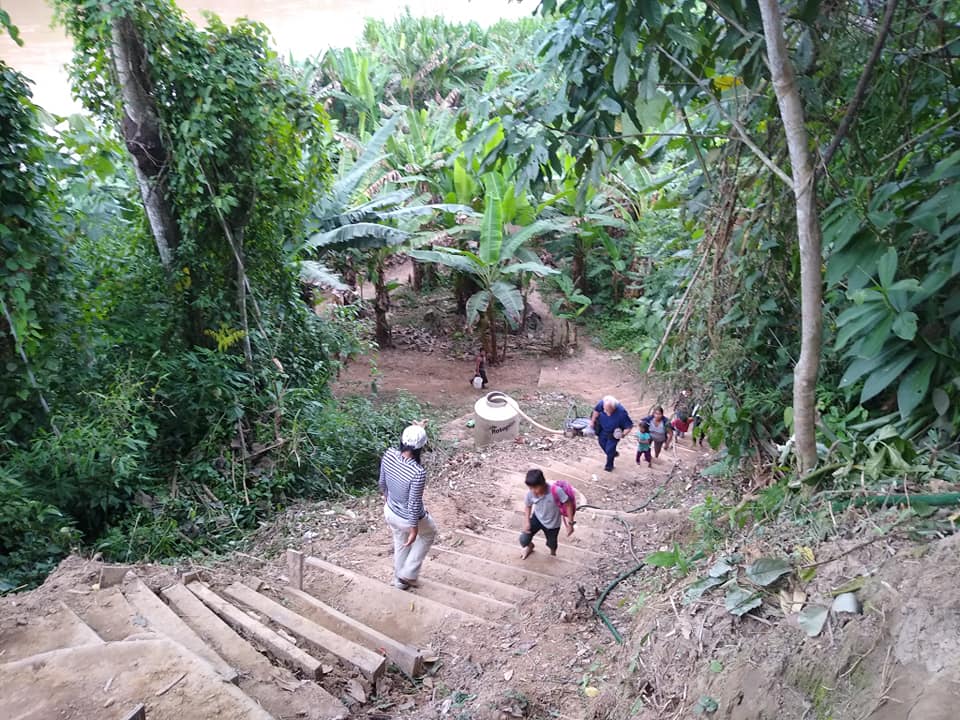
A dozen or so stilted, open-air houses sat at the top of the tall, muddy hill. Their thatched roofs jutting out on all sides. After 10 hours (more?) on our boat, the village was a welcome sight. Even after climbing the monstrosity of a hill leading to the village half a dozen times, I was glad to be off the boat. I can only sit for so long. Our 80’ long stretched-limo-like canoe moved quickly that day, cutting up the Las Piedras river like the ever-present mosquito. Our team carried boxes and totes and crates full of camping gear, medical supplies, and food to last us the week. Soon, this tribe of American medical nomads set up tents. Our home for the next week would be a movable clinic along this muddy river in the south of Peru.

Little kids ran about in their bare feet and all smiles. Kind-hearted nationals helped with the totes of supplies. Local women-folk talked of a breakfast for us the next day. To say that our arrival was a big deal would be an understatement. For many, this mobile clinic is the only chance for medical care. The nearest hospital lies more than 10 hours by boat in Puerto Maldonado. And some may never go there. Poor medical care, terrifically hard labor, appalling nutrition, and rampant disease and parasites contribute to a discouraging quality of life, and a short one at that.

We slept comfortably in our tents that night.

The next morning, our team popped open plastic yard-sale tables. Then we lined up boxes of Amoxicillin, Mebendazole, anti-diarrheal, paracetamol, bag after bag of vitamins, and dozens more medications. And even though some may not currently have pain, discomfort, illness, or injury, they may still want medication. For most of these people, this is their only chance to treat any ailments they may have, now or later.

Before the clinic starts, the women of the village bring us breakfast of rice and chicken soup. A bowl of boiled plantain makes its way around the table. And, after final preparations and trips down to the boat to retrieve forgotten items, we pass the word around Santa Lisia that the clinic is open.

Some came quietly, some eagerly, some came dragging screaming children, but all came. That clinic was better attended than any midwestern yard-sale. But instead of used flatware and old Christmas ornaments, our tables were filled with medication. And our hands filled with care.

This was the first clinic of many.

anthony forrest


Related Tales:
Prologue to Field Notes, Peru: Return to South America

Field Notes, Peru

Prologue: Return to South America

Travel Journal, 53

My return to South America came 15 years after my last visit and more than 20 years after my first. Far too much time had passed. I’ve replayed memories of living in Bolivia over and over. But this time, a medical mission opportunity arose and instead of Bolivia, I went to Peru. Both countries differ greatly. But somehow, when I stepped off the plane in Puerto Maldonado, a feeling of familiarity smothered me more than the oppressive heat.

It’s hard to say why. I had never been to the Amazon jungle. The food in Peru is vastly different than the food in Bolivia. They use Soles, not Bolivianos. And the socioeconomic makeup is far better in Peru than Bolivia. But for whatever reason, it felt like some kind of subconscious homecoming. Minor similarities nudged my mind. Regional words and vernacular came back to me. Cultural mannerisms just felt comfortable, though new. Actually, in some ways it was better than a simple reunion. I didn’t go backward into time. I was moving forward.

If Bolivia was the childhood friend I knew long ago, Peru is Bolivia’s brother whom I got to know later in life. I have drifted away from Bolivia, someday (hopefully) to pick up where we left off. But at this moment, Peru holds the fresh memories of now. And the foundation laid in one part of South America now informs my experiences in a new part of the same continent.

anthony forrest

United by Food

Travel Journal, 52

The best mushrooms I have ever eaten are found in the town of Mae Sai, Thailand. Specifically, at a Chinese restaurant that specializes in Yunnan food. Yunnan province in China lies a mere five-hour drive from this place.

Turn right out of the restaurant and go to the border—about a quarter mile.

Cross the Myanmar border, pending any security problems, and continue onto Myanmar National Highway 4 until you get to Mong Lah Rd and turn right. This will in turn take you to the province of Yunnan in southernmost China.

The food there is spicy and very good.

But, truthfully, I’ve never been to China.

So when a friend told us that a family member owned a Yunnan restaurant, we jumped at the opportunity to meet up.

We were met by people we did not know, to eat food we’d never eaten, in a place we’d never been, to experience things we’d never experienced. But the company of strangers quickly shifted to friendship. I sat next to a cousin of a friend. His English faltered and crumbled at every attempt, which is more than I can say about my Chinese. Somehow, I found out that he likes to run (as do I), orders his running shoes from Japan, and owns a tire company nearby. But as the food hit the table and the chopsticks began to fly, language skills didn’t seem to matter so much.

The giant marble table had a type of “lazy Susan” that covered most of its surface. Each person got an empty plate set before them. And all the food was shared as the lazy Susan was wheeled about. A tray of mushrooms appeared and I took several and placed them on my plate. The mushrooms were quartered and had been soaked in a brine of soy sauce and some other spices, then baked. It gave the mushrooms a dense, almost crunchy texture.

If there is one thing that me and the Chinese man communicated clearly that night it was that these mushrooms blew us away. Food crosses far more borders that any ambassador.

The reason TV food shows attract people is that food unites us. Eating ties us together. Whether black, white, Chinese, or Jewish, you have to eat. And it’s not something reserved for only a select people. Perhaps that’s why poverty and starvation give us so much sorrow.

I recently heard former astronaut Garrett Reisman say that, “the things that unite us are stronger than the things that divide us.” Not only does this saying make me feel good, but I think I actually believe it. Sure, it’s cliched and a little derivative. But the dividing aspects of humanity never last. Sure, they might lead to disputes and wars, but those end and peace eventually prevails. And though the dividing factors of life tend to get a lot of attention, the factors that unite us are far more important.


anthony forrest


Year One

Travel Journal, 51

Travel and Verse is celebrating one full year of publication. Thank you so much for coming along. Over the past year, I’ve written stories and composed thoughts that span most of my life.

Each story I write has been important to me in one way or another. When I travel, occasionally vastly interesting things happen that I quickly put to paper. And sometimes a small situation or personal interaction—that may occur in the blink of an eye—captures my attention. These often turn into long-ponder thoughts that, in time, turn into stories.

In year one, Travel and Verse has published 51 Travel Journal entries. Together, we’ve explored 17 countries and five continents. In 2019, I traveled to seven different countries. And as 2020 begins, I am poised to see three new countries where further stories await the telling.

I also greatly appreciate the opportunity to publish my poetry.

In year one, Travel and Verse has published over 50 original pieces of poetry. Writing poetry not only helps to capture my thoughts and feelings, but it positively and therapeutically contributes to my life. Writing poetry gives me the chance to reflect a bit of my soul. And as a friend recently reminded me, I think that I benefit from the sharing. Thanks for listening.

So, here’s to the year past and the beginning of year two.

Here’s to things interesting to come.

Here’s to Travel and here’s to Verse.

May both give us joy and better our souls.

anthony forrest


Sign up to receive weekly stories and poetry directly to your inbox

* indicates required

Pros and ̶C̶̶o̶̶n̶̶s̶

Travel Journal, 50

Peruse the internet for no more than 10 seconds and you will probably find some article touting some opinion. Throughout this highly connected world, somebody is ready to pounce, telling you their opinion on the current political climate, or social justice cause, or even the latest trend is health and dieting. In this day and age, it is much easier to find the cons rather than the pros.

But traveling tends to change opinions and broaden horizons. And those who travel are far more likely to focus on the positives rather than on the negatives.

There are so many great reasons to live in the US. There are also so many great reasons to travel or even live outside the US. But keep in mind, the pros for one may not be the cons for the other.

Below are five reasons to live in the US and five reasons to travel outside the US. These reasons aren’t as abstract as, say, “freedom.” No, they’re tangible, and personal, reasons for why I like living in the US and why I like traveling outside the US.

And now, the Pros and…Pros.

US Pro #1: Bacon.

While places like the UK and South Africa have types of bacon (google “back bacon”), no land has that crispy delightful slice of meaty goodness like the good ‘ol US of A. Nothing comes close.

International Pro #1: Street food.

Whether you are walking the narrow alleys in Bangkok or getting tapas in Barcelona, one truth ties them together—street food. Ah, the smell of the open wok. That music of the food stand attendant barking out the wild names of unknown foods. Nothing beats the world abroad for street food.

US Pro #2: The public restroom.

America truly is the land of the free…restroom. Instead of having to pay to use the toilet, just use one of the free restrooms scattered all over this vast nation. In fact, drop into a convenient store or gas station and use their restroom. You probably don’t even have to buy anything.

International Pro #2: The Bidet.

What can I say? It’s a car wash for your backside. So many countries use them. And when you walk out of the restroom cleaner than you’ve ever been, you will know why. You’ll just have to overcome the first impression of being sprayed, well, down there.

US Pro #3: Camping.

No country camps more than the US, and there’s a good reason why. The US has a plethora of National parks, State Parks, and other campgrounds. Americans camp more than any other culture. Campfires and bonfires are an integral part of American culture, and you’d be hard pressed to find its equal.

International Pro #3: Transportation.

Want to go someplace? Just take one of the many trains, buses, trolleys, trams, or subways within walking distance of your home. Heck, you could even rent a bicycle. Europe excels in this area. Flights are also cheaper. As I write, tickets for a flight from Dublin to Amsterdam from February 26th– March 3rd are literally $38 roundtrip.

US Pro #4: Carpet.

I don’t know about you, but there is something special about walking on carpet with bare feet. You won’t find a lot of carpet outside the US. I know it’s silly. But I like carpet. Thanks, America.

International Pro #4: Cell phones.

I have friends in China. Their cell phone bill is $7 a month. Of course, China is probably listening to their calls and monitoring their text messages. But seven bucks? Let ‘em listen!

US Pro #5: Gas prices.

Unless you live in California, Hawaii, or Alaska, chances are you’re paying less than $3 per gallon. Not $3 per liter. I’ll let you do the math.

International Pro #5: Coffee.

Worldwide, coffee reigns. France, Spain, UK, Thailand, they all can serve you a delightful cup of carefully crafted coffee. I’ve never seen so much concentration or effort than the time I watched a barista in Tokyo pour a cappuccino. And in most countries, coffee is to be enjoyed at a table; no to-go order. The art of careful concentration on quality coffee still exists.

Though I love the US, I also love travel. And there are pros to each.

anthony forrest

Kinvara, County Galway

Dunguaire Castle

Travel Journal, 49

Rolling green slopes of wet grass lead up to the tiny castle. Is there such thing as a tiny castle?

Appears so.

As castles go, this one seems on the small end. But somehow, its tiny size makes it all the more beautiful, haunting. Stones lay around its base. Perhaps one day it rained stones and hailed rocks in place of the incessant drizzle that makes the grass ever so green. Compared to monstrous castles throughout this wide world, its two towers look like cut-stone milk cartons, standing alone by the ocean. A stream rushes beneath the towers.

The light rains and mists from the light grey clouds make this, as the locals call it, a “soft day.” Dark and rainy it may be, but far from a bad day. This is a fine, soft day.

Cobbled stone road, narrow and unchanged for centuries, leads southward, toward Tralee. But long before that, it meanders through tiny villages, and by the wild Atlantic.

The stone walls on either side act like a chute, spilling you into the harbor town of Kinvara in County Galway.

A guesthouse on your left.

Dressmaker’s shop next to it.

A veterinary surgeon’s office next to that.

You walk across the road to the light red building on the corner. The sign above you says Keogh’s of Kinvara (food served all day).

The air is dry and warm, inviting. With a shake, you unbutton your rain-jacket and lean your umbrella against the wall near the entry. The two people seated at the counter turn and look, but turn back to their tea.

“Morning. Y’allright?” asks the man behind the counter.

And with a smile, you sit and wait for your tea. To your right, a tiny-but-mighty wood-stove shakes with heated excitement as the owner stuff another log inside.

The drizzle hits the window, but you don’t mind. A bowl of soup and a piece of brown bread show up shortly after your tea.

Cold and rainy outside, but warm and hearty inside.

A fine soft day, indeed.


anthony forrest

One Mexico

Hermosillo, Sonora, Mexico 2002

Travel Journal, 48

Over the past 20 years, I have spent quite a bit of time in Mexico. Anymore, I hear about it when friends go to Puerto Vallarta or Cabo San Lucas. But Mexico is so much more than beaches and all you can eat shrimp ceviche.

I first ventured south of the border in the summer of 2002. A group of us piled into a 15-passenger van and drove the bajillion miles from Wyoming (my home state) to Nogales on the Arizona border. Our destination was Hermosillo in the Sonora desert. We spent a week helping out a mission by painting walls, doing sketchy plumbing, and handing out Bibles and other spiritual materials. I can still taste the cabeza tacos and apple soda (I think it’s called Mundet, if you can find it). Each person I met bubbled with kindness. And it was a safe place to visit.

For the most part, Mexico loves America. Other than the US itself, Mexico is the biggest consumer of American goods in the world. And no matter your political leanings, Mexicans make up an enormous populous of the US workforce.

But the black eye that we don’t want to talk about it the drug situation, on both sides of the border. Not that long ago, Mexican cartels consisted of many smaller, unorganized groups of drug traffickers. Harmless, they were not. But for American tourists, crossing the border and enjoying the Mexican culture was very safe. Over the years, cartels “consolidated” into just a couple of factions. Drug violence, trafficking, and a renewed drug demand fueled by the US Opioid Crisis, all contributed to a volatile geopolitical temperature in parts of Mexico.

This bleak second Mexico is hard to figure out.

In the middle of November, 2018, my wife and I landed in a little plane in a small village in the northernmost part of the Sierra Madre Mountains. I hadn’t been to this part of Sonora since 2002. We drove our truck up a curved dirt road. At the top of the curve sat a sparkling, huge (brand new) SUV. Standing coolly at its side was a sharply dressed young man with designer jeans, sunglasses, a polo shirt, and an AK47. He chatted nonchalantly into his radio as our truck meandered the along the narrow ridge. It took us two hours by Cessna 182 to get to this place. And this guy is driving a behemoth SUV, in designer jeans, mind you. But we passed without problem. The local charity we served benefits the community greatly. So, the cartels left us alone.

Our visit went off without a hitch. But not without contrasting stories and experiences:

The local cartel leaders force the young men into work by saying they’ll kill their family if they don’t.

We walked on trails with the locals and shared time with wonderful people.

We heard stories of people being kidnapped; gone forever.

The charity work down there is thriving. And so much good has been accomplished.

And to top it off, I had the best tortillas in my life in that village. They were freshly made of local, blue corn.

See what I mean? So many contrasts. Mexico sits in political darkness. But you’re not reading this to better grasp my political views. And there isn’t two Mexicos. There is one Mexico. Mexico isn’t just cartels and violence. It’s also Cabo and kindness, ceviche and sangria, friends and warm, warm family. And it is wonderful, wild, free, friendly, frightening, unbalanced, and oh-so-much-more than I can handle.

So, if you’re wondering, “should I go to Mexico?”

I say, with all my heart, “yes.”


anthony forrest

Looking Glass Series, part 4

Of Public Bathing and Barriers Unbroken

Travel Journal, 47

The watch on my wrist said 11:40 p.m. They lock the hotel doors at midnight.

“I have time,” I thought as I hurried off the Keikyu train at Heiwajima station in Tokyo, Japan. The hour was so late that the Tokyo Monorail was no longer running. The commuter train got me to my station, but barely in time. It was late and I was tired. The only thing that I wanted was to wash away some of the travel funk and flop ungracefully onto bed.

The bed I procured for my one-night stay in Japan was located in a Capsule Hotel. Japan captured my heart upon my first visit. It’s everything you think of and more. Between the iconic aspects of traditional countryside and the energetic throes of downtown Tokyo, Japan leaves the traveler wanting more. One iconic hotel experience is the Capsule Hotel.

And it is what it sounds like.

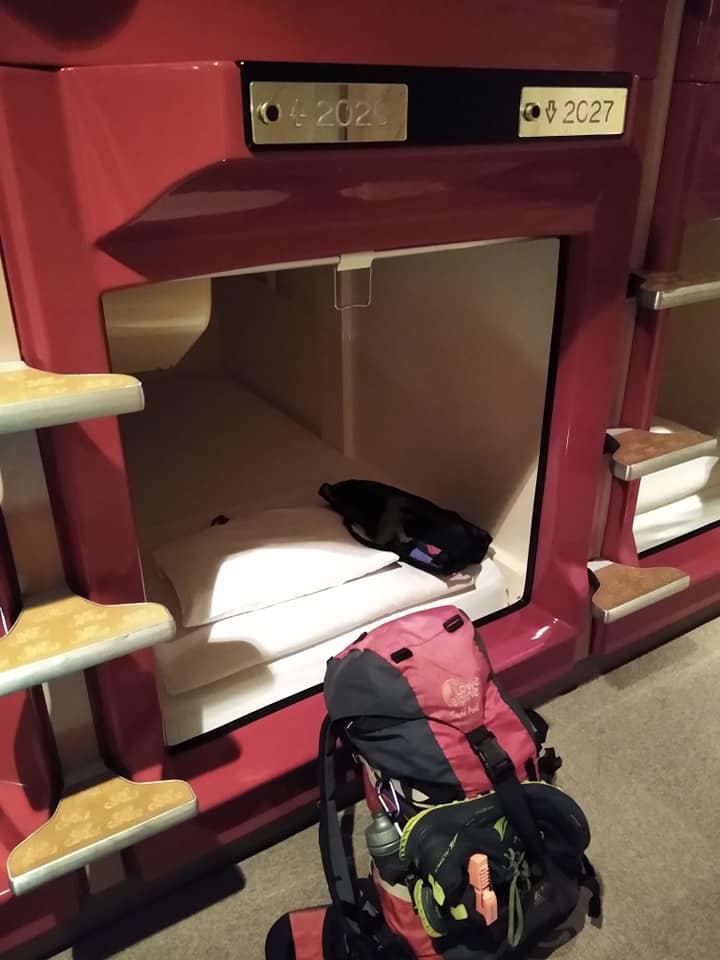
A capsule. A friend describes it as a coffin. Rows and rows of coffin-like spaces are built into the wall. Each has its own TV, air controls, and privacy curtain. And at around 2700 yen per night ($26), it makes for a great option traveling on the cheap.

I weaved in and out of smallish alleys and under neon glow promising pachinko and ramen. Finally, I stepped into the doorway with five minutes to spare. Immediately, I knew that I may have a bit of trouble. The hotel was clearly not ideal for English-speaking travelers. Everything here oozed Japanese. It was clearly a place for the Japanese salaryman.

I took my shoes off and put on a pair of sandals at the door. The man at the counter was very gracious and patient, though he spoke no English. I placed my shoes in a locker in the entryway and collected my complementary PJs, which made me look like a really disheveled, poorly trained, and pasty-white ninja.

The elevator took me to the fifth floor and I found capsule 2027. Exhausted, all I wanted was shower and sleep. The facilities were on the next floor up. So, I collected my things and made the journey.

But as I walked up to what I thought was the shower room, my attention was drawn to a sign that said, “大浴場.”

Enter Google translate.

I actually knew one of the characters, and I was worried. And my memory was right. In essence, it was a bath. Then it hit me.

This hotel has no shower.

It has an Onsen.

A public bath.

“Well, it’s late,” I told myself, “who could possibly be up and using the public bath.”

I entered the room to find a minimum of seven naked, sprawling Japanese men soaking in all the luxury of a quiet bath.

Japan is famous for public baths. It’s a part of the culture that will never go away. The locals swear by soaking in the natural hot springs that bubble forth from the ground. I’m told that once you start using an Onsen, you just can’t stop. But something like this suddenly makes the traveler feel very foreign. Public bathing are two words Americans never use together.

But I’m a pro, right?

I can do this.

I took a big gulp, trying to swallow my midwestern pride.

Heads began to turn my direction.

I felt my heart thump.

Then I turned and walked away.

“Chicken,” I said to my prudish self.

Not every wall easily falls. I still have a few barriers of my own. And one day, I will step into the looking glass and conquer each of them. And the reward will be great.

Maybe one day when I’m on another jaunt into Japan with a group of friends, we’ll brace ourselves with camaraderie and gently slip into a hot Onsen. And perhaps all of our concerns and preconceptions will float away.

But until then, I bathe by myself, thank you very much.

anthony forrest

For those of you interested in exploring a crazy website, here is the link to the hotel. Try using your browser’s translate feature. http://www.mizho.net/

Other Looking Glass Stories:

Part 1, Of Blood and Barriers 

Part 2, Of Strong Hands and Reservations 

Part 3, Of Cats and Coffee

Looking Glass Series, part 3

Of Cats and Coffee

Travel Journal, 46

Terengganu, Malaysia

Early morning

 I rubbed the bleary look out of my eyes and walked into the living area. My flight back to the States was in a couple of hours. Chris entered the room, cup of coffee in his hand.

“Here you go.”

I took a sip. Neurons fired, senses awoke, and life slowly entered my body.

“This,” I muttered, “Is probably the best cup of coffee I have ever had.”

A few moments later, Chris produced a bag and I gleefully stuffed it into my backpack. I finished that cup of coffee in the car ride to Sultan Mahmud Airport. I jotted these words into my journal as the rain hit the car window.

Malaysia ends in monsoon rains

Another flight

Another cup

Another road traveled

Golden riches gained

For the soul

Poetry-inducing coffee: the best kind of coffee.

Two days later

“Any food with you today?”

Well, I thought, you don’t eat coffee.

“Nope.”

The US Customs agent handed back my passport. I walked over to the connecting flights TSA checkpoint and threw my bag on the counter.

The beat-up backpack gently rolled into the scanner. The red and black bag smelled of curry and too many nights away. It’s been with me for nearly 15 years. It’s carried me through a spectrum of circumstances, each crazier than the last. And half the time, it’s covered in mud, blood, ramen, or coffee. In fact, I was a little worried about the coffee buried in the bottom of my bag. As the rollers paused, I guessed in my mind what would happen next. Sure enough, the TSA agent pulled me aside. I made it easy for him and pulled out a one-pound bag of coffee. I had already been a little less than truthful with the Border Patrol and Customs agent. But I doubted the coffee would be an issue with TSA.

“Just a bag of coffee,” I said.

“Oh yeah? Is it any good?”

“The best in the world,” I said slowly, hoping not to sound snobbish or condescending.

“This is coffee from Sumatra,” I glowed, “It’s 50% Kopi Luwak, 25% red wine cured, and 25% natural bean. It’s open. You can smell it if you’d like.”

The agent popped open the seal and took a sniff. He seemed pleased. But then he said the sentence that I hoped he wouldn’t say; a sentence I hear a couple times a year.

“Luwak? Isn’t that the cat-poop coffee?

I hung my head and sighed.

“Yeah”

Whenever I hear this sentence, the entire conversation become unredeemable. I could explain that the Asian Palm Civet is not a cat, but a cute little mammal called a viverrid. I could also explain that it eats the coffee cherry, in which resides the green coffee bean. The cherry passes through the civet because it cannot break it down. I could then conclude in saying that farmers retrieve the cherry, clean it, and harvest the bean, and use it to make the world’s most expensive and delicious coffee.

But it’s no use. He’s still hung up on poop.

And it’s true. Kopi Luwak may forever be the butt of jokes (apologies for the pun). However, most coffee drinkers may never have the opportunity to try it. Kopi Luwak is far too expensive and unavailable in the States, though prevalent in southeast Asia.

“Cat-poop” coffee may be a barrier that many people never cross. But what about other strange food items. Nobody thinks twice about eating an egg, produced directly from the back end of a chicken. And don’t get me started on hot dogs.

A good cup of coffee can vitalize your day, bring a smile to your face, warm you up, and bring friends together. And if a good cup of coffee can do that, what happens when you try the world’s best coffee?

You’ll just have to break down the “cat-poop” barrier to find out.

anthony forrest


Other Looking Glass Stories:

Part 1, Of Blood and Barriers 

Part 2, Of Strong Hands and Reservations 

« Older posts Newer posts »

© 2026 Travel and Verse

Theme by Anders Noren — Up ↑