stories of travel, medical missions, and more

Category: Travel Journal (Page 9 of 15)

An Important Place

Travel Journal, 65

One of the most memorable (dare I say, best?) international trips that my wife and I have experienced was actually our first.

Though both my wife and I had ventured outside of the United States border before we were married, we did not take our first trip together until December of 2014. The plan to begin traveling around the world was not really a conscious decision. It happened naturally. We both settled into careers and found that we had the opportunity, means, and gumption to explore more of God’s Green Earth.

So, for a long weekend, we boarded a flight to Amsterdam in The Netherlands.

Unfortunately, Amsterdam gets a bad rap. When mentioning a trip to the Dutch city, many people will reference partying, legal (or at least easily accessed) drugs of all sorts, and the ever evil red-light district. But don’t sell Amsterdam short. Though the aforementioned frivolities prevail, Amsterdam boasts a deep culture and exciting history. Miles of canals coarse through the streets, like watery veins. The sheer number of bicycles will astound you. Great food and smiling faces await. The coffee scene shocks. And the architecture delights.

And though I’ve been to Amsterdam itself on other occasions, our first trip was to the smaller borough of Haarlem. It’s only a mere 30-minute train ride. We stayed at a lovely inn with a typical Dutch breakfast: assorted meats, cheeses, breads, muesli, yogurt, and, of course, coffee. We attempted to get some sleep, adjusting from a long flight, though we slept little.

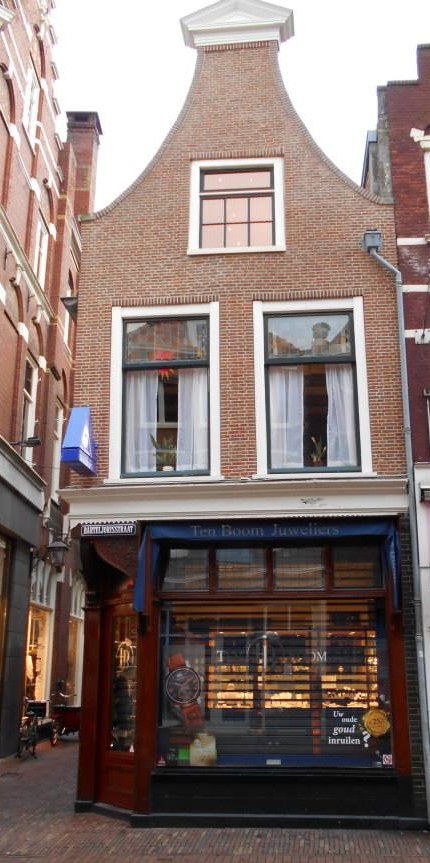
But the next day, we had an appointment. Most people know Anne Frank. She and her family housed Jewish nationals who were persecuted by Nazi Germany in the early ‘40s. But the lesser known story is of a Christian watchmaker named Corrie Ten Boom drew us to Haarlem. Her family hid, housed, and trafficked Jews through their home and out of the country. Her home is now a museum.

I had emailed the Corrie Ten Boom house and asked for an English tour. To our delight, they accommodated. We spent three hours wandering the old home. She and her family had a false wall in the upper bedroom of the home. A little door popped out and they could fit six people inside this “hiding place.” If that were not enough, they procured fake IDs and papers, supplied food, and worked with the underground resistance to secure exit-passage for the persecuted people. The work eventually caught up with them. Their whole family was arrested and placed in Ravensbruck concentration camp—but not before they were able to save some 800 lives. Some of her family members died at the camp. But Corrie lived and was released.

Our time there was very memorable, to say the least. I think some of the best travels that a person can make is to a place of great importance. Whether it’s Ground Zero in New York City, the Alamo, the Great Wall of China, or a simple home with a false wall—the meaningful places stick with you, maybe even change you. The hiding place is definitely an important place.

If you have not read The Hiding Place by Corrie Ten Boom, please click below to get a copy. As I write this, the ebook is only $1.99. I promise it won’t disappoint. 

anthony forrest
Favorite Trips: A Needle Pulling Thread

Once a month, I will post a favorite story from the year prior.

Travel Journal, 64


Our bus careened over the hill and down into another pristine valley. Pines passed by at a leisurely rate. And the sun shone through a break in the Austrian Alps. We typically never do this.

Tour busses and groups epitomize the type of traveler that I simply don’t want to be. I can see it now: a group of late middle-age women with fanny packs and vizors piles onto the bus. Each has a camera and one of those neck wallets that holds everything—you know, so it’s easier to steal. Catty laughs and group photos overtake the day. The sun comes out and on goes the sunblock and clip-on sunglasses.

The horror.

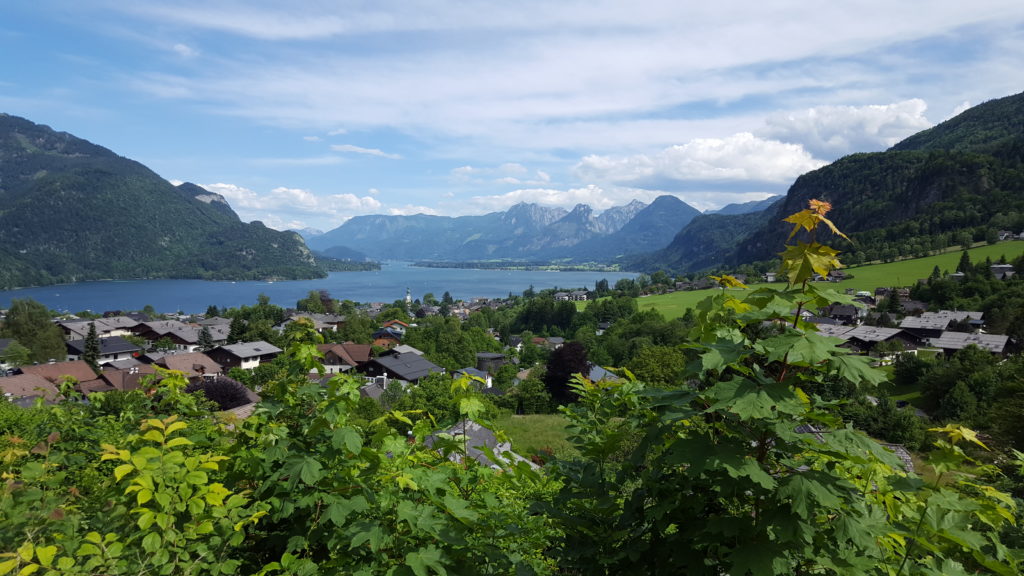
But this was different. The stunning mountains soar high. Crystal clear lakes lay at the bottom of valleys. Tiny towns with tempting bakeries beckon a visit. This is the Alps.

My daydream died in front of my eyes and my attention turned to the front of the bus. Music started blaring out of the speakers. Our tour guide began dancing up the aisle, sporting a microphone. She started singing.

“Let’s start at the very beginning…”

No.

“A very good place to start…”

What’s happening? It can’t be. I turned to my wife. Her entire face beamed a smile that didn’t quit. She knew what was going to happen next. The music picked up pace and our tour guide began passing the microphone from person to person.

“Do, a dear, a female dear…”

For the love of all that is holy, no.

“Ray, a drop of golden sun…”

She’s coming this way.

“Mi, a name I call myself…”

Don’t make eye contact.

“Fa, a long, long way to run…”

This was literally our first time on a tour bus. And I should have known there’d be a sing-along on a Sound of Music bus tour. And now it was far too late. This was happening. I looked up and our gleeful tour guide dropped the end of the microphone within centimeters of my lips.

I quietly gushed, “ti, a drink with jam and bread…”

She finished, “that will bring us back to do, do, do, do…”

It’s official: I’m a tourist.


anthony forrest

*Originally published on May 2nd, 2019*

Mountain Ash

Travel Journal, 63

Two of my favorite places on earth are tied together by a single tree.

The North Shore of Lake Superior lies just south off Canada. And Ireland lies west of the UK. Neither has much in common.

Each year, my wife and I join her family on a getaway to the North Shore. We stay at a small resort a few miles north of Grand Marais and spend our week having campfires on the rocky coast and eating pie. We wander the area, pick agates, skip stones, visit State Parks, talk about fishing (but never do), and relax near the perfect simplicity of the ancient and cold Lake Superior. Last year, our family group walked all over the area near the resort. Down and around the coast, I saw a tree that I always love to see—the Mountain Ash. It’s almost a large shrub or a bush, but it does grow tall. The branches are filled with flat rows or leaves and bundles of reddish-orange berries. I find the Mountain Ash quite beautiful. The red offsets the green leaves, making the tree stand out near any evergreen. Before we left, I looked around and dug up a spindly little sapling to bring home and stuff into the ground. Despite my best efforts, it appeared that the tiny tree would not make it.

A month after our week on the North Shore, my wife and I walked along the eastern coast of Ireland, in the fishing village of Howth. I love Ireland so very much. The reason the world over speaks of Ireland as the Emerald Isle is because it’s true. Ireland is never really beset with a hard winter. So, the island grows vibrantly green. Trees and vines and bushes and ivies and all sorts of plants grow there. Even in the rockiest portions of the island, tufts of green heather can be found here and there. But the biggest surprise to me was finding the Mountain Ash growing wildly in that little coastal town.

Last week, as I walked around the yard, back at home, I found the place where I planted the spindly Mountain Ash. I kneeled down and saw that it has begun budding. It makes me very happy to know that, one day, our yard will have a tree that reminds me of both the North Shore and the Emerald Isle.

anthony forrest

London Perception

The Bard

Travel Journal, 62

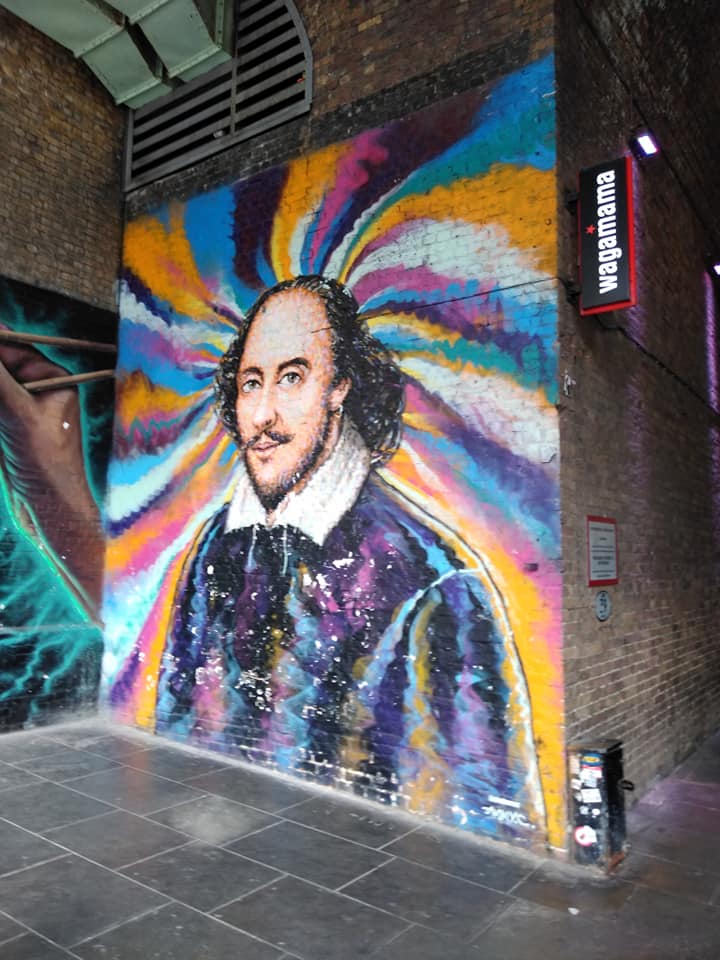
I’ve spent too much time watching Dr. Who and Mr. Bean. My mind drifts to police boxes and meat pies, stone roads and Piccadilly Circus, to Harry Potter and words like “blimey.” It is easy to think about the Queen drinking afternoon tea and live performances of Shakespeare. And everybody acts like a Monty Python skit.

Yes, my perception of London pretty much sums up every American’s perception of London. It’s the default setting. Now, I am not saying that there is anything wrong with that. In fact, many of the stereotypes I think of are true. You can, truly, get an incredible meat pie in London. British humor does differ from American humor. You may actually hear somebody say “blimey.” And there are daily performances of Shakespeare.

But beware.

This perception, my perception, is easily challenged.

London is an international city. Some compare it to New York. But, in my opinion, London more so contains the typical melting pot presumed of the Big Apple. London encapsulates the globalization of the future—a globalization far ahead of America. And even though the UK no longer aligns itself with its long-time EU partners, the vast cultural differences in London will never change or leave.

Nowadays, it’s easier to get shawarma than meat pies. Bangers and Mash? How about a curry instead? Don’t get me wrong, iconic English treats and culture have not disappeared. And iconic London sites like the Shakespeare Globe and Tower Bridge encapsulate everything English.

But take a side street. Perhaps listen closely to conversations. Glance at the restaurants. Scour the outdoor markets. Talk to the person next to you in the Tube. Ask your cabbie where he’s from. Take it all in, and learn.

For London is more than just a tin of biscuits.

London is the world.

anthony forrest 

A Snapshot of Maine

Travel Journal, 61

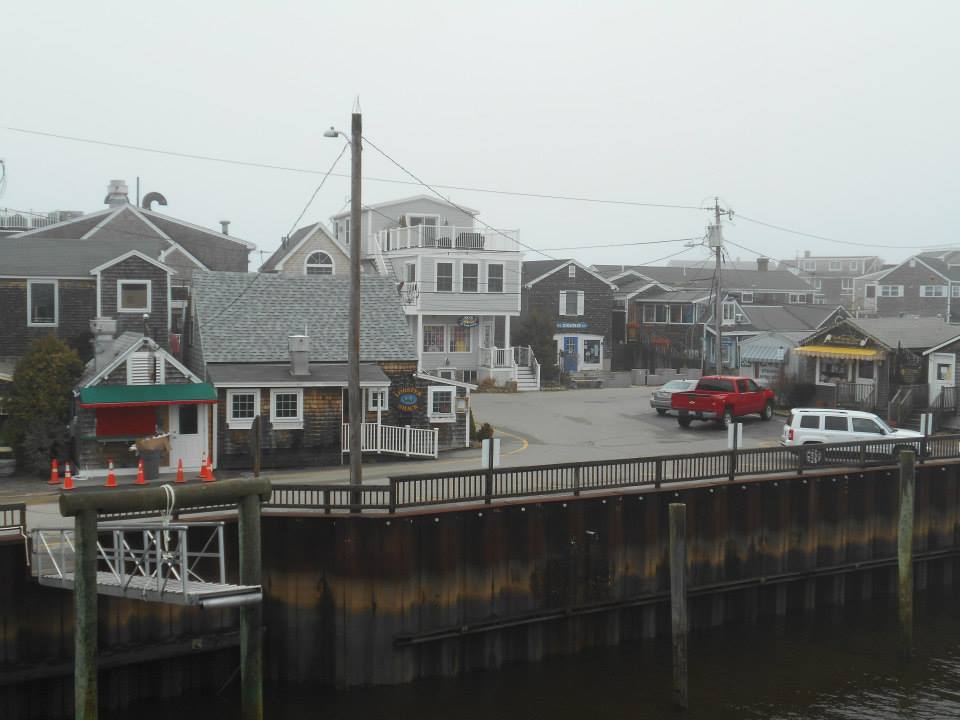
Our rental car swerved back and forth along the skinny, winding road. Scrubs and trees lined either side. But we could see through the trees and scrubs and the ever-present mist, the Atlantic Ocean throwing itself on the rocky coast. An amazing aspect of the eastern coast is the close proximity of other States. The same can be said of Europe. If you were to fly into Schiphol Airport in Amsterdam, The Netherlands, you could take the train and be in Germany in one hour, Belgium in under two, and at the furthest, France in a cool three and a half. Rent a car at Boston’s Logan International Airport and you have the eastern US at your fingertips: Rhode Island, Connecticut, New York, New Hampshire, and lastly, one of our favorites, Maine. Again, all within three hours of driving (insane traffic notwithstanding).

Our only goals: drive to Maine, eat a lobster.

The tiny rental car careened around corners as we passed through New Hampshire, and onto the last US State before Canada. The coastal road opened up to the idyllic Maine portrait. Wooded lands lay to our left and rocky shoreline lay in spotted fog to our right. Tall pines dripped misty dew onto our windshield. It was not, as Dickens would say, “foggy withal.” We saw easily through it. But the fog hung in the air, nonetheless, contributing to the very picture of Maine that we expected find. 

We only had a few hours before we had to be back in Boston. So we followed our map up the coast, looking for lobster. This was before either of us had a smartphone—it’s a miracle we found Maine. A mere 25 minutes north the border lies the little village of Perkin’s Cove. And if you’re driving south, it’s only 25 minutes from Kennebunkport (which I mention only because I love saying Kennebunkport).

We turned into this seaside fishing town and gazed across the cove to find a tiny restaurant literally named the “Lobster Shack.” We were in the right place.

The wooden door creaked as I pushed it open. Immediately, the smell of lobster and steam rushed out. It might have been foggier inside then out. The man behind the counter regaled us with the daily process of walking the 50 feet to the dock, buying freshly captured creatures of the deep, and bringing them back to the live tank where we now stood. The lobsters probed the walls of the tank with their antennae and jumped about. After making our selection and ordering other goodies, we found our seat.

We feasted that day.

There is something surreal and important about enjoying local specialties. Whether it’s a steak sandwich in Philadelphia, tri-tip and chicken in California, or lobster in Maine, can you really know a place or a people without eating what they eat?


anthony forrest

Kentucky Stopover

Travel Journal, 60

One of my favorite places in the great US of A is the state of Kentucky. Our plane descended through the clouds and a spread of green grass and white fences materialized below us. When I think of Kentucky, I think of horse racing and old money. The scene that I saw below me confirmed those thoughts. Every once and a while, my wife and I end up with a long space of time between flights. We usually spend that time sitting in the airport. But not always.

There are two terms to know: layover and stopover. What’s the difference? The way I think of it is that a layover is a space of time between flights in which you don’t have any time to do anything fun, i.e. leave the airport. That space of time may vary depending where you are. If the airport is close to attractions, the higher the chance of doing something fun. Generally, if we have over six hours between flights, that gives us plenty of time to leave the airport, explore, eat dinner, and came back through TSA security to catch our flight.

Layover= less time

Stopover= more time

We had about eight hours in Lexington, KY.

Large swaths of green and mown, grassy fields lay below us, each lined with a tall white fence. Enormous (and expensive) barns sat at the edge of each field. And horse ran about. I was quickly falling in love with Kentucky.

We needed a quick attraction to pass the time. The Mary Todd Lincoln house fits the bill. This large home in central Lexington makes a great historical sight that won’t bore you. Little shops and great dinning are right around the corner. And it was a $12 Uber ride to boot.

We called our Uber to take us back to the airport after a terrific day in Lexington. Just then, a car barreled up to the curb and a lady called out my name. We climbed into the car. She then began to ask us how to get to the airport. And for the next 10 minutes she dodged cars, held her phone to look at the map, called her husband, then informed us that we were her very first passengers. Eventually, we just got out of the car and ordered another Uber.

This time, the driver was the best Uber experience we’d ever had.

“Have you ever been to Lexington before today?”

We told him no. And, with a shocked look on his face, he took as on a tour of the area, including the beautiful Keeneland Racecourse. He dropped us off at the airport with a smile. We had the worst and the best Uber experience that day.

If you have a few hours and the chance to get out of the airport, do it. You will not regret a proper stopover.

anthony forrest

Favorite Trips: The Wall

Once a month I will post a favorite story from the year prior.

Travel Journal, 59

“What this?

“You have drugs?

“Is for party?!”

We had heard this and other inquiries like it for several minutes now. All around us, heavily armed soldiers stared at us, unmoved. We had been in Jerusalem for only a couple of days and it seemed that we were already in trouble.

Please understand this: Israel is safe to visit. The news publishes the exception, not the rule. That being said, bad things happen, terrorists attack, and the middle east constantly wallows in unrest and tiresome Status Quo. While we boarded our flight to Tel Aviv, a commotion caught our attention outside the aircraft. Several police cars and fire trucks congregated between our plane and another. After a 45-minute delay, the pilot announced that we would be under way shortly. Upon arriving in Israel, our friends met us with wide eyes and concerned looks. Our flight had been the target of a bomb threat. Later that day, a terrorist in Tel Aviv stabbed and killed 9 people on a bus.

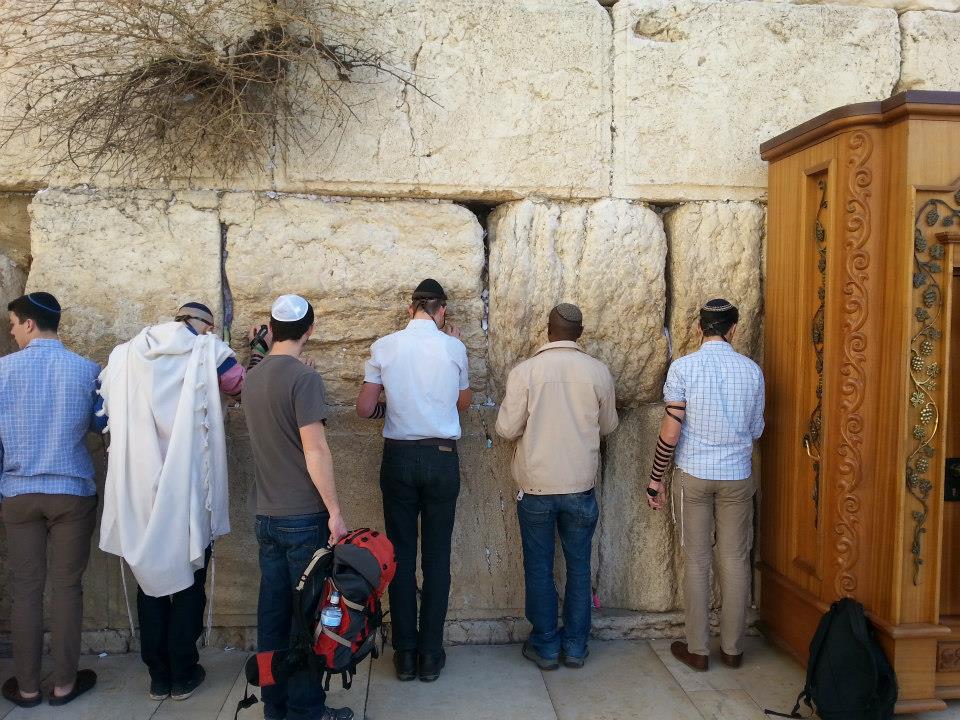
And now here I stood at the Western Wall, trying to explain to the small army of Israeli soldiers that the small clear bag of Tums in my wife’s purse was not actually illegal drugs. After they we entirely satisfied that we were not starting a drug distribution ring at one of the world’s most important religious sites, we were escorted through the gate.

Men and women are separated here. Men must have their heads covered and never turn their back on the Wall. Women must have their arms, legs, and heads covered. The name of the game is respect. With our respective head coverings, my wife went to the right side of the gate and I went to the left.

After all of the intense security and unsafe occurrences, my heart pounded even harder at the peace that stood in front of me: an ancient, 62-foot-tall, limestone wall. Small slips of paper inhabited every crevasse of the old stones. Each slip had a prayer for something—most of them for peace.

And I shouldn’t be surprised.

This is Israel.

The land of war.

The land of peace.


anthony forrest

Andes Mountain Milk

Travel Journal, 58

When thinking of weather in South America, the first thing that came to mind was hot and humid jungle. I’d imagine that most Americans think the same way I did. But there I was, sitting in the back of an old pickup truck with a jacket pulled tightly over my chin. Our truck bulged with passengers, in the cab and in the bed. I sat on a spare tire in the bed of the truck with several others, Americans and Bolivians alike. I had been in Bolivia for about two months. And the weather was one of those surprises that arise when traveling outside the country for the first time. Our vehicle rocked into holes and threw dust as we slowly careened off the barely-maintained road and into a field. I would like to say that it was an open field and give you unending details, but my memory is only so accurate. Besides, the fog hung so heavily that, save for the driver, none of us could tell where we were going.

It’s the cold, misty fog that chills the body. I’ve lived in many cold climates throughout my life. From the windy and dry winters of the American west, to the timeless and immovable snow-seasons of the north, I can pretty much handle the cold. But nothing had prepared me for the surprising weather of the Andes Mountains. Far south of the equator and high in the mountains, lies the tiny hill town of Pucara in a region of South America called the altiplano (or high plains). I could relate to the altiplano, to some degree. I grew up in Cody, Wyoming which sits in the Bighorn Basin—a high plains desert area in the northwestern part of the state. The winters are cold, windy, and unpredictable.

But this Andes Mountains winter was ridiculous. Cold fog hung all around. Soon it would turn into a mist and soak everything, including me, right to the bone. Every building was made of adobe brick, which hold and trap the cold. For a while, I rarely ever felt warm.

That was about to change.

Our old truck came to a stop with a lurch. We billowed out and stretched our tight and rattled muscles from the drive. As the foggy mist began to clear, I could see a Bolivian man huddled next to a brown cow. They were revealed like a dream coming through the clouds. We walked over to him and he chatted with us like he expected us to arrive. He sat on a small, three-legged stool and milked into a large bucket. With smiles abounding, he produced a small tin cup, white in color (questionable in cleanliness). And for the next half-an-hour, we each took turns drinking warm and frothy milk directly from the udder of a Bolivian cow.

Beside the fact that it was a lukewarm body temperature and I occasionally had to pluck out udder hairs from the foamy milk, it warmed my body and soul through and through.

anthony forrest

How to Meet Famous People in the Airport

Travel Journal, 57

Years ago, my wife and I began making a list of 50 things we’d like to do before we turn 50. Some items are easy, some hard to accomplish. And then some of them are just plain weird.

For so long I’ve wanted to meet someone famous while traveling through and airport. To be walking along and see a popular TV or movie star would be incredible.

I would walk up and ask, “hey, are you [ENTER FAMOUS NAME HERE]?”

“Why yes,” they grin in their terrible disguise of ballcap and sunglasses. “Would you like a picture?”

I would get a selfie and have them sign something, then we’d go our separate ways.

The problem? I’m pretty sure that I could never recognize anybody. And I don’t keep track of who’s popular anymore. It’s a paradox. I want to meet somebody famous. But I never will.

That is, until I walked up to my gate in the Atlanta airport. The delay on our flight to Lima grew longer and longer. We’d boarded and deplaned after a mechanical problem. I stood toward the back of a line of tired passengers, ready to be at their destination. My attitude had faltered, but I was determined to recover it.

So I struck up a conversation with a lady in front of me.

“We’ll eventually get there,” I said, making small talk. She was a kind-looking lady of maybe 60, traveling with her son. Another son was getting married in Peru. We talked of Peru, our respective plans, and then our conversation turned to occupation.

“What do you do?”

“I’m a children’s book author. “

“That’s incredible!”

“Thank you. I write stories and poetry.”

And Joyce Sidman isn’t just any author. She is a multi-award-winning crafter of words. Her poetry and stories bring joy, provoke thought, and nurture souls. If you can find Dark Emperor and Other Poems of the Night, please pick it up (link below). This Newbery Honor winning collection of poetic animal tales and night reflections is breathtaking for kids and adults alike.

As I found my seat and tucked into our six-hour flight, it hit me. I had just met somebody famous in the airport. It hadn’t been the latest action star or big-name in music. Joyce was so much more than that. Her work is actually important. Her work inspires, educates, nurtures hearts, and downright delights.

And it delighted me to meet her.

anthony forrest


About Joyce:

Joyce Sidman is the author of many award-winning children’s poetry books, including the Newbery Honor-winning Dark Emperor and Other Poems of the Night, and two Caldecott Honor books. Her recent book The Girl Who Drew Butterflies: How Maria Merian’s Art Changed Science won the 2019 Robert F. Sibert Medal. She also received the NCTE Award for Excellence in Children’s Poetry, in recognition of her body of work. In her home state of Minnesota, she teaches poetry writing to school children and walks through the woods with her dog Watson.

Field Notes, Peru

Epilogue: The Boat

Travel Journal, 56

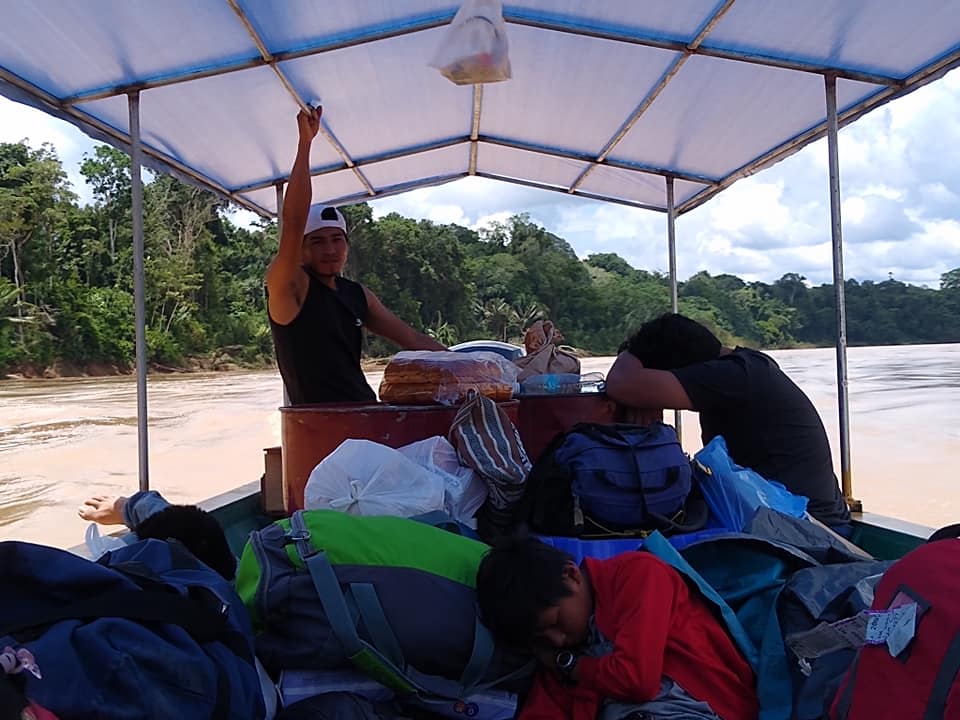
On a sudden, the motor coughed, sputtered, and gave up the ghost. The rapid river was now in control. The small crew at the back of the boat fought with the motor to try and get it started, to no avail. Soon the boat lazily turned and turned until this motley little band of river rats were nearly perpendicular to the oncoming river currents. With the river so high due to the frequent rains this time of year, it can be difficult to see semi-submerged logs protruding from the surface.

But directly in our path lay just that. A dead tree, about 10 inches in diameter jutted out from the river surface, and straight ahead. We all saw it. Some of us climbed onto the edge of the boat, hoping to push away from the branch when it approached. Others continued to try and get the motor started.

Everybody grabbed onto something.

But it was far too late. The boat heaved and rocked onto the side closest to where the branch just hit us. A loud banging noise came from the metal vessel. Then, like a pendulum, the boat rocked back, overcorrecting and tossing the passengers to the other side. Thankfully, nobody fell into the water. The branch scraped along the bottom of the boat and disappeared behind us.

Troubleshooting began.

“That’s what we call a near miss.”

“I’ll say.”

Eye’s wide all around.

“We’ve got to tie this boat off if we can’t get the motor started.”

“Where? Nothing here but rocks.”

“Over there—see, the beach. Plenty of trees.”

The boat now turned freely in the fast-moving river.

Shoes off.

Rope in hand.

Into the river.

Another into the river. Both swam to the beach.

Success.

We avoided catastrophe narrowly. And it kind of sounds adventurous. If the river had flipped the boat, it would not have been its first victim. All of our medical supplies and gear would have been lost.

Some dream of adventure; find it, they may. But our goal was not to find adventure. Our goal was to bring care and love to a people in need along the Las Piedras river in Peru. God’s guiding hand protected us along the way.

anthony forrest


Related Tales:

Prologue to Field Notes, Peru: Return to South America

Part 1 of Field Notes, Peru: Medical Nomads

Part 2 of Field Notes, Peru: A Bird Who Brings Bad News and Good News


« Older posts Newer posts »

© 2026 Travel and Verse

Theme by Anders Noren — Up ↑