Travel and Verse

stories of travel, medical missions, and more

Page 12 of 26

A Tale of Two Museums

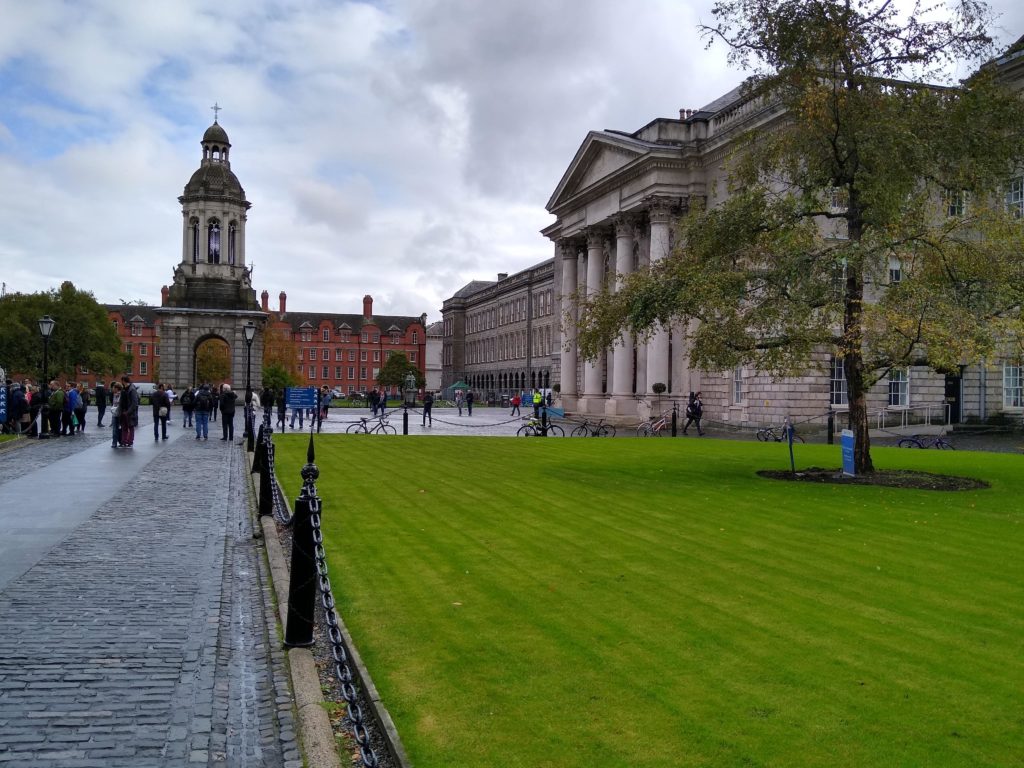
Trinity College in Dublin

Travel Journal, 74

I have been to several museums in my life—some interesting, some not. In fact, I very much enjoy a good museum. I don’t even mind the occasional modern art exhibit (although much of it is completely lost on me). But two museums stand out clearly in my mind.

Early in my marriage, an exhibit of the Dead Sea Scrolls made its way to the Science Museum of Minnesota. Even if you are not a Christian and if you don’t even believe in the God of the Bible, the Dead Sea Scrolls are undoubtably the most important manuscript discovery in modern time. They are a collection of manuscripts of Biblical and secular texts from before the time of Christ—over 2000 years ago. Stunningly, these scrolls were discovered by a shepherd boy in the 40’s. As he walked near the Dead Sea in modern day Palestine, he threw a rock into a nearby cave. A shattering noise caught his attention. Inside the cave sat several clay pots filled with old scrolls. Over the next decade, archeologists unearthed numerous manuscripts, hidden in a total of 12 caves.

My wife and I walked through the exhibit, holding the electronic “tour guide” to our ears. The monotoned voice regaled us with countless details. Row after row of tools lay under glass display cases. Shepherd outfits hung here. Large murals of caves hung there. Everything led to a small room with low lights—only a few were allowed in at a time. We stood hovering over the glass encapsulated scroll. A ragged piece of parchment, written in ancient Hebrew was described in an English translation adjacent to the display:

I love you, O Lord, my strength. The Lord is my rock and my fortress and my deliverer, my God, my rock, in whom I take refuge, my shield, and the horn of my salvation, my stronghold.

Psalm 18. It astounded me. Here sat one of the oldest copies of God’s Word. And it showed a perfect truth—God is my strength and the One who holds me with His powerful hand.

Just last year, my wife and I attended another museum. The Trinity College Library in Dublin, Ireland, hosts (in my opinion, humble or otherwise) the greatest treasure of the Middle Ages—the Book of Kells.

During the fabled “Dark Ages,” monks in Ireland, Scotland, and Modern-day England created an exquisitely and ornately decorated copy of the four Gospels. The nearly 700-page collection dates from the 8th and 9th centuries. The Latin words form a decorative tapestry on each page. And Celtic knots and pictures line the margins. Bright Irish colors jump out at the reader.

We walked through this exhibit much like we had done several years ago at the Dead Sea Scrolls exhibit. Quill pens lay on ancient desks. A replica of the book sat on a glass case. And a translated poem about the difficulties of writing spoke of hand cramps in the name of biblical preservation. But soon we walked into a dark room with two of the books on display.

They were open to the Gospels of Luke and John. I gazed at the Latin words, then over to the translation. It spoke of Jesus—the same God who swore to be my strength and fortress and shield.

My salvation. My Love.

The two museums make me think of a little song I used to sing as a child while attending Sunday School:

The Bible stands like a rock, undaunted amid the raging storms of time. Its pages burn with the truth eternal. And they glow with a light sublime.

anthony forrest
Illumination Revelation

my footsteps interrupt a dark sleep

of trails and earth

in a boreal land

as uneasy stumbles awaken limb and leaf

I struggle to walk and

-at times-

barely stand


shadowy shadows in this day-less empty

hide every path and markers of ways

so I reach out

grasp at the next pine tree

and bide my time till the rising of day


presently…


aspen leaves glow and the trail is lit

my eyes now open

and sharp

I gaze around, taking in every bit

with many miles more

I make a start


the path way shines with a hazy blue tone

bathed in a silvery, old-woman-grey

no other color

only this alone

has turned my night into day


this companion watches me closely

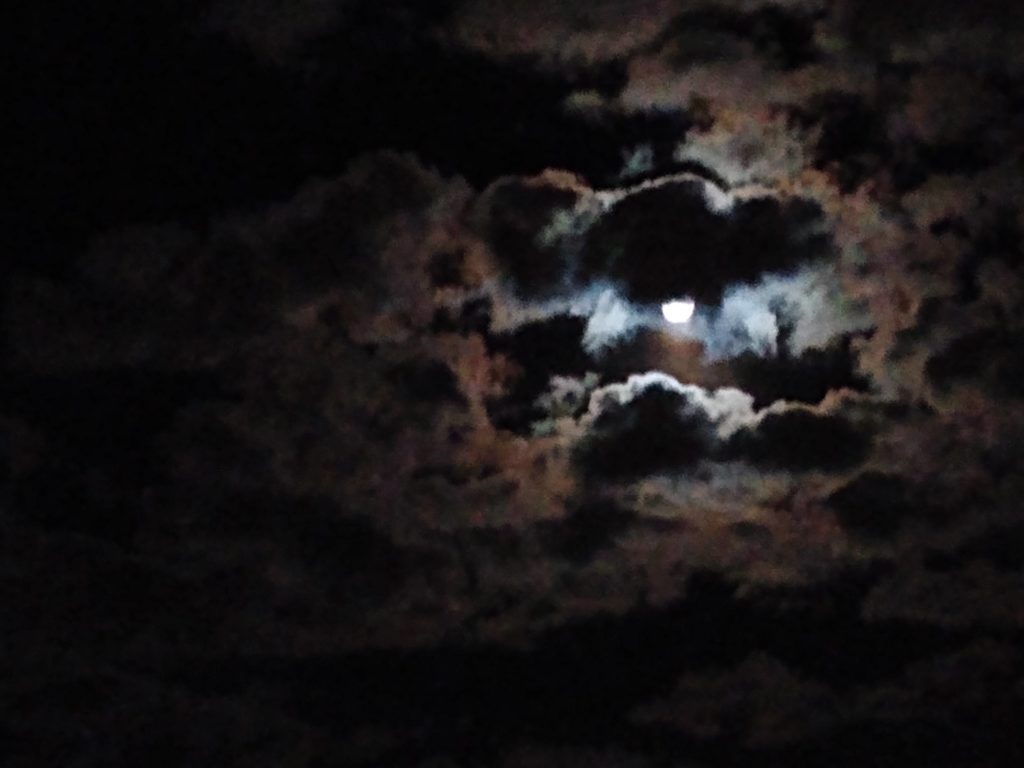
with her silver and bright gibbous eye

so I smile and move on

and look up

thankfully

to my night time friend and guide


anthony forrest

Haiku: A Minnesota Summer Collection

-On a Crayfish-

Fin tailed snapper

With mighty sword in thy hand

Hark! Defend thyself


-On the Dangers of Trail Running-

Engine roars to life

From above the attack comes

Take cover! Deer flies!


-On the Lost Art of Skinny Dipping-

With clothes on the dock

I am part of the lake now

As free as the Loon


-On Solving the World’s Problems-

Paper and wood lit

This wise council has gathered

Night thoughts around the fire


-On Taming a Bonfire-

Dancing flames of fire

How shall I stem this power?

Trusty stick in hand


-On a Minnesota Sunset-

Pink and orange and blue

All give way to more fiery hues

The sun hides its face


anthony forrest

Turkish Coffee

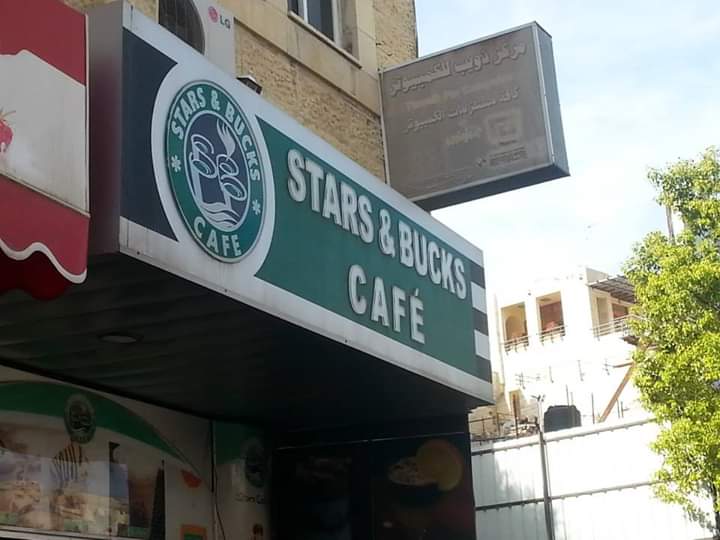
Not the coffee shop in Jerusalum. This was actually taken in Bethlehem. The good 'Ol Stars and Bucks.

Travel Journal, 73

My wife and I walked together in the Jewish Quarter of Jerusalem, several years ago. The stone streets led us through beautiful and ancient pathways, revealing one of the most important and stunning cities we have ever visited. When people ask me where to go if they had only one trip left in their life, I tell them, Jerusalem. You’ll never find a place more eclectic, stunning, historical, rewarding, fun, delicious, and mysterious.

We were on our second day in Israel, after taking a bus from Tel Aviv. I could feel that Grim-Reaper-like presence of jet lag creeping in. It always seems like we’re only one step ahead.

But we stopped at a café in the Jewish Quarter for some falafel (tasty pita wrap made from chic peas), and I found a stand nearby selling coffee.

If you haven’t noticed by now, I love coffee in its varied and delightful forms. And in the United States, finding coffee, and quality coffee at that, proves quite easy. Many people are on the hunt for the perfect cup. But there is one form of coffee which is pretty rare to find. Sure, if you look closely you may discover it on a menu at a middle eastern or Mediterranean restaurant. But even then, it’s not a very popular drink.

I’m talking about Turkish Coffee.

Why is this drink so unpopular and unknown? I have a theory: it is very strong, and far from sweet. In a world of tall, sweet, iced, chocolaty, creamy, blended, caramelized, and rich, Turkish Coffee only vaguely resembles a distant cousin. Turkish Coffee possesses all of the recessive genes: short, hot, highly spiced, only a couple of ounces, very strong, and almost pungent.

But don’t be frightened. Fortune favors the bold.

I took a sip at that café in Jerusalem and almost fell off my stool. The coffee stand worker noticed my mistake and rushed to tell me to wait to drink it. I had taken in mostly fine and bitter grounds.

Turkish coffee consists of a finely ground coffee and various spices, such as cardamom. It is also served with sugar. The coffee is typically served with only a few ounces of boiling water. The server will scoop the grounds, spice, and sugar into a small copper pot with a small handle and heat it to boiling several times. After it has met with his satisfaction, the coffee slurry is poured into cup. The drinker then waits for the grounds to settle to the bottom of the cup, hence most Turkish coffees are served in glass.

Though even after the grounds settled to the bottom, the drink still nearly floored me. Turkish Coffee remains one of my favorite coffee drinks in the world. But word to the wise, it will put hair on your chest.

anthony forrest

Day Change

Eastern sky on fire

Barely a new day

Sun getting higher, nigher

The horizon begins to fray

Into colors dark, then light

change to bright

Sleep shuffles away

anthony forrest

Favorite Trips: Not Cheap

Once a month, I will post a favorite story from the year prior.

Travel Journal, 72

A dull throbbing cut through my worn-out running shoes and seeped into the pads of my feet. The ancient stone floor wasn’t helping. Jet lagged and bedraggled, there we stood—occasionally. After short intervals of standing, a hallow voice asked us to be seated. And so the pattern continued. Stand, sit, stand, sit.

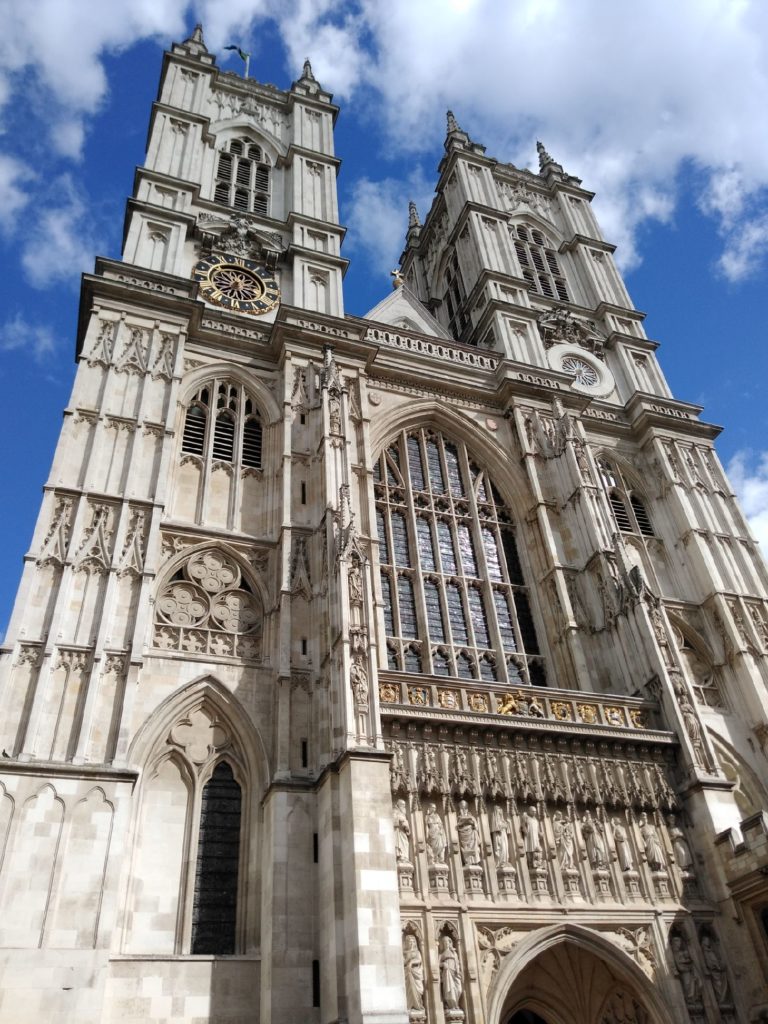
Every once and a while I smelled smoke and wax. Burning candles glowed on tables and shelves and stone and glass. But the aroma implied so much more than just a burning candle. It hinted at old candles, new candles, forgotten candles. It was the aroma of candles continuously burning—maybe for centuries. Out of the smoke and silence rose a voice; many voices. Soon the Choir of Westminster Abbey all sang together. They had started so quietly that I hardly knew when they had begun. Perhaps the choir had always been singing. Was I not listening?

My feet still hurt. But the intoxicating cold stone, smoke, and music gently eased the ache. We had walked all over London—Piccadilly circus, Parliament, London Tower, new roads, old roads, iconic ally-ways, ect. The day culminated at the Westminster Abbey for evensong. Nearly every day, the old church hosts an evening worship service comprised of Biblical readings and ethereal choral music. The day began to close as we made our way to the church. As we waited in line, I turned to read a nearby sign.

“No Pictures. No Mobile Phones.”

I begrudgingly stuffed my eager phone (already 9 months pregnant with travel photos) back into my pocket. But as we shuffled quietly into the building, all desire to take pictures fell away. We found our spot in folding chairs on the old stone floor. Then it all began. And our tired bodies and minds vulnerably soaked up the experience like a dry rag.

After an hour, it was over and we shuffled back out toward the door. Nearby, a not-so-sneaky tourist held up a cellphone and snapped a photo. Out from behind him, a vicar began verbally berating the man for taking a photo.

Only an hour ago that was me. But now I was as appalled as the irritated Church leader. How could he take a picture after something like that? Did we not have the same experience?

Pictures have their place. And I am still trying to find all those places. But I long for the places where picture taking seems inappropriate. Places like Westminster Abbey tend to make cell phones feel cheap and indecent. I want to see those places. I want to experience places of awe and dignity where trivial things like pain and jet lag melt away.

A picture may say a thousand words, but it turns out that I don’t really care. The smell of smoke and wax burns my mind. The music haunts my nights. And an experience like that cannot be cheaply manufactured (or even recalled) by any technology.


anthony forrest

The River

Crisp, cool spring-fed river

Rushes on and on

Through this wood and down the hill

Noon and dusk and dawn


Birthed from stony earth

It pours as joyful tears

And bubbles up in constant giving

Through each season and every year


Stacked up stones cannot stop it

Neither root nor rotted log

A stagnant pool, you will not find

For this is living, and is no bog


Crisp, cool spring-fed water

Rushes down from above

It heals and soothes and grants great peace

This river of God’s Love


anthony forrest

Hover Hole and The Hoop of Hope

Foreign Bathroom Series, Chapter 6

Travel Journal, 71


As always in this series, names of those involved have been removed or redacted to protect the (possibly) innocent and (definitely) embarrassed. 


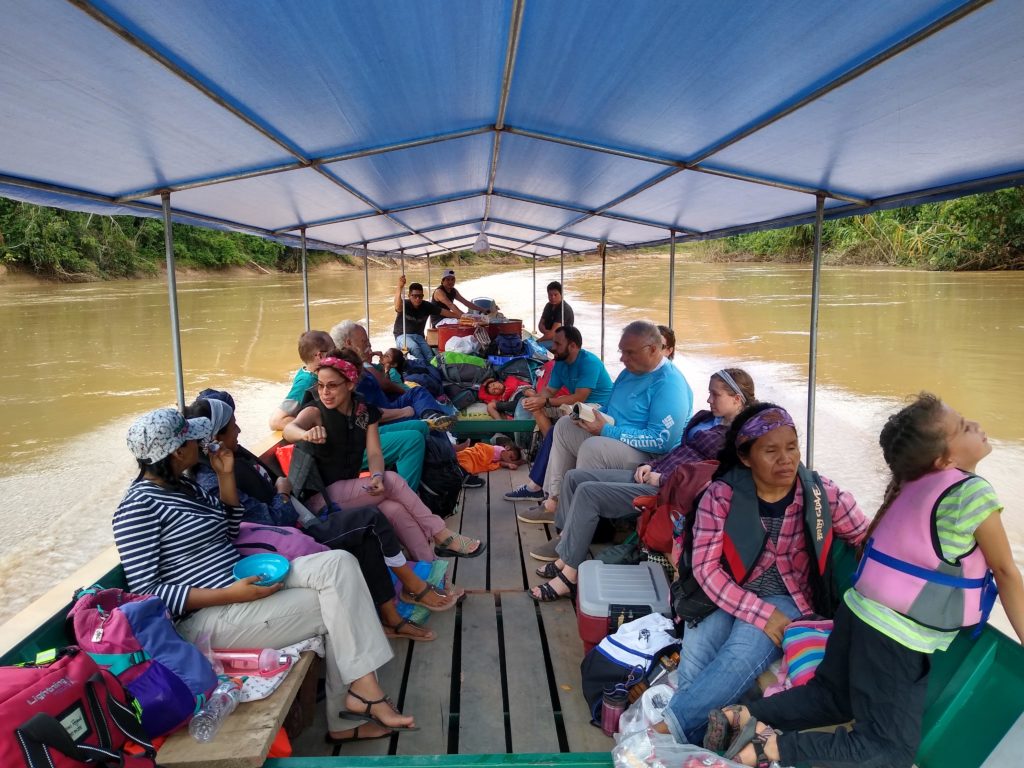
Deep in the Peruvian Jungle, our medical mission team set out on a river boat destined for several small villages. Our task for the week required us to travel a great distance into the jungle. The first day alone we spent over 10 hours in an 80 foot-long, flat-back river canoe with a huge engine. We saw a few settlements along the way. And, needless to say, we didn’t have a chance to stop at a luxurious rest area, complete with running water and cold Pepsi machines. No, in fact, we stopped only once or twice during that 10-hour trip.

But alas, mankind must eat.

Mankind must drink.

And what goes in must come out.

The two boat stops granted relief for any…er…major business. But what about the rest of the time?

For the lads, a curious leaning and balancing act off the back of the boat does the trick. And it comes so naturally. Boys will be boys, right?

But what about the lady folk?

I give you: The Hoop of Hope.

One luxurious item brought aboard was a camping/chemical toilet. The tiny box completes the bathroom objective easily. Though the real trick is not the toilet. It’s privacy. One genius mind concocted the idea to hang a shower curtain around a hula hoop. And, since the female of the species tends to go to the restroom in herds, the three-foot diameter hoop can be upheld by lady friends and used one at a time.

The Hoop of Hope.

When the boat arrived at the various locals on our mission, The Hoop of Hope was no longer required. Each settlement has a bathroom. Although, I use that term in its loosest form.

Not too far from huts and hammocks sits a tiny shack. It appears to be hastily assembled with ill-fitting boards and a partial Brazil Nut bag for a “door.” Enter and look down.

May I introduce to you: The Hover Hole—the one foreign bathroom experience that always gives newcomers a challenge.

The name gives away its purpose. When first venturing out into hover hole territory, one must consider tactics and strategy. Two boards line a hole in the ground. Stand on these when using the Hover Hole. Balance is key. Touching the ground for stability is fraught with consequences.  Bring your own toilet paper, but take care not to set it down anywhere (for the same reason you don’t want to touch the ground). Accidents can and will happen, though. One of the kids traveling with us lost his sandal down a hover hole. But don’t worry, somebody retrieved it for him. Not long after (perhaps not long enough?), I saw him wearing it.

It may be a new experience, but I assure you, many parts of the world utilize this form of toiletry. And when pressed, mankind can adapt to most forms of bathroom use.

Though the one form that was entirely new to me was the sparkling brilliance of the well-crafted Hoop of Hope. May is give hopeful relief to boat travelers for years to come.

anthony forrest

Check out the other chapters to this fun series:

Part 1: Bidet

Part 2: The Lav

Part 3: Floor Towel

Part 4: 20p Toilet

Part 5: Dutch Hostel


Morning Grey

I walk along this morning grey

My Father hand in hand

I walk along this morning grey

Beside my Savior I will stand


I walk along this morning grey

Talking with my Lord

I walk along this morning grey

And His grace to me is poured


The joy to walk with my God

On this morning grey

And why I walk may seem odd

I walk alone to pray


I walk along this morning grey

And all my soul I give

To the exalted Maker of this day

And the reason that I live


anthony forrest

Hitchhiking

Travel Journal, 70

It is my personal belief that every person in the world should hitchhike at least once in their life. I also believe each person should pick up a hitchhiker at least once in their life.

Americans used to hitch a ride all the time. I have spoken with many people who thumbed it back in the sixties and seventies. If they did not own a car, hitchhiking was a simple and easy solution to getting from place to place. But someplace in the late seventies and eighties, the attitude toward the free ride changed drastically. Was it due to a rash of hitchhiking murders? Perhaps the cinema cashed in on the fear and made hitchhiking horror movies. Did newspapers tout the antics of serial killers out on the road? Soon every hitchhiker looked like a villain. Was any of this true? Who knows? I wasn’t around and can’t verify any of this.

But I will say that in most parts of South America, hitchhiking is not only common, but a legitimate option for getting around. I met a young man in Bolivia one time, who, between busses and hitchhiking, traveled from Montana to Bolivia over the course of a few months. (He apparently ran into a little trouble with the military police in Panama, at one point though.)

Could hitchhiking be dangerous? Sure, but everything is dangerous. I think it really depends on how bad you need a ride. In America, the people hitchhiking are far more likely to be desperate.

I was desperate in Texas.

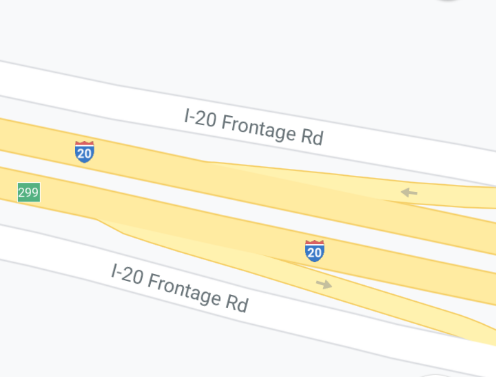
The greyhound bus that started in Dallas could only take me as far as the small town of Clyde. I was still a lot of miles short of Abilene—which isn’t a luxurious of fun location to begin with. (On a side note, the Greyhound Bus station in Dallas has the worst public bathroom I’ve ever seen in the US, but I digress.)

So, I stuck out my thumb and began to walk. If you are in need of some humility, I would suggest this course of action. There is nothing more humbling than trying to get a ride on a busy freeway. Car after car passed me. Two hours later, a car pulled over.

A Honda Civic full of college students from Zimbabwe kicked open the door, and I stuffed my backpack into the back with two other guys. We laughed and talked for the remainder of my ride.

And guess what?

I didn’t die.

In fact, I am still Facebook friends with those boys that gave me a ride all those years ago.

anthony forrest

« Older posts Newer posts »

© 2026 Travel and Verse

Theme by Anders NorenUp ↑