stories of travel, medical missions, and more
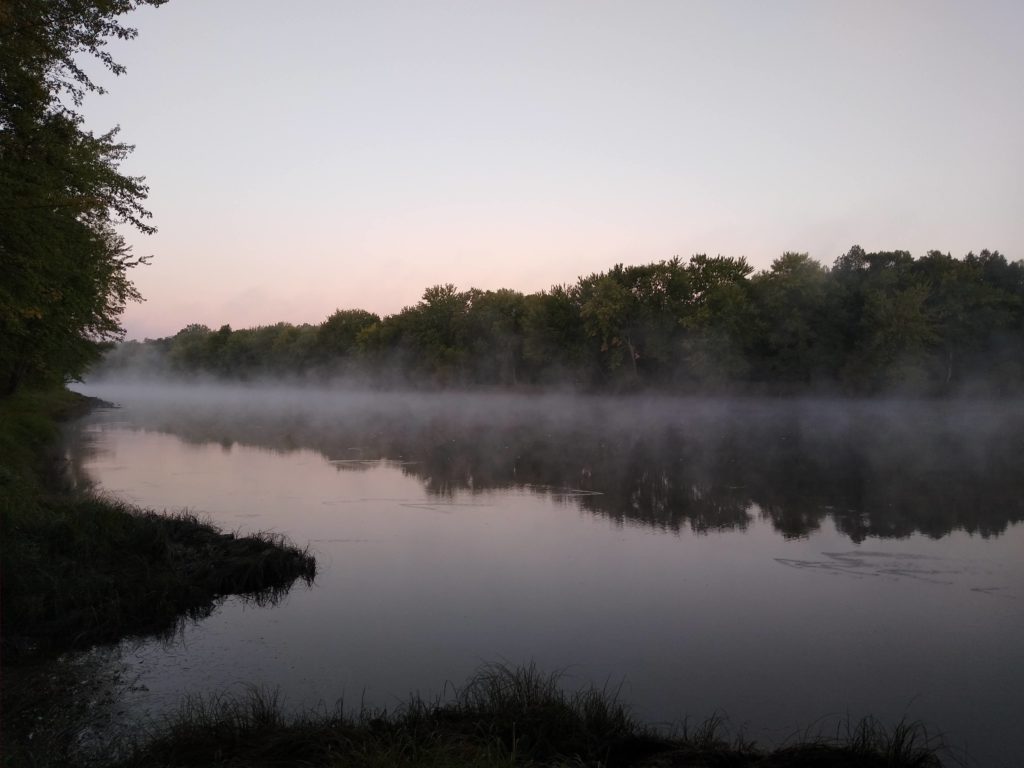
Sun rises—eyelid of the day opens wide.
Pine tops blaze with the barely risen sun.
Before the day’s problem had begun,
the sun took its place with pride.
I close my eyes
and listen to the aspen-quaking breath of God.
anthony forrest
I wear little jewelry.
Mind, I have attempted to wear a bit extra here and there over the years. When I was a teen, I wore on of those obligatory Christian WWJD bracelets. And later I wore the occasional necklace—which don’t flatter me, to say the least. But now I only wear two pieces of jewelry.
I obviously wear my wedding band.
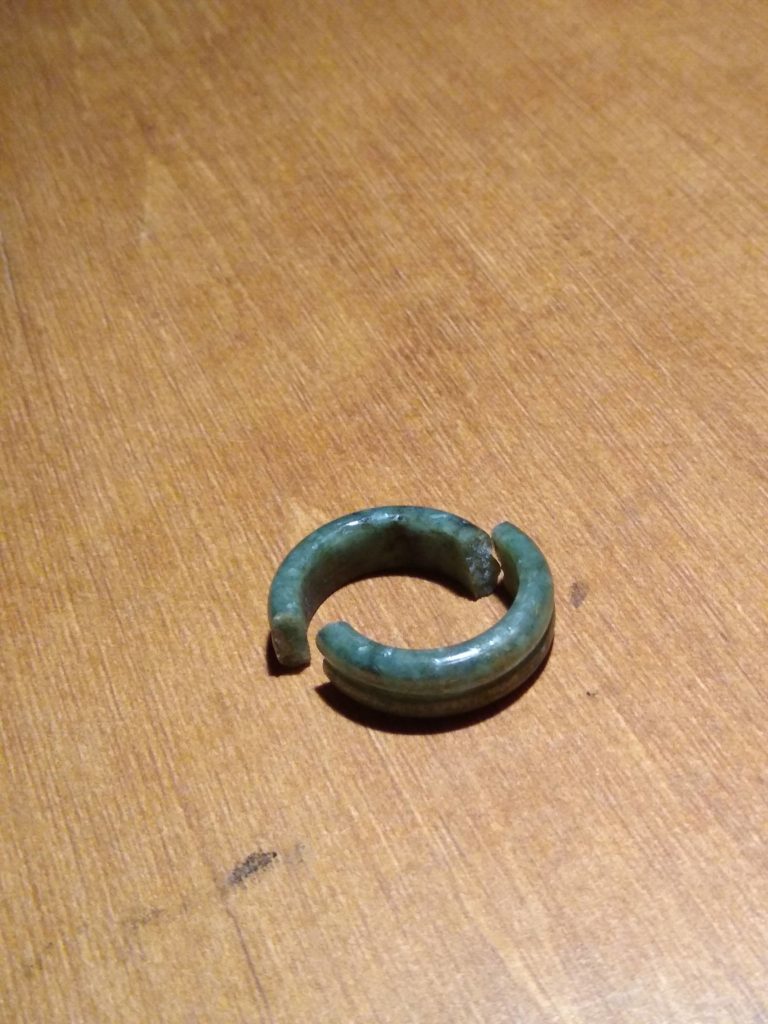
The only other piece of jewelry I wear is a lone ring on my right hand.
Several years ago, my wife and I traveled to Israel to visit friends. While there, we saw Jerusalem in all her glory: back street market hung with silky scarves, ancient stone walls with bullet holes from the 1967 war, many religious relics and locales, and more food than you can imagine. The land is holy to nearly everybody—and not just here, in this city. Not too far from Jerusalem stands a wall, separating Israeli controlled land from Palestinian Authority controlled land. The city of Bethlehem is also a beautiful city, ravaged by war and constant dispute, but like Jerusalem, it is beautiful all the same. Walking down a side street market, I spotted a table covered in Olive wood decorations, nick knacks, chachkies, and whatnots. As I perused the table, a ring caught my eye—simple, unassuming, and made of a material that I never see. I bought that ring and wore it on my right hand. That is, of course, until it broke due to the stress of wearing it, exposing it to the cold Minnesota winter, or simply because I banged it on something. I tried to repair it a couple of times to no avail.
Years later, I strolled a street on the border of Thailand and Myanmar. The heat drove us under tarps giving shade to food booths (and vendors selling probably the strongest iced coffee I’ve ever tasted, but that’s another tale). We spent a week in the north of Thailand in the Chiang Rai area, visiting friends, experiencing the culture, tasting the food (and coffee), and taking in the weather and scenery. It is easy to love Thailand. Everything about that trip brings a sparkle to our eyes. So, when I looked down at one of the vendor tables and saw a handcrafted jade ring, I just had to have it. The dark green jade color seeped into my eyes. I slipped it onto my hand—now completely understanding how Bilbo and Golem felt. It was precious. It had a weight about it. Jade also signifies healing. As a paramedic, this ring was a perfect accoutrement. I wore it for years—that is, until I finished washing my hands and began to dry them on a towel. The ring felt like it was slipping off. But I looked down and, behold, the one ring was broken into two pieces.
I wear another ring on my right hand now. But it’s a simple place-holder. One day, we will travel to a far-away land. That place will touch my soul. And I will again find a special ring to bind me.
anthony forrest

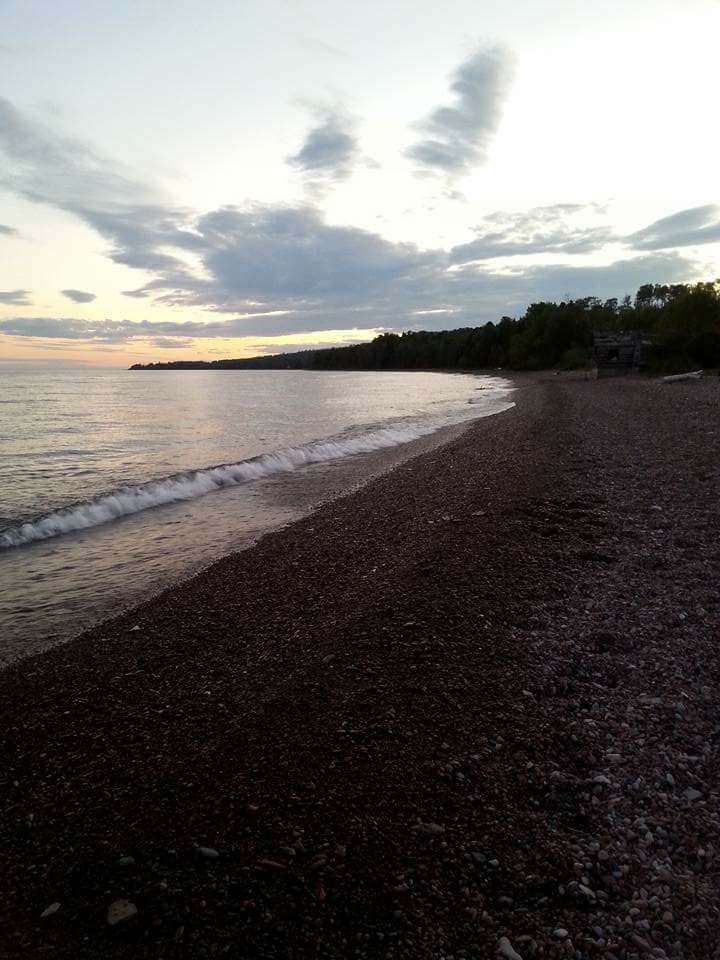
Waves break tall—close to the shore
White-water washes and smooths each stone
Cleansing my sinew and bones
Wind blows the mist through heaven’s open door
God is in the wind and waves
He will my soul restore
anthony forrest
rest, oh Lord, give me rest
that I may carry on
and walk this road
that taunts my soul
grant these demons—be gone
peace, oh Lord, give me peace
bring an end to my wars
send a message dire
of mutual ceasefire
and make me feel your peace to my core
love, oh Lord, show me your love
which I often overlook
remind me of your heart
keep me never apart
from the loving Father and his Holy Book
anthony forrest
Seattle, Washington, 2015
I peered out the small airplane window and glanced worriedly back to my watch. There was simply no way I was going to make the next flight. But maybe, just maybe it would be late and I could run to the gate. I had a vision of myself running like OJ Simpson, stiff-arming people through the airport. (We’re talking pre-scandal OJ. Check it out here. You’re welcome.)
I looked back out the window and saw my gate. What luck, I was pulling into the gate adjacent to my next flight. But alas, my luck ended there. I watched helplessly as my next flight pulled away from the gate and taxied down the jetway. That was it. I had no other options for getting from Seattle to Ketchikan, Alaska until the next afternoon. I now had an unexpected stopover. And the solution to an unexpected stay in Seattle is simple—Pikes Place Market.
Backpack on shoulder, I stepped off the bus in front of the iconic sign, right above the fishmongers. After several minutes of gleeful fish-throwing observations (Yes, fish throwing. Check it out here.), my stomach told me to find some fish of my own.
I bypassed several nicer-looking places with patio-seating and large menus. I knew what I was looking for: a hole-in-the-wall. Sure enough, on the pier and under a shanty sat three greasy stools and a small counter. The stocking-cap-wearing chef (?) threw a pile of fried fish and French fries on a day-old copy of the Seattle Times. I doused the luscious heap of Pacific Cod and fries with fresh-squeezed lemon and gratuitous amounts of tartar sauce (call me a heathen). Nothing beats the west coast for the market flavor of fish and chips.
Howth, Ireland, 2019
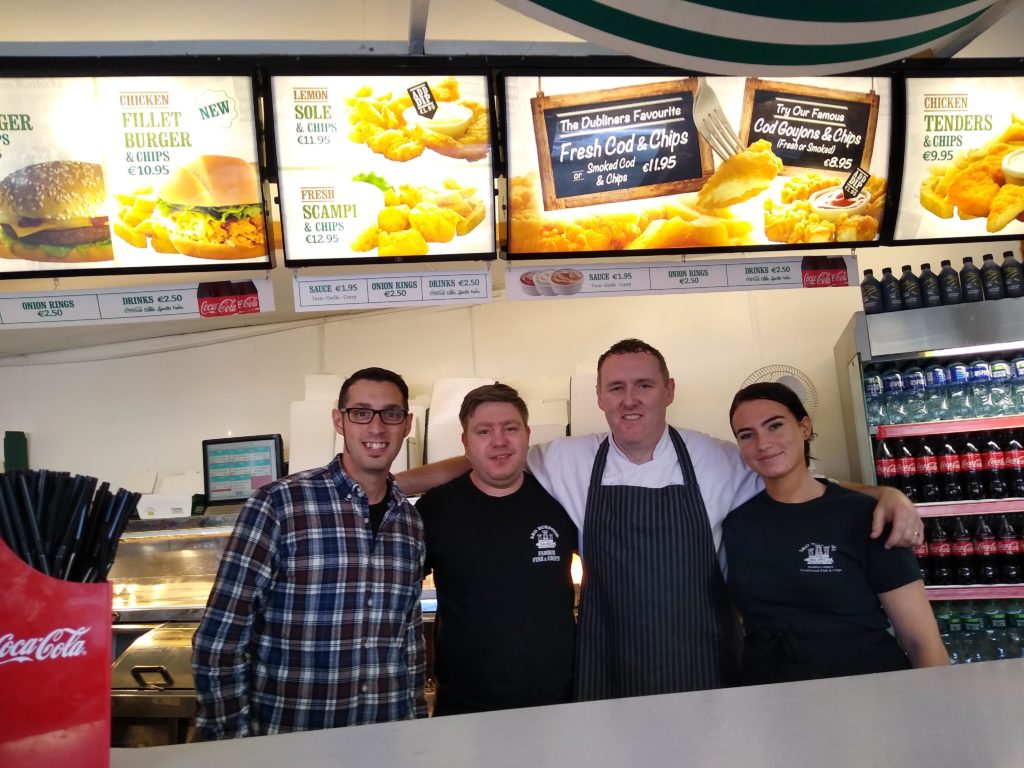
The small fishing village of Howth sits just east of Dublin. In fact, it’s one of the most pleasant train rides leading out of Dublin. Ivy-covered houses line the tracks that lead all the way to the ocean. When you get to the ocean, you’ll find a lovely little village with a lot of scenic hikes and great food. Some say that on clear day, you can look out toward England and see Hollyhead, near Liverpool. Ireland supports the cliché. Ireland is exactly what you’d expect: green, beautiful, friendly, all the people have wonderful accents, and the food is outstanding. But in a place where they literally call fish and chips “Dublin Caviar” how does one decide where to eat? Nearly every restaurant and pub serve outstanding food. But when you step off the train in Howth and walk just a little way up the street, you’ll see Leo Burdock’s. Please, if you go to Dublin, eat there. We placed our order and began to take a picture of the restaurant. But the owners would have nothing of it.
“Come on back,” they said with a smile. So, I jumped the counter and got my picture with the laughing crew. We chatted about Ireland and America until our food came. They sat a glorious mound of fish and chips on a platter in front of us. Each serving is two pounds of fish and potatoes. This time, I poured the malt vinegar with reckless abandonment.
Grand Marais, Minnesota, annually
Blindfolded and dropped onto the North Shore of Lake Superior, most people would guess they were in Maine or some other rocky and oceanic local—unless, of course, you’ve been there. The Lake stretches for miles and miles and states and states. And every year, my family heads up there in search of solitude and rejuvenation. The frigid water laps the rocky coast. Pines and boreal trees sway with the almost-constant breeze. The small town of Grand Marais is a favorite in Minnesota. Most residents of the State love it and make the journey at least once a year. And just as you drive into the town, look to your right and you will see a little café called Dockside Fish Market. The Lake teems with an abundance of Whitefish, Pike, Walleye, Salmon, and (my favorite) trout of many types. When I was a lad growing up in Wyoming, I didn’t really think that anybody ate any other fish but trout. I had not been confronted with the great Northern Pike or the elusive Walleye. I now love it all. But each year at Dockside, I get a basket of Lake Trout. We usually sit on the patio in the back and we eat our fish and chips in the cool breeze of Lake Superior. It is a tradition we are not soon to break.
anthony forrest
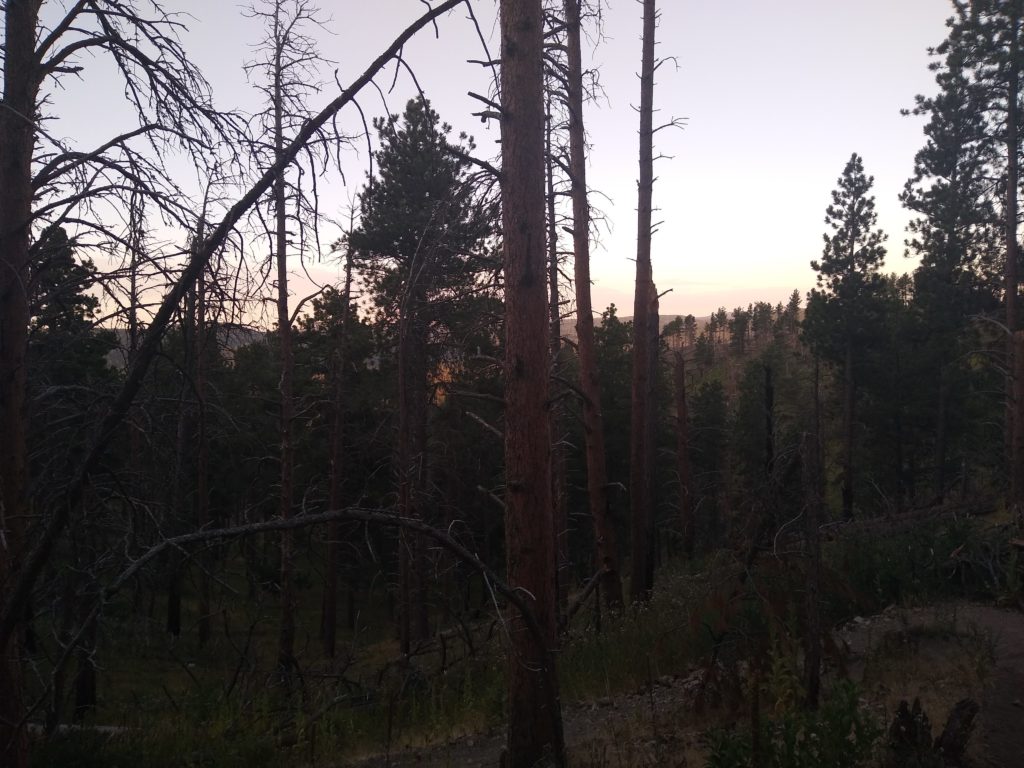
Space of Hills, high and black
Near the Lands, bad and mystic
Follow the deer and track
an ancient relic
of this old, old place
Reach up to the endless river
of sky, scattered—the Milky Way
Orion and his unseen quiver
fires arrows at the rise of a new day
Take the trail—footpath of beast and man
Get lost in those vanilla trees
Breathe in their life and understand
the quiet and beauty
of these Black Hills
anthony forrest
I have said this before, many times. And I will, no doubt, say it again.
Traveling is different than vacationing.
Sometimes, after walking in work or church or upon meeting a friend for coffee, I will hear a question that I get a lot.
“Were you on vacation?”
It’s a good question. Friends and acquaintances see pictures of my wife and I on social media. Perhaps we’re standing near an old statue in another country, or eating barbeque in the deep south. We have smiles on our faces. We are indeed enjoying ourselves. But to say that we are always vacationing would not be accurate. But it’s unfair to drop into a philosophical discussion on the subtle (and not-so-subtle) differences between travel and vacation when having a five-minute chat. It’s more important than that.
While vacation may appear the same as travel, it is vastly different. But I’m not going to begin bashing vacation. Sometimes you just need to sit on the beach and take in the ocean breeze. Taking a break from the stresses of career and life in general helps to reset the mind and greatly benefits emotional and mental health.
Please, by all means, take a vacation.
But how does one travel? Most of the time, travel wears on you. Travel tends to be a lot of work. It involves less rest and relaxation. And when you get back, all you feel like doing is sleeping. But if it’s so much work, why travel at all? Because travel is growth. It informs your soul and changes your perspective on life and the lives of other people.
Mark Twain published Innocents Abroad in 1869, but I think his words cut deeply into today.
“Travel is fatal to prejudice, bigotry and narrow-mindedness, and many of our people need it sorely on these accounts. Broad, wholesome, charitable views of men and things cannot be acquired by vegetating in one little corner of the earth all one’s lifetime.”
June, 2017
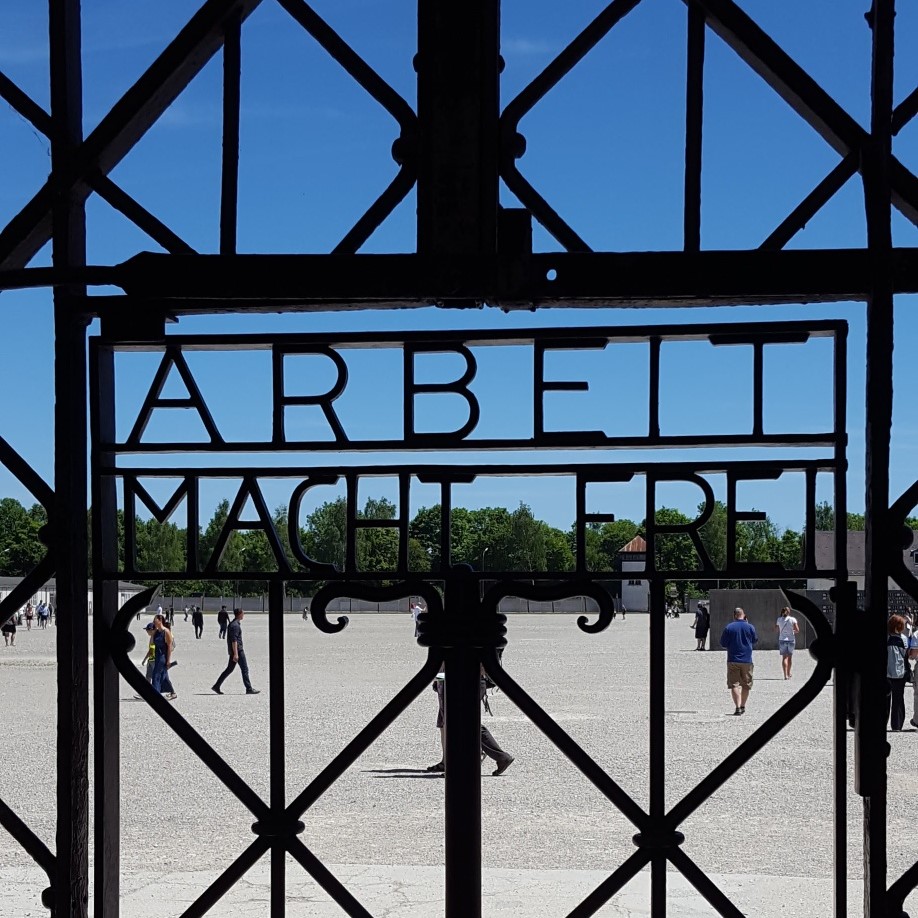
We stepped off the train into the heat of the German summer. We had not planned on this. However, our flight out of Munich back to the US wasn’t scheduled to leave for 8 hours more. One of the biggest travel tips I give others is to not miss opportunities, especially when you have extra time. We had extra time. And not too far from Munich lies the small city of Dachau. If that name sounds familiar, it’s probably because you heard it in a history class. Atrocities happened here. It was the first of many concentration camps during WWII. Thousands of people suffered and died at the hands of an evil regime. Jews, Catholics, political prisoners, homosexuals, gypsies, and anybody else that didn’t fit rightly into the Third Reich’s false picture of utopia, were imprisoned here.
We carried our bags on our shoulders because we couldn’t find a luggage locker at the nearby train station. We payed our fee and entered the massive complex. Overhead a cast iron, barred sign read “Arbeit macht frei.” Work will set you free.
It never did.
Acre after acre of sprawling complex-turned-memorial displayed pictures, signs, statues, and artifacts of the evil capabilities of mankind.
This room was used for solitary confinement.
The poles over there are where the Nazis used to hang rulebreakers.
See that door? That leads to where the “doctors” performed medical experiments.
How fitting that we were stuck with hauling around our luggage for three hours. But the weight we felt that day couldn’t have been made worse by a couple of bags. We sweat and staggered around until we couldn’t take it anymore. We could have spent two days studying and viewing the Dachau Concentration Camp. But there was no way. We can only take so much death and dying in one day.
Come, follow me to Hawaii.
May, 2018
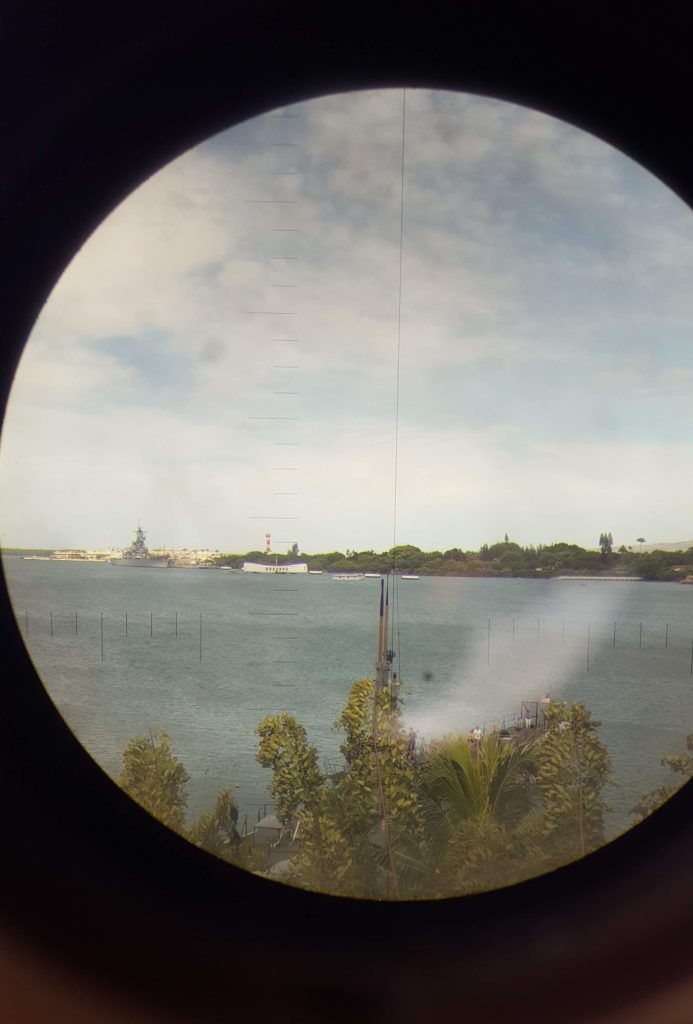
Our mothers joined us for a fantastic and relaxing adventure to Oahu. We drove the island, ate tons of great food, relaxed, and spent time by the ocean. Most of it was vacation. But it had one blemish, leaving a bitter (but important) taste.
We stood near the bay at Pearl Harbor. Thousands died here during a surprise attack from an exotic country with which we weren’t even at war. The Imperial Japanese military carried out one of the most iconic and deadly attacks of the 20th century. Their goal was to destroy US aircraft carriers, delaying or preventing any US involvement in a brewing Indo-Chinese and Pacific conflict. Though no carriers were destroyed, thousands of people lost their lives. The US entered into war with Japan the next day. Americans died. Japanese died. And though we tend to think about “who won” WWII, nobody really won. Everybody lost.
Our boat cruised the watery graveyard. We saw pieces of ships rising above the sea, as the guide spoke of bombs falling and fires starting. I imagine battleships, full of fuel oil, leaking into the ocean. An oil slick on the surface, six inches deep in some places, ignites into a black-smoke fire. Bombs drop onto ships. Seamen leap to avoid death, only to find it faster in the hellish, burning ocean.
The visit to Pearl Harbor was amazing, but not because it was fun. It was amazing in the truest sense. Loss of life should always amaze. The incident was not that long ago. And it was perpetuated by fellow humans. Pearl Harbor changes you; teaches you.
Not every traveling experience will brand sadness into your soul. But sometimes it will. Neither Dachau nor Pearl Harbor are good places to vacation. But they are excellent places to travel. Taking the time to travel is soul-instructing and character-changing.
Travel if you dare to better yourself. Gather your bags and make a personal journey. Grow yourself and become more human. Release the prejudice in your grasp. But take caution, traveling is not for the faint of heart.
For travel can be fatal to preconceptions.
And it is much different than going on vacation.
anthony forrest

So far the distance,
so long the wait,
a rough road winding,
as a light so blinding,
blocks my sight.
What’s ahead?
What will come?
How will I know where to run?
Around the corner,
I walk through the night and see a light,
(a familiar face, a reminder, a friend)
my Savior: the pain and worry He will mend.
-busy in thought-
How could I be so blind not to see
that is was not me?
Though my life is often a mess,
what my Father does daily for me, I will never forget.
anthony forrest
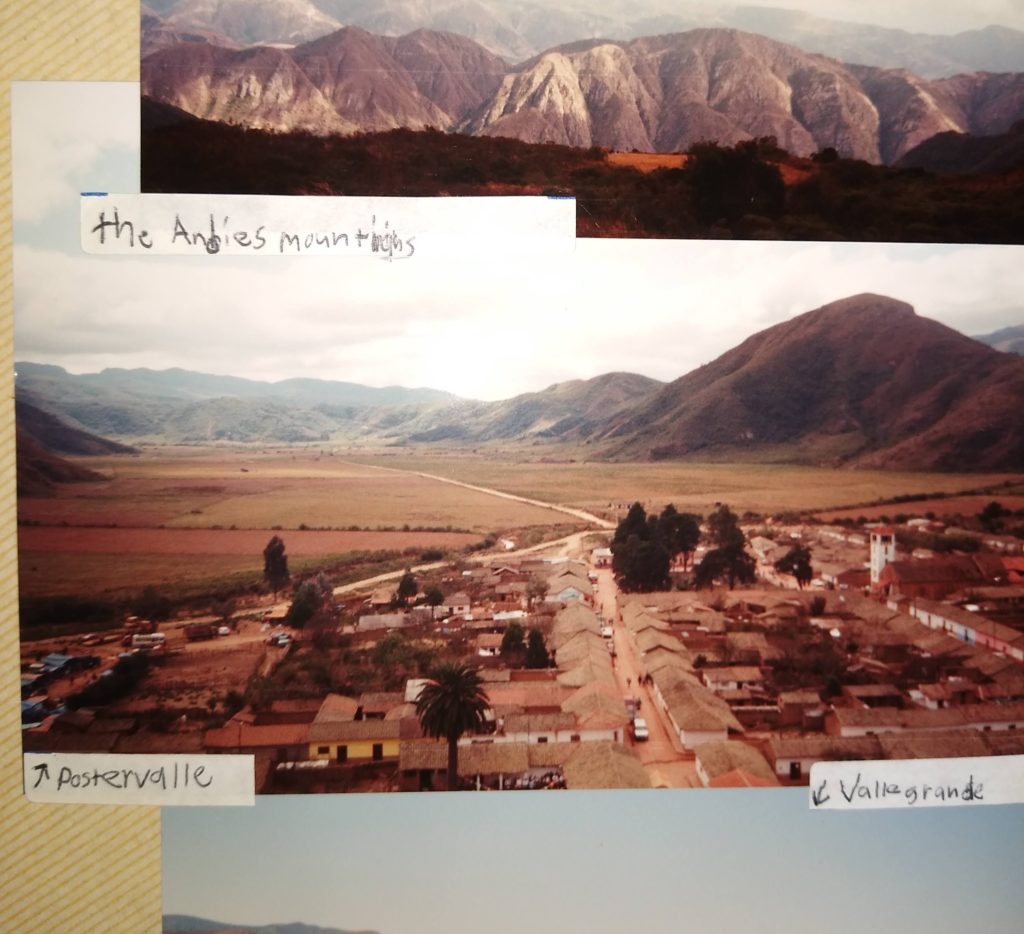
My thoughts take me to 1999. I’ve written about Bolivia a couple of times. But long before I lived there as a high-energy, guitar playing 18-year-old, my entire family spent a month in the town of Vallegrande, nestled in the Andes Mountains.
Dad, mom, sister, brother, and I packed up our 90’s clothes. Armed with a sparkling-new Sony Handycam Hi8 camcorder, we flew to the heart of South America. This would be a kind of survey trip to help our family decide on whether or not we would move there and become missionaries. Though life would take us in another direction, that first international trip helped to shape my life.
During our travels, we spent some time in the village of Postrervalle. The name translates to “the last valley.” It’s the end of the line; the quintessential middle of nowhere. Parts of Bolivia remind me of my own home state of Wyoming. It’s arid, desert-like, and has a sort of cowboy feel to it. We traveled there during Carnaval. This custom includes a weeklong celebration of indigenous beliefs mixed with assimilated pseudo-Catholicism. But mostly, it’s an excuse to party. For days on end, the music rarely stops. Alcohol flows. Food stands and vendors line the plaza.
And for some reason, I remember the rain and the mud…
We sit at a small plastic table, huddled close due to the cold. These parts of the Andes Mountains are cool this time of year. I smell the food cooking and have no idea what it is. But when my dad asks if I want the sausages hanging nearby, my instincts scream, “yes!” Soon, a plate of sausage, rice, potatoes, and salad arrive and I tuck in neatly. Even though I’ve been stuffing my face with candy, I can always still eat. My chocolate supply is running low. Earlier I bought a handful of chocolate sticks (which taste like low quality Easter chocolate) with little comic strips inside the wrapper. I clean my plate, but don’t eat my salad. Our family stays away from the produce. Dad says it’s because we don’t want to get sick. Fine with me. I didn’t want to eat my salad anyway. I’m 12. I want chocolate.
I finish my food and look out to the street. It’s only 4 p.m. and already dark. Actually, the whole day has been dark. The surrounding mountains hide the sun earlier than the true sunset. Above, black rain clouds mask the only remaining light. The foreign festival gives me an uncomfortable feeling.
Darkness sits in this valley like the smoke of a smoldering fire.
The day’s drizzle seems to have stopped, but the mud prevails. Our chilled bodies warmed, we walk down the muddy street laden with trash and running chickens. I remember the story that my dad’s friend told us around a bonfire last night. Apparently, the locals think that the house in which we are staying tonight is haunted. He talked about people hearing things in that house—sounds of strangers dragging one foot. That sort of thing. I don’t buy it. At least, that’s what I want everybody to think. In a place like this, who knows. Postrervalle used to be spiritually dark—witches and demons dark. That is, until he and his mission’s team brought the light of God. And that light has shone in the darkness since. But on a rainy day with foreign music and muddy roads, my mind tingles with hesitant curiosity.
Haunted, you say?
It’s night. I’m lying in a sleeping bag on a straw mattress in the haunted (?) house. Though we’ve all been in bed for hours, I hear the throbbing of the drums and the beating of the music in the town plaza. They’re celebrating. On and on they’re celebrating. And to me, every beat sounds like a stranger dragging his leg. I finally fall into a restless sleep, tossing and turning with the twisted dreams of an imaginative 12-year-old.
But now it’s morning. The sun is shining. I look outside and see that it doesn’t look all that dark anymore. The mud still cakes the roads, but the music doesn’t play. I throw my sleeping bag and backpack into the rusty Toyota pickup. I eat some bread and a chunk of cheese as I climb onto the truck. And rolling down the muddy road home, I glance back at Postrervalle—that last valley. The end of the line.
You know what?
Now it doesn’t look all that bad.
But I know that night will come once again. The drums will beat. And then, at least in my mind, the ghosts will come out to play. The only cure for this darkness is the light.
I’ve been back to that village in the years following my first visit. And though the light continues to seep through the cracks in that dark place, the work in Postrervalle is far from over.
But that was over 20 years ago. Who knows what goes on now in the mountain village of Postrervalle, Bolivia?
anthony forrest
Small encouragement from yours truly:
Though travel is currently limited, the lessons we learn along the way still exist. As soon as you can, get out there and seek to learn more about other cultures and people. And if physically going is out of the question, travel through a good book. Read an author or title outside of your comfort zone. Find the things that help you discover the hidden traces of yourself under the rubble of the day-to-day monotony.
Speech over. You may go about your business.
anthony forrest
© 2026 Travel and Verse
Theme by Anders Noren — Up ↑